Practitioner writing.
No fluff. No SEO sludge.
Articles on workflow architecture, CRM implementation, automation tools, and operations engineering. Written by practitioners for operators.
49 more reads.
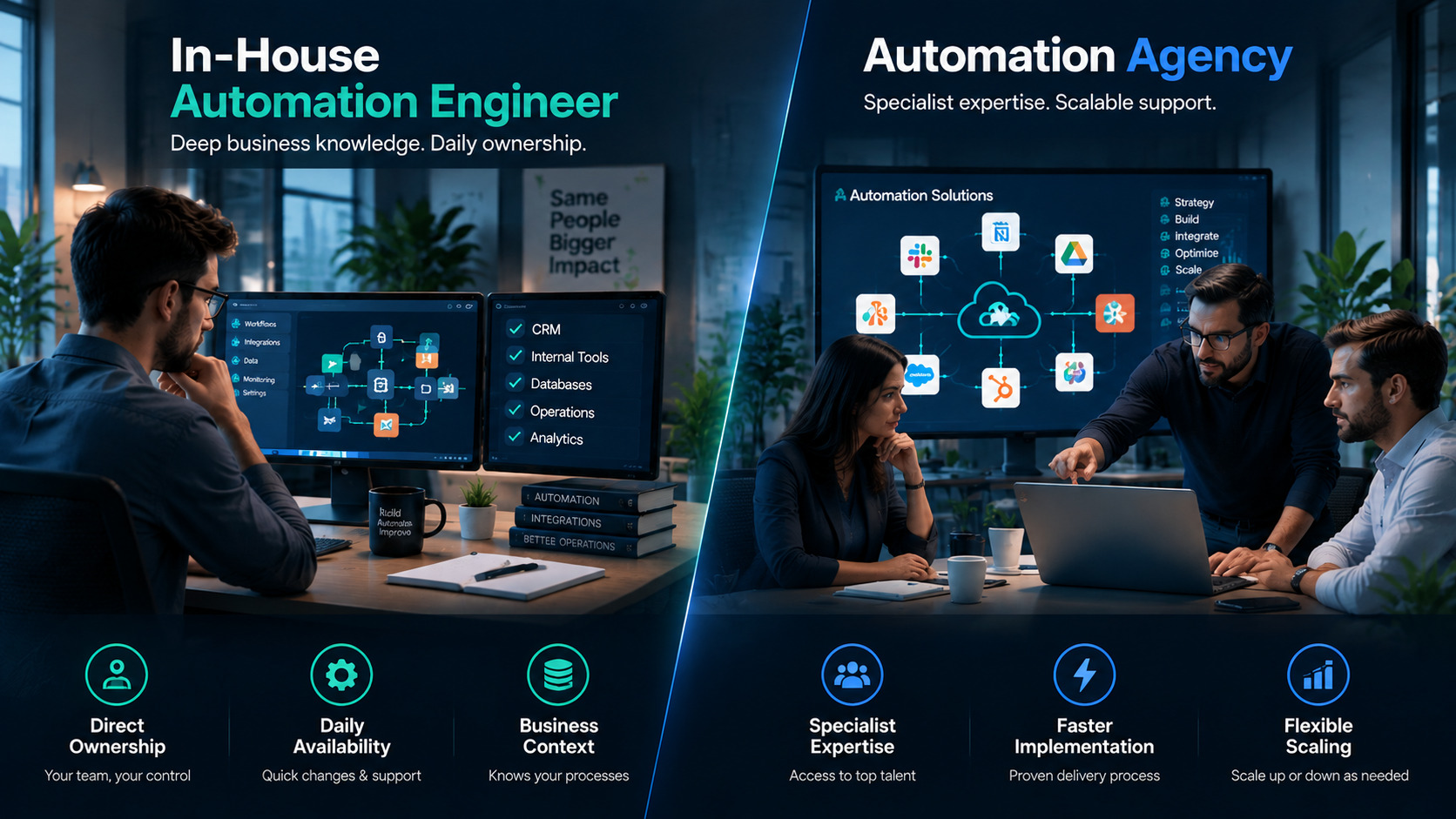
In-House Automation Engineer vs Agency: When to Hire
Most operators at this size have about a quarter of a role's worth of automation work, not a full one. The decision is not agency or hire. It is how many hours a month the work actually takes, and almost nobody counts before pricing a salary against a workload they have guessed at.
Read →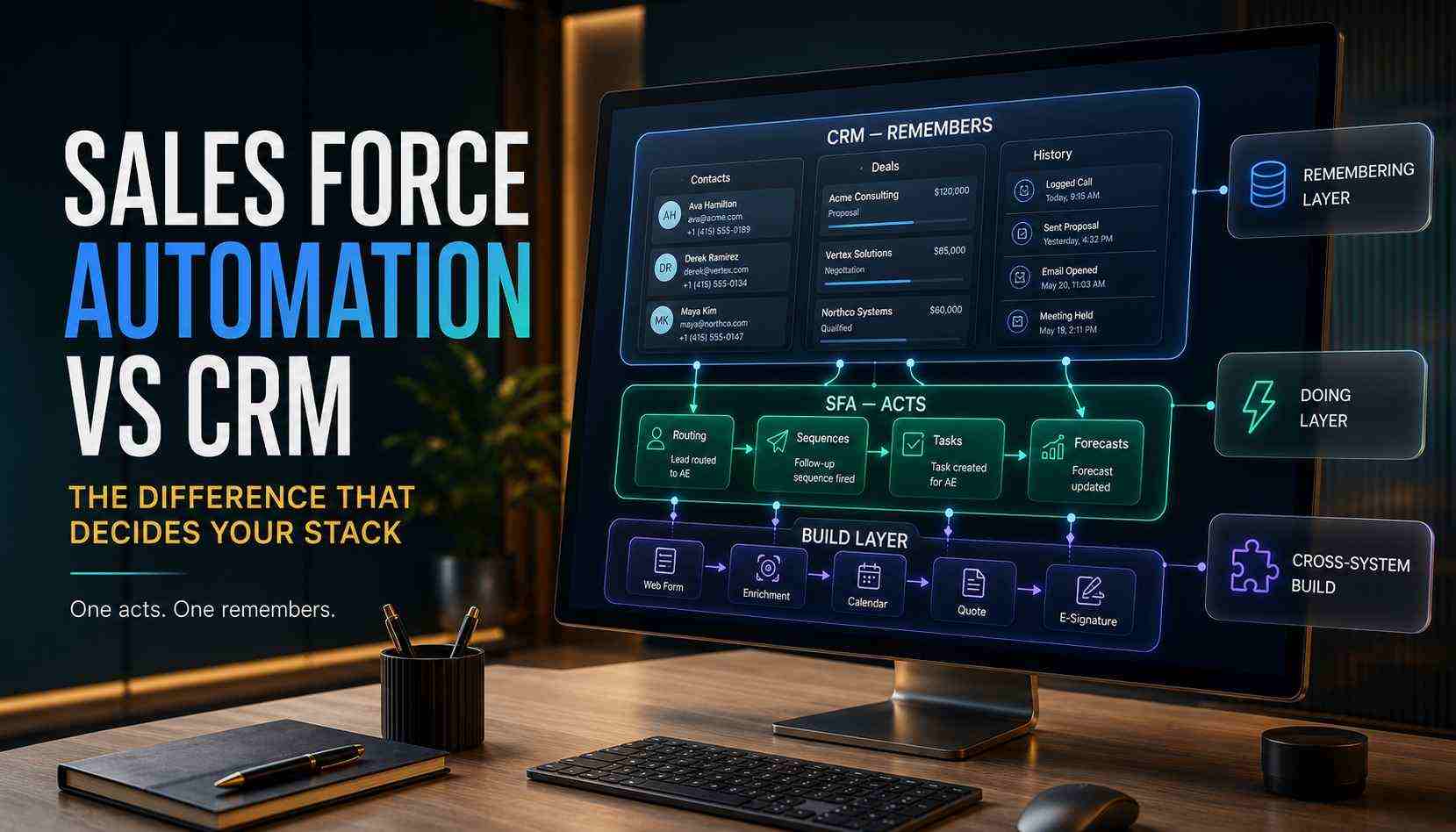
Sales Force Automation vs CRM: The Difference That Decides Your Stack
Sales force automation is the doing layer: routing, sequences, reminders, forecasting. CRM is the remembering layer: contacts, deals, history. Standalone SFA died as a product decades ago. It now lives as a layer inside every CRM, plus a build layer on top, and your bottleneck lives in one specific layer.
Read →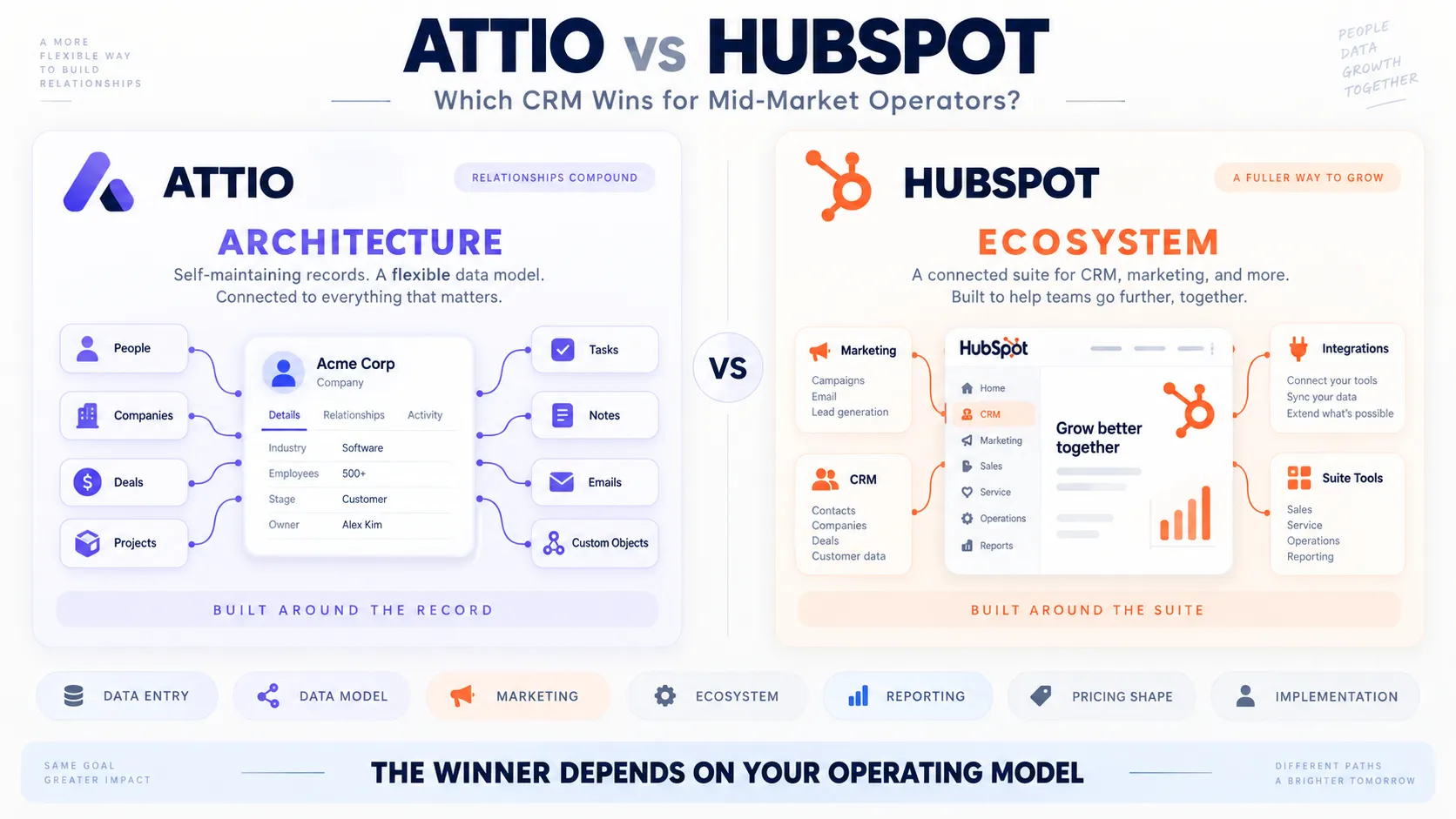
Attio vs HubSpot: Which CRM Wins for Mid-Market Operators?
Attio vs HubSpot is one bet, not fifty features: Attio bets on architecture, an AI-native CRM that does its own data entry on a flexible data model. HubSpot bets on ecosystem, a mature suite where marketing automation and integrations run deep. Attio wins operators whose marketing lives outside the CRM. HubSpot wins teams whose revenue engine runs on the suite.
Read →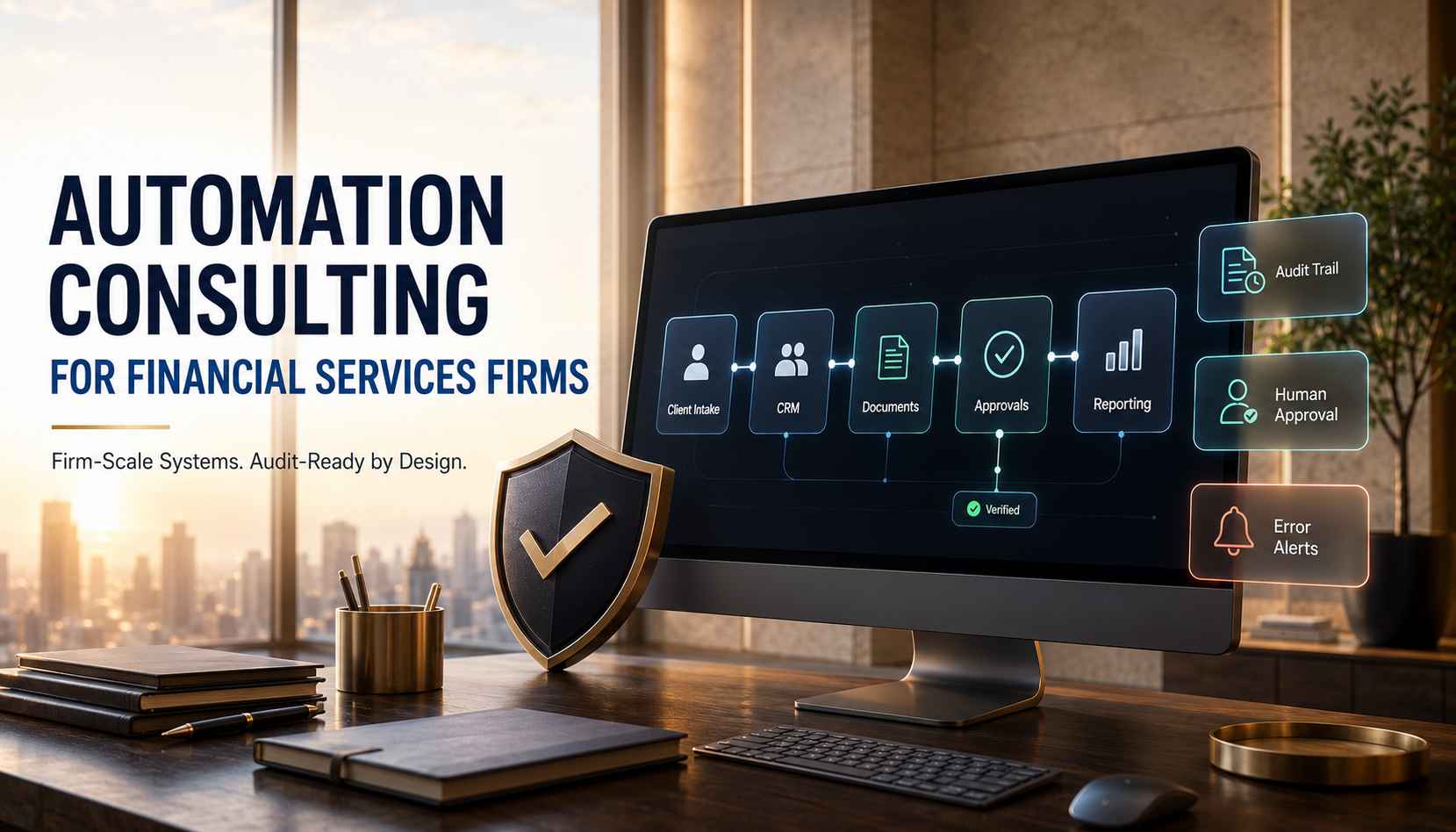
Automation Consulting for Financial Services: A Guide for Firms, Not Banks
Automation consulting for financial services splits into two very different markets. Institutions buy enterprise platforms and multi-year programs. Firms in the $10M-$50M range need workflow automation on the systems they already run, built with audit trails by default. This guide serves the second market, on purpose.
Read →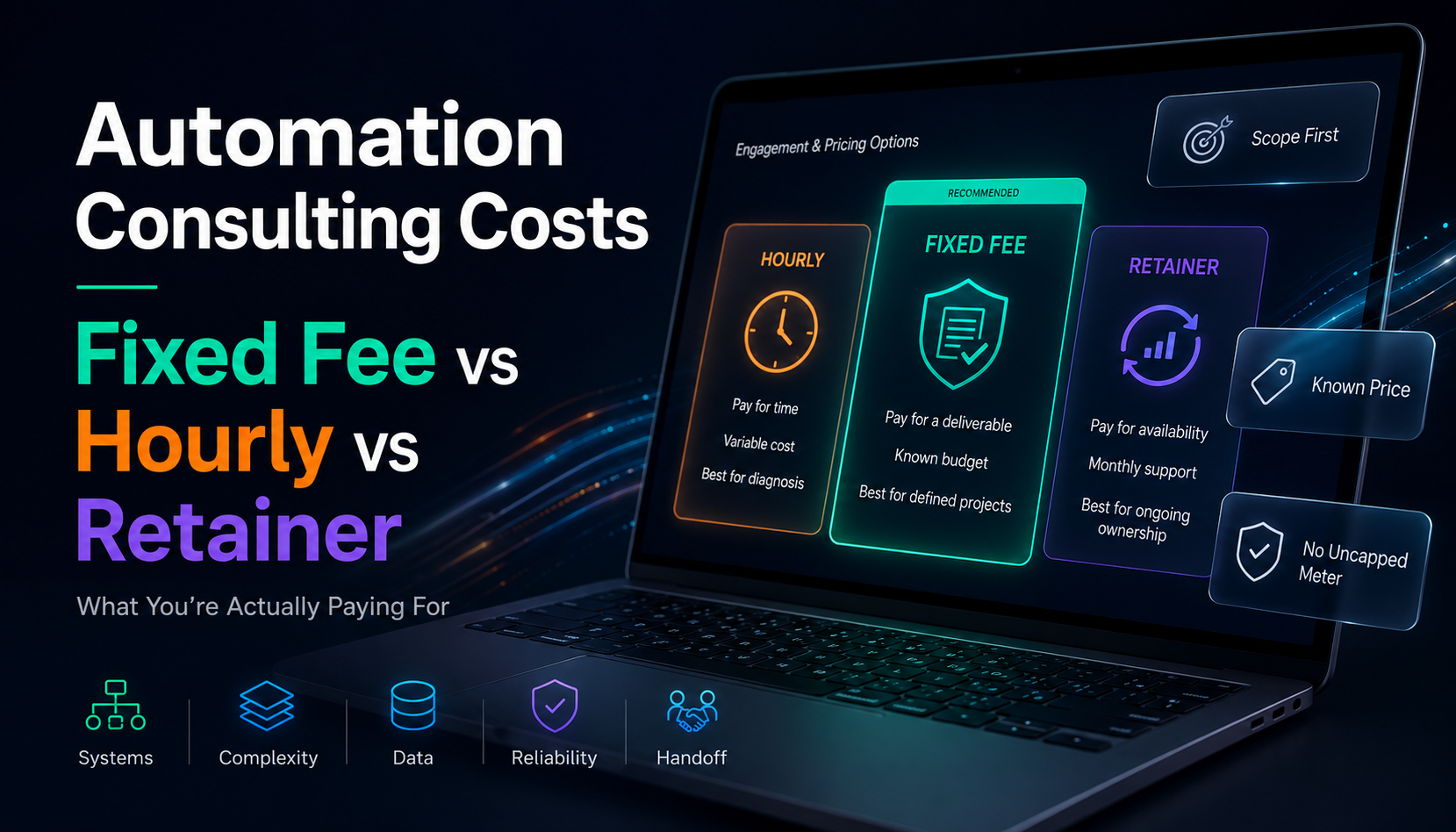
What Automation Consulting Costs: Fixed Fee vs Hourly vs Retainer
Automation consulting costs follow three models. Hourly rates run roughly $100 to $300 in the US market. Retainers run four figures monthly and up. Fixed-fee projects price the deliverable instead of the clock. Cost is a scope function, not a price tag, and the model you pick decides how the incentives point.
Read →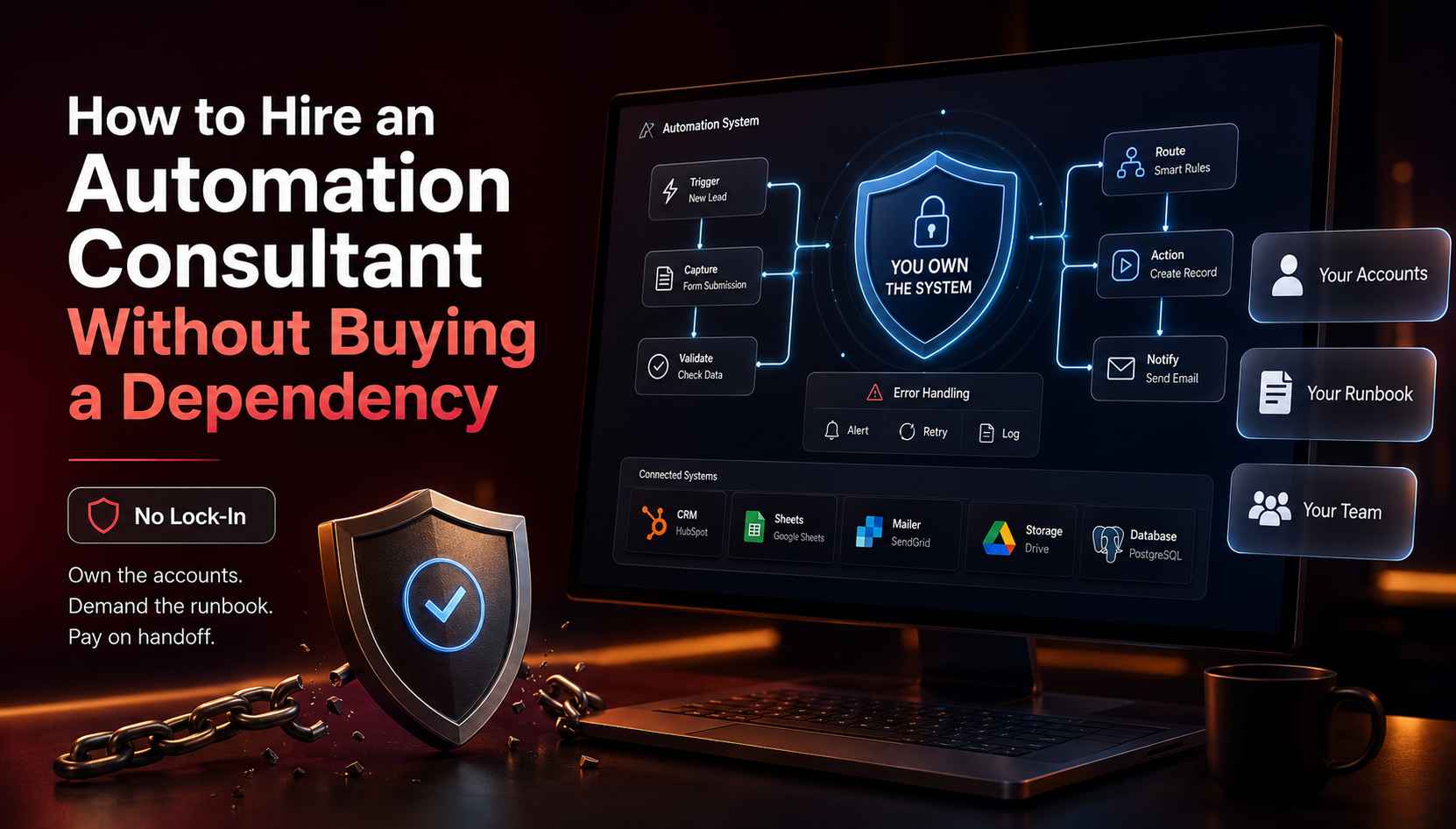
How to Hire an Automation Consultant Without Buying a Dependency
Hire an automation consultant the way you would hire a builder for a house you plan to live in alone. Own the accounts. Demand the runbook. Tie final payment to the handoff. Five lock-in vectors decide your freedom, and every one is negotiable before signing.
Read →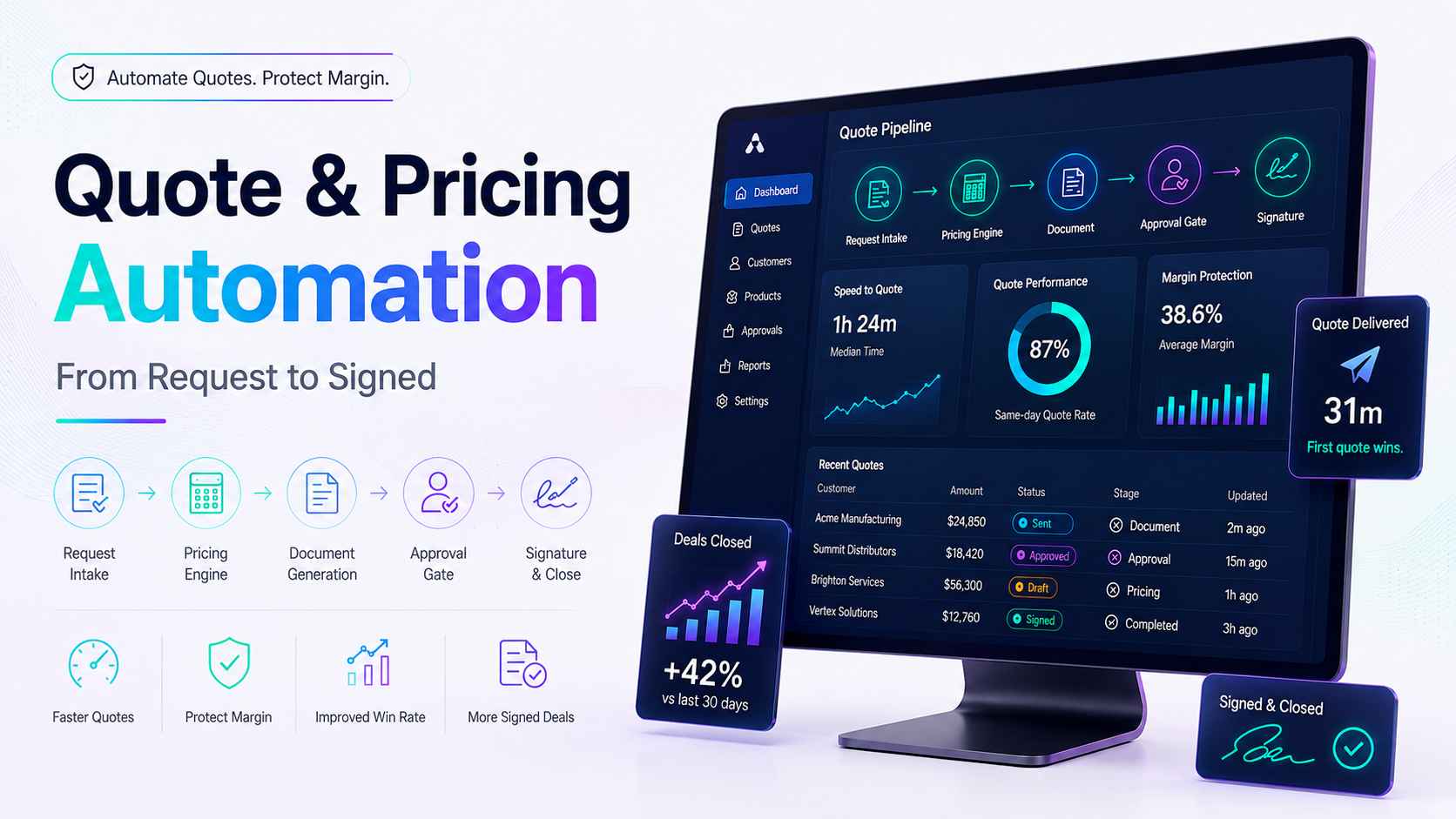
Quote and Pricing Automation: From Request to Signed
Quote and pricing automation turns a request into a signed document without manual math. Five stages: intake, pricing engine, document, approval, signature. The engine calculates. The rules guard margin. The clock measures everything. Quote speed is a pricing decision, because slow quotes discount themselves.
Read →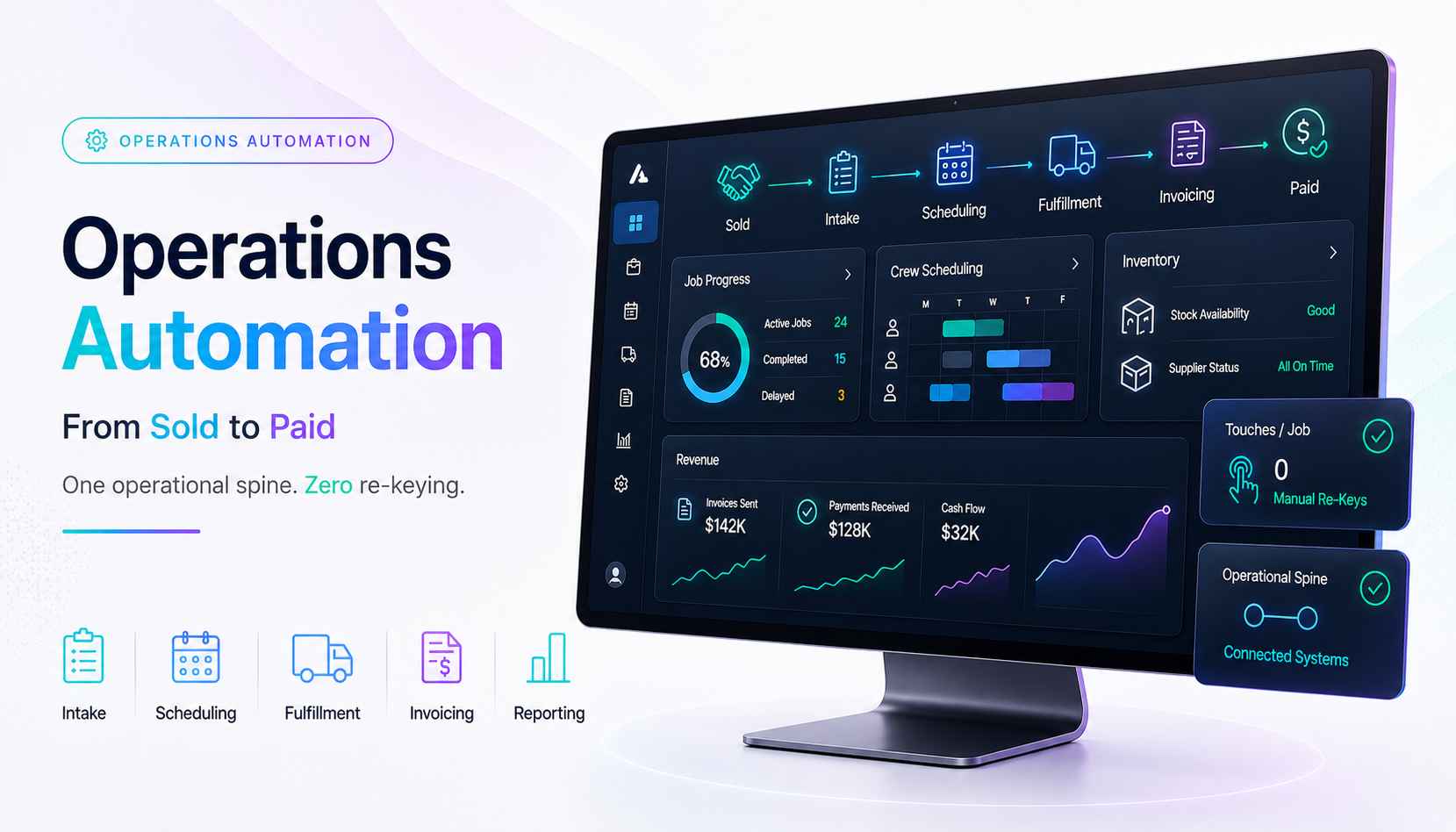
What Is Operations Automation? An Operator's Definition
Operations automation is the work that moves a job from sold to paid without anyone re-typing it. Six links form the operational spine: intake, scheduling, fulfillment, inventory, invoicing, reporting. Automate the spine before the edges, and measure it in touches per job.
Read →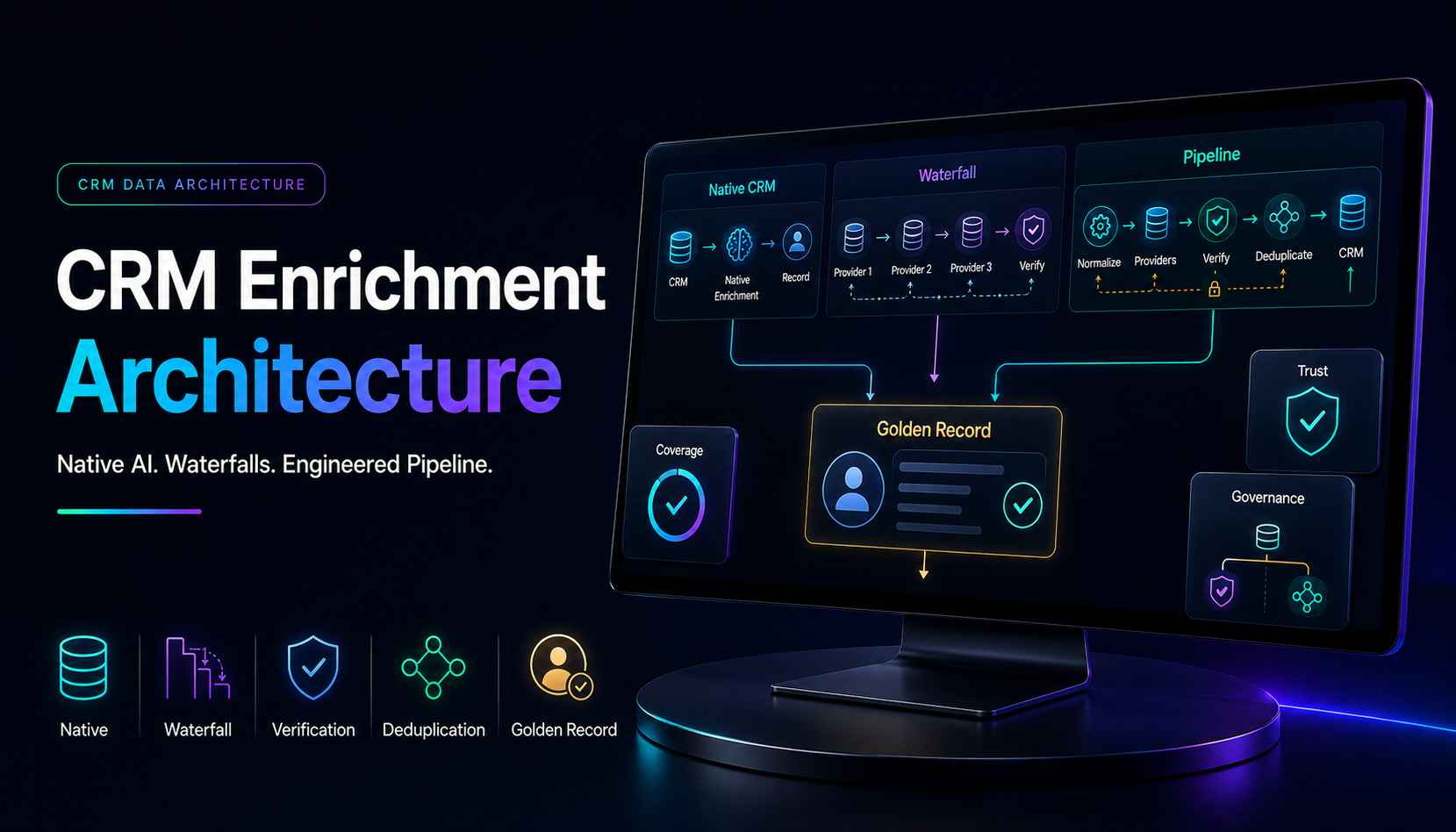
CRM Enrichment Architecture: Waterfalls, Clay, and Native AI
CRM enrichment architecture is the design that decides how your records get their data. Three designs exist. Native enrichment inside the CRM. Waterfall orchestration across many providers. The engineered pipeline built for governance. Coverage is a vendor metric. Trust is an operator metric. Pick the architecture that serves the second.
Read →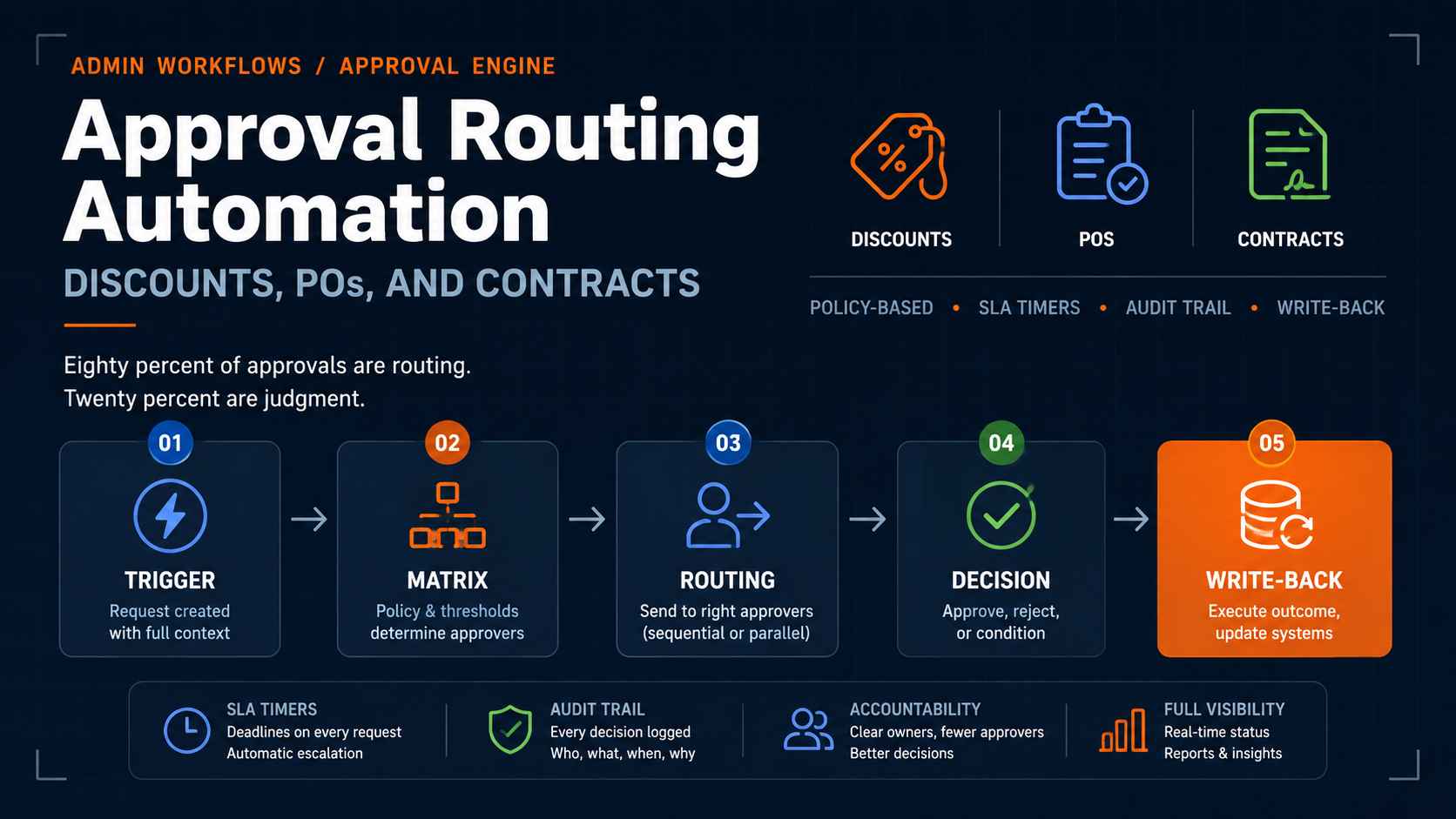
Approval Routing Automation: Discounts, POs, and Contracts
Approval routing automation moves requests through a policy matrix instead of an inbox: trigger, matrix, routing, decision capture, write-back. Eighty percent of approvals are pure routing. Twenty percent are judgment. Automate the eighty to protect the twenty, and put a timer on everything.
Read →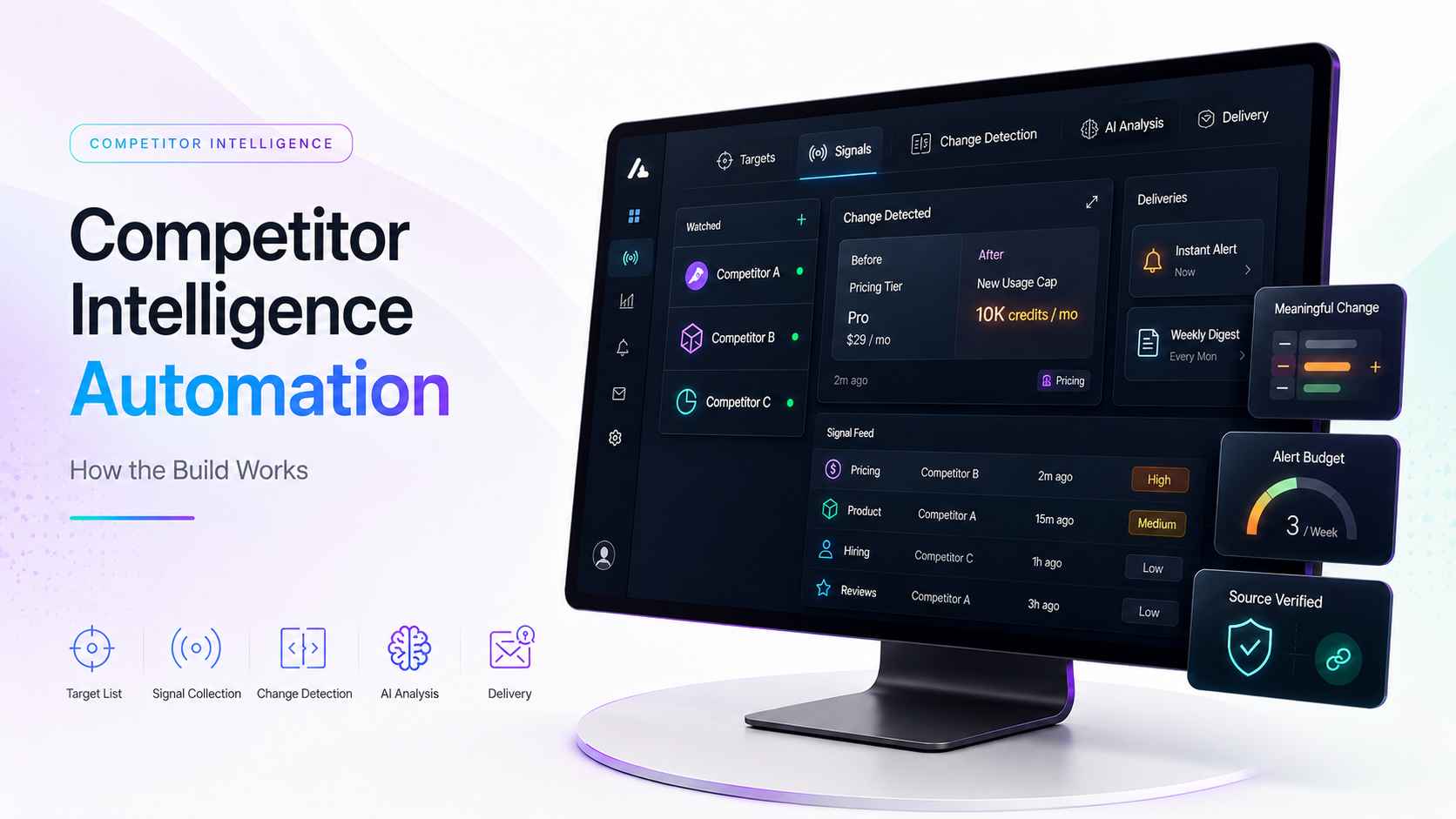
Competitor Intelligence Automation: How the Build Works
Competitor intelligence automation watches your rivals continuously and delivers only the changes that matter. Five stages: target list, signal collection, change detection, AI analysis, delivery. Monitor the delta, not the page. Budget the alerts, or the noise wins and the channel gets muted.
Read →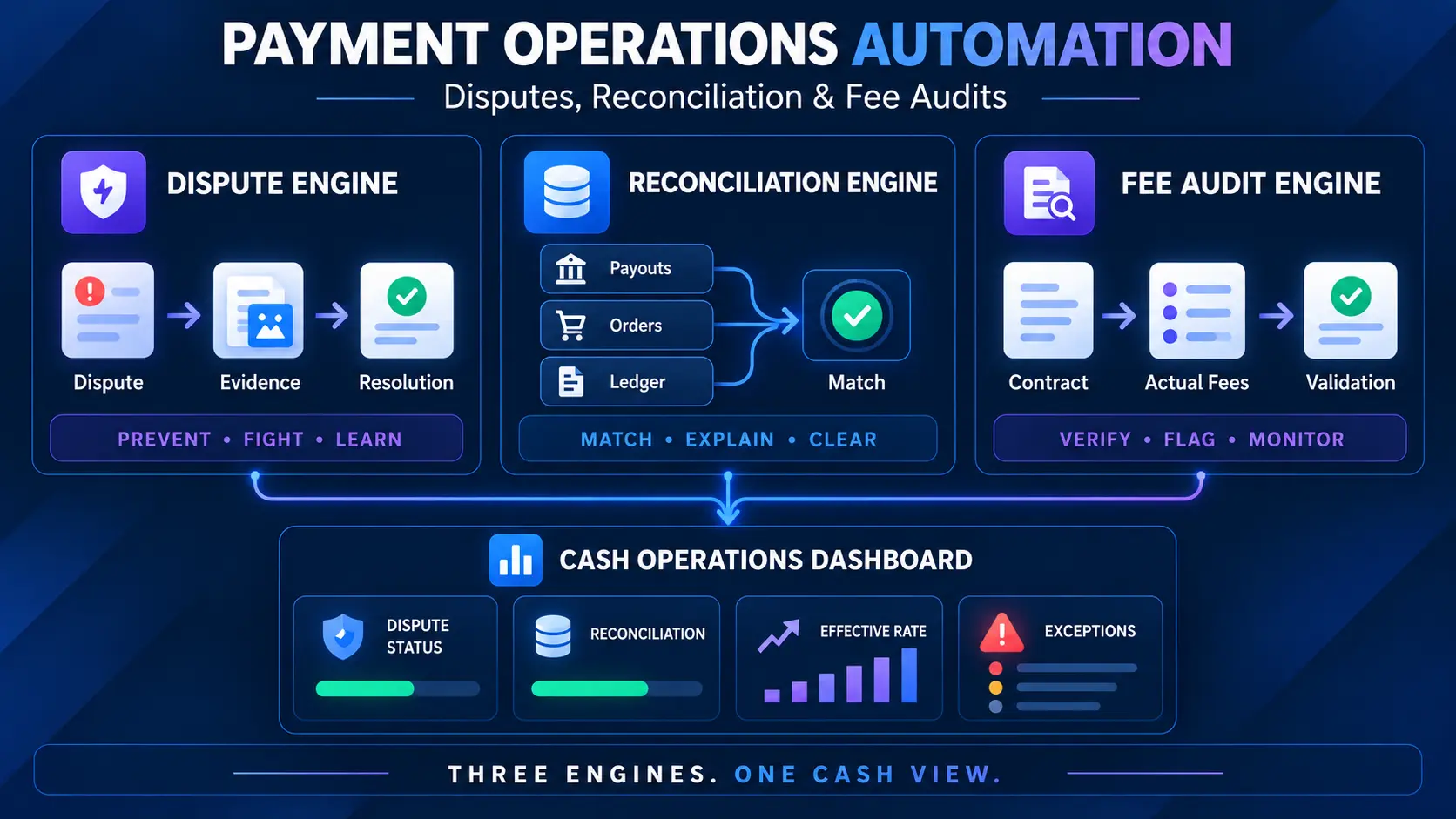
Payment Operations Automation: Disputes, Reconciliation, Fee Audits
Payment operations automation runs three engines: a dispute engine that prevents, fights, and learns; a reconciliation engine that matches every payout to the penny daily; and a fee-audit engine that checks every cycle against your contract. Every dispute is a data point wearing a fee. A payout is a batch wearing a total.
Read →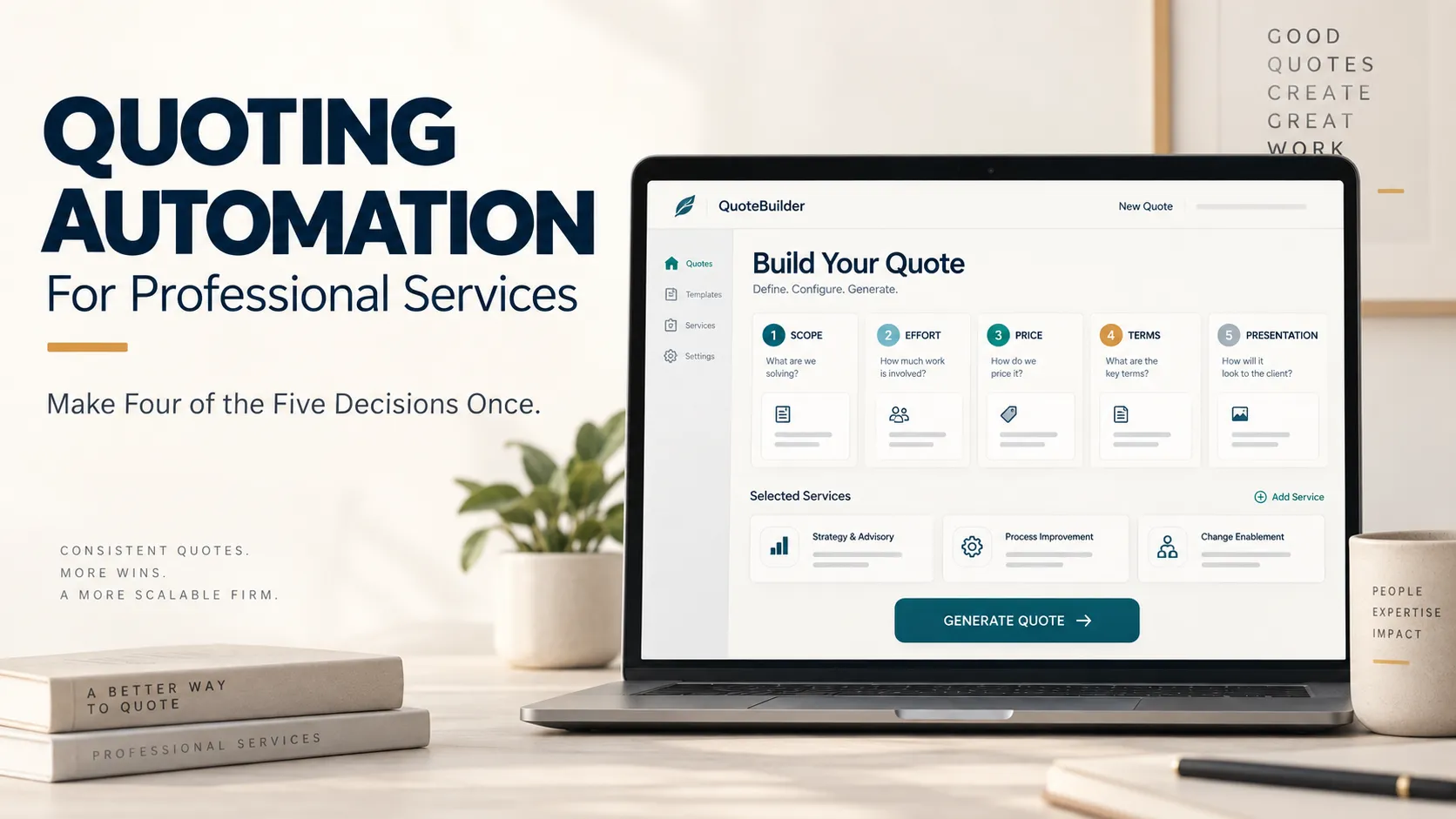
Quoting Automation for Professional Services: Make Four of the Five Decisions Once
Quoting automation for professional services relocates the decisions inside every quote into one governed system. A quote is five decisions: scope, effort, price, terms, and presentation, in that order. Slow firms make all five per quote. From scratch. Under deadline. Every single time. Fast firms made four of them last year. Once. Inside a system they govern. Their quote time goes to the one decision that still deserves human attention on every single deal.
Read →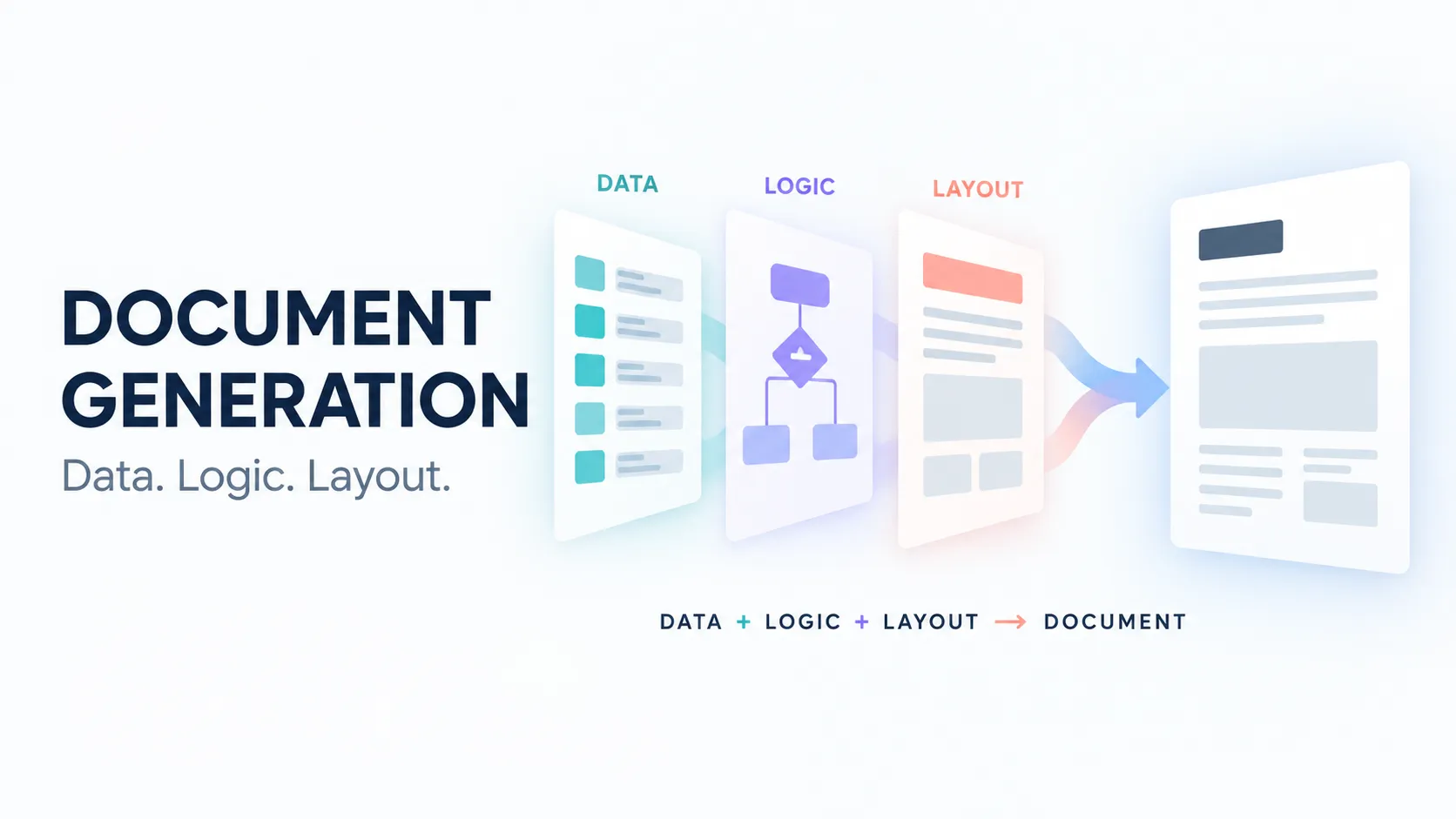
Document Generation: Separate the Data, the Logic, and the Layout
Document generation produces business documents from three separated layers, on demand. Data lives in systems of record. Logic lives in governed rules. Layout lives in templates. A document is data wearing a layout, assembled by logic. Manual drafting welds all three into one file. Every welded file is retyped, reformatted, and re-argued forever.
Read →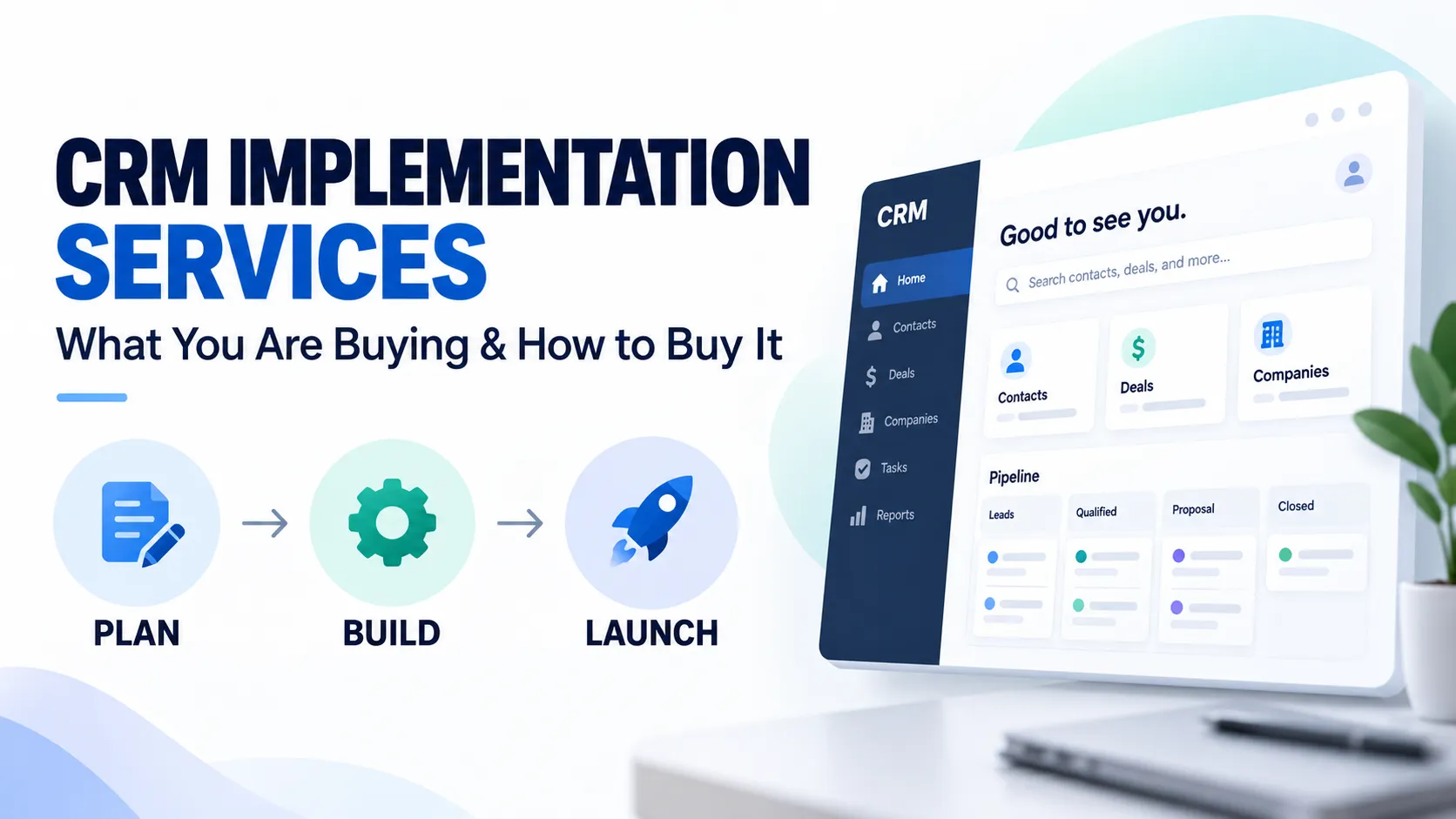
CRM Implementation Services: What You Are Buying and How to Buy It
CRM implementation services turn a software license into an operating system for revenue: process mapped, data migrated, integrations wired, automations built, team trained. Implementations do not fail at configuration. They fail at four handoffs: your process into the map, your data into the system, the build into your team, and launch into operations. Buy the four handoffs deliberately, and the portal takes care of itself.
Read →
Construction Operations Automation: Bid, Turn-In, Scheduling, Dispatch
Construction operations automation connects the systems that already hold your job data, so a job moves from won bid to closed and billed without anyone re-typing it. A job changes hands four times before it is billed: bid to turn-in, turn-in to schedule, schedule to dispatch, and dispatch to billing.
Read →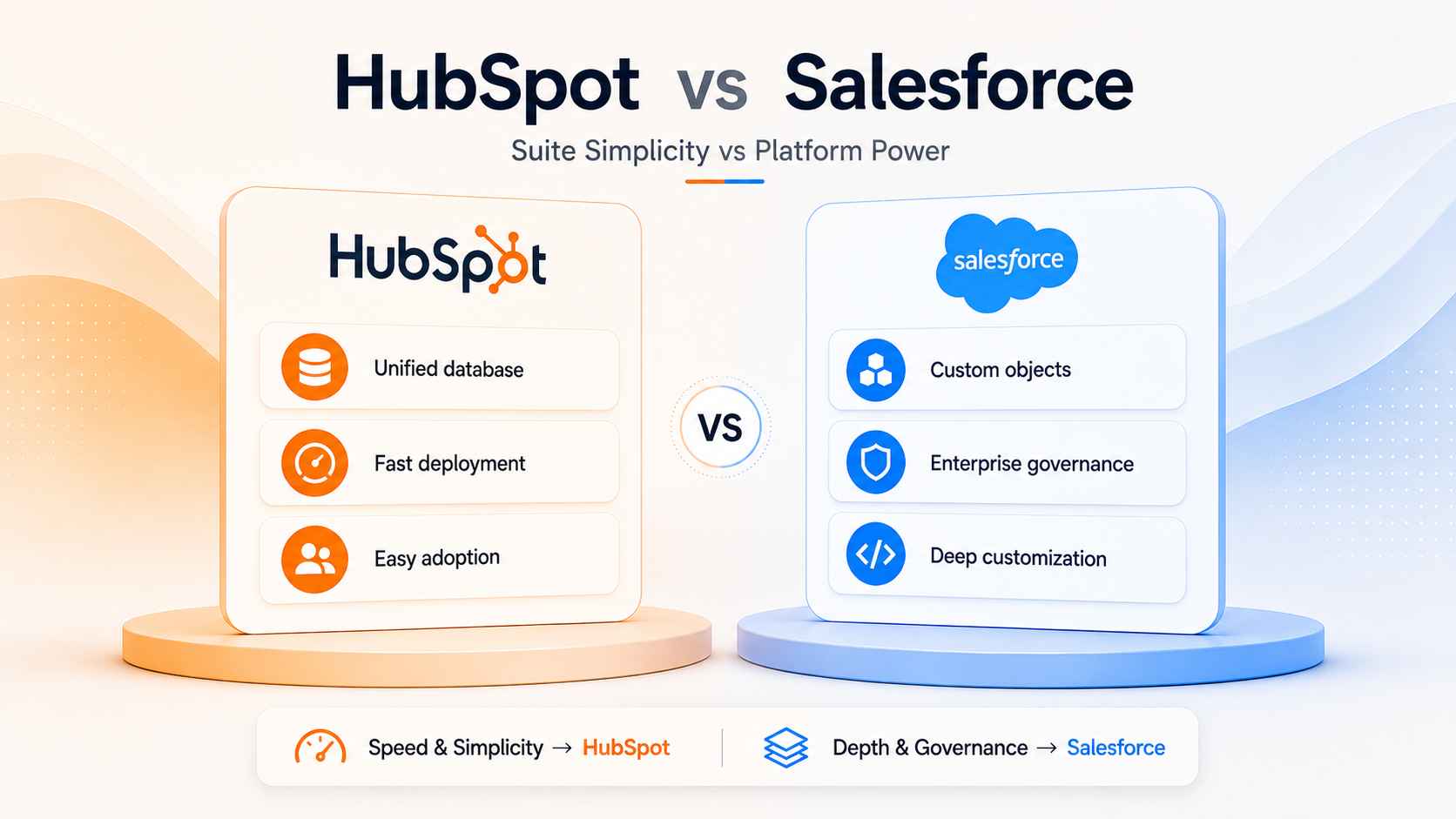
HubSpot vs Salesforce for $10M-$50M Operators
HubSpot vs Salesforce is a suite bet against a platform bet. HubSpot wins on unified marketing and sales with fast time to value. Salesforce wins on data model depth and enterprise governance. For a chunk of $10M-$50M operators, both are the wrong purchase.
Read →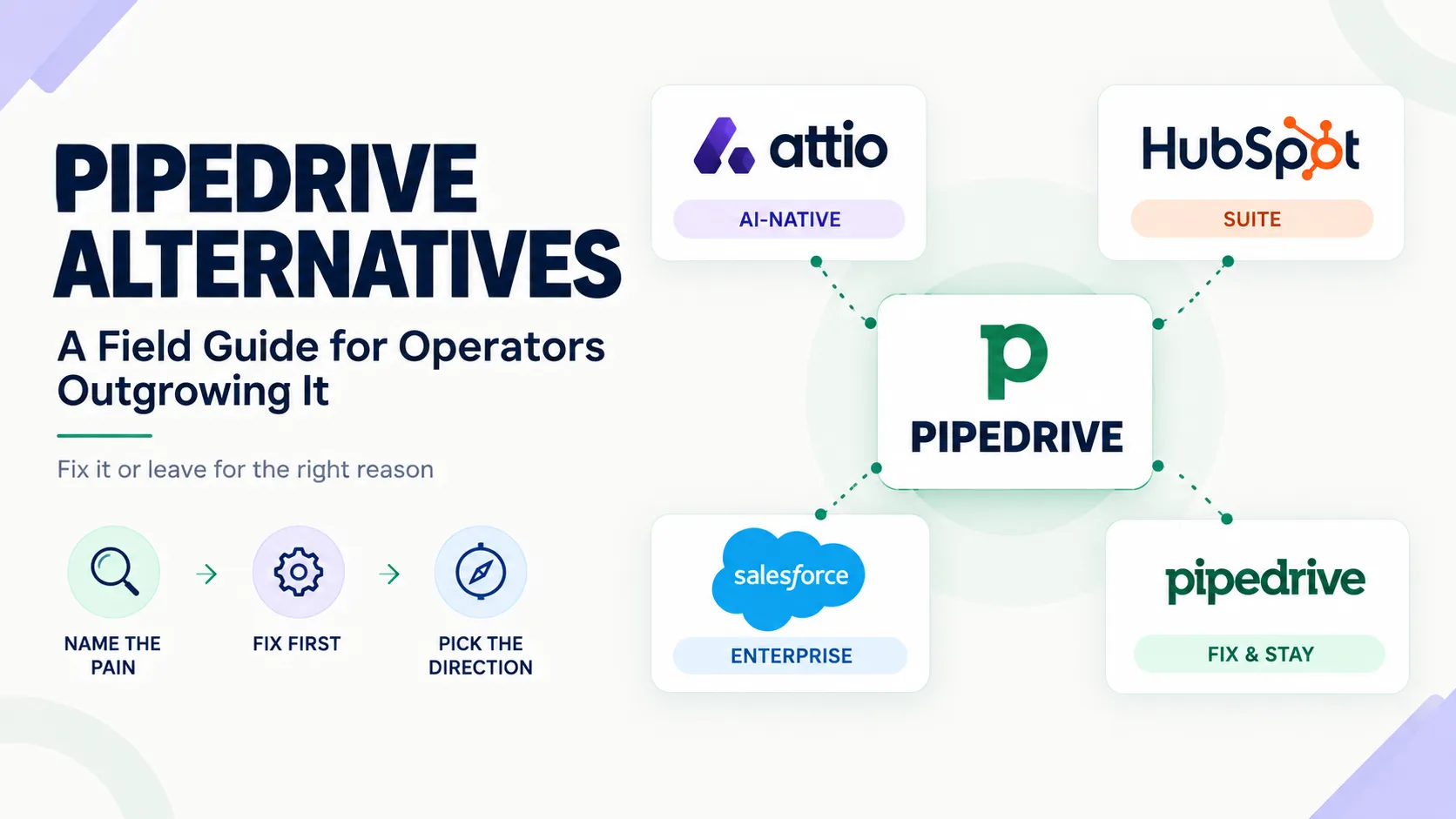
Pipedrive Alternatives: A Field Guide for Operators Outgrowing It
Pipedrive alternatives sort by exit reason, not by feature grid. Data entry fatigue points to AI-native platforms like Attio. Marketing needs point to suite platforms like HubSpot. Enterprise requirements point to Salesforce. An outgrown data model points to flexible-object platforms. And a bad implementation points back inside: fix the build, keep the tool.
Read →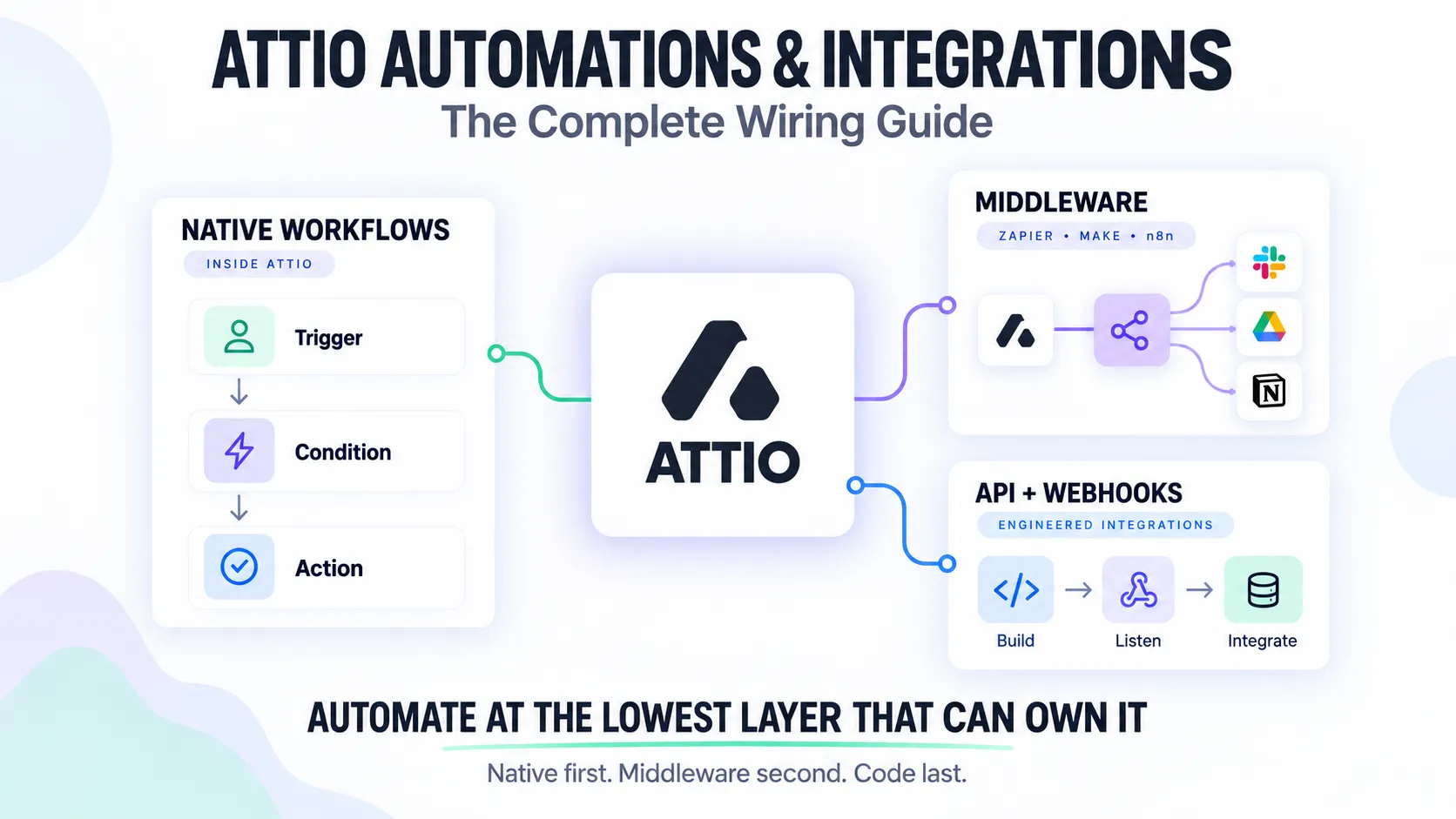
Attio Automations and Integrations: The Complete Wiring Guide
Attio automations run on three layers: native workflows inside the platform, middleware through tools like Zapier, Make, and n8n, and engineered builds on the API and webhooks. One rule governs placement: automate at the lowest layer that can own it. Five builds come first for nearly every operator: capture, enrichment, revenue, ops handoff, and reporting.
Read →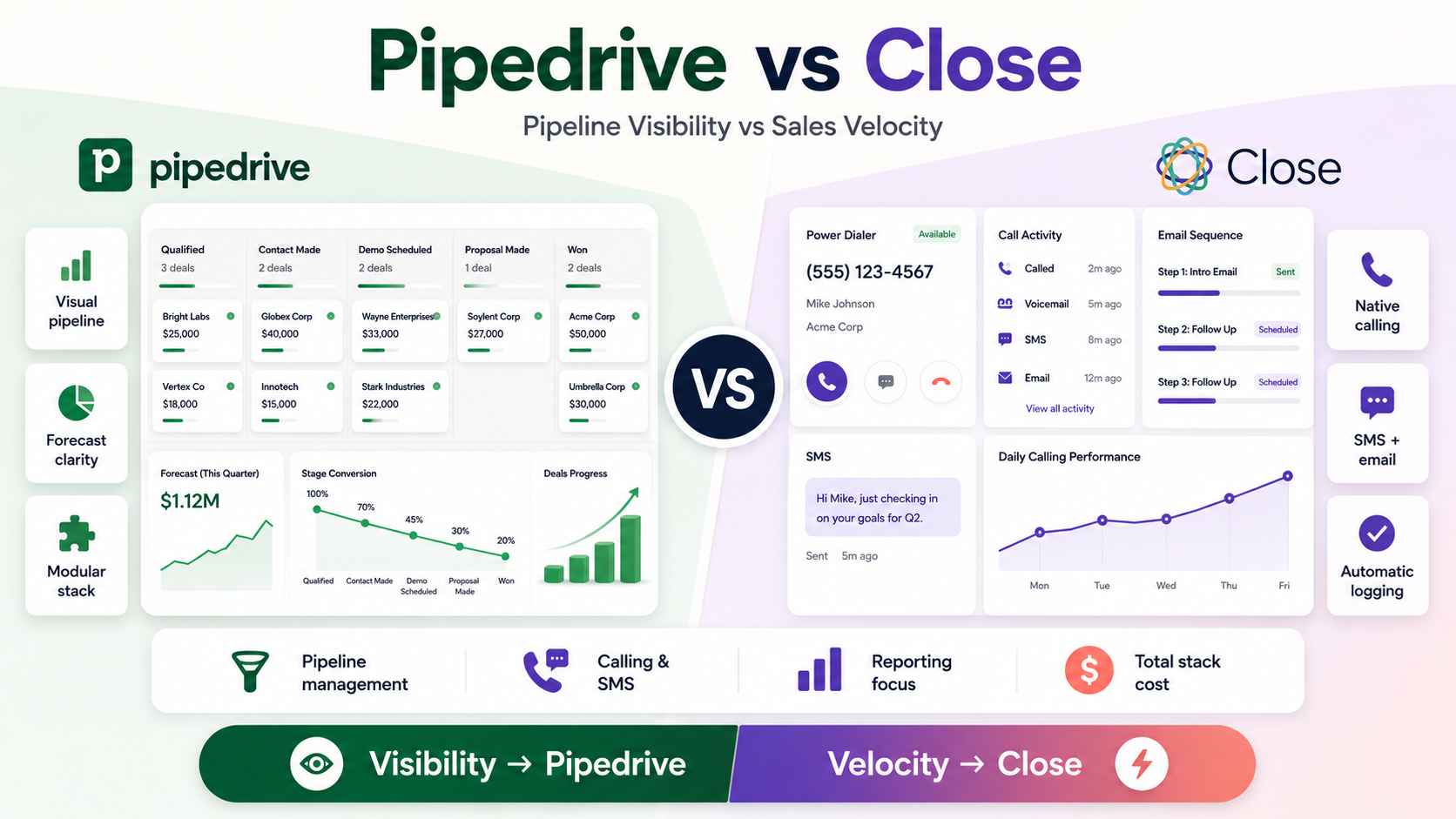
Pipedrive vs Close: The Honest Comparison for Transactional B2B
Pipedrive records the sales motion. Close performs part of it. Pick Close when your reps live on the phone at high volume. Pick Pipedrive when pipeline visibility drives the deal, and keep the calling stack modular.
Read →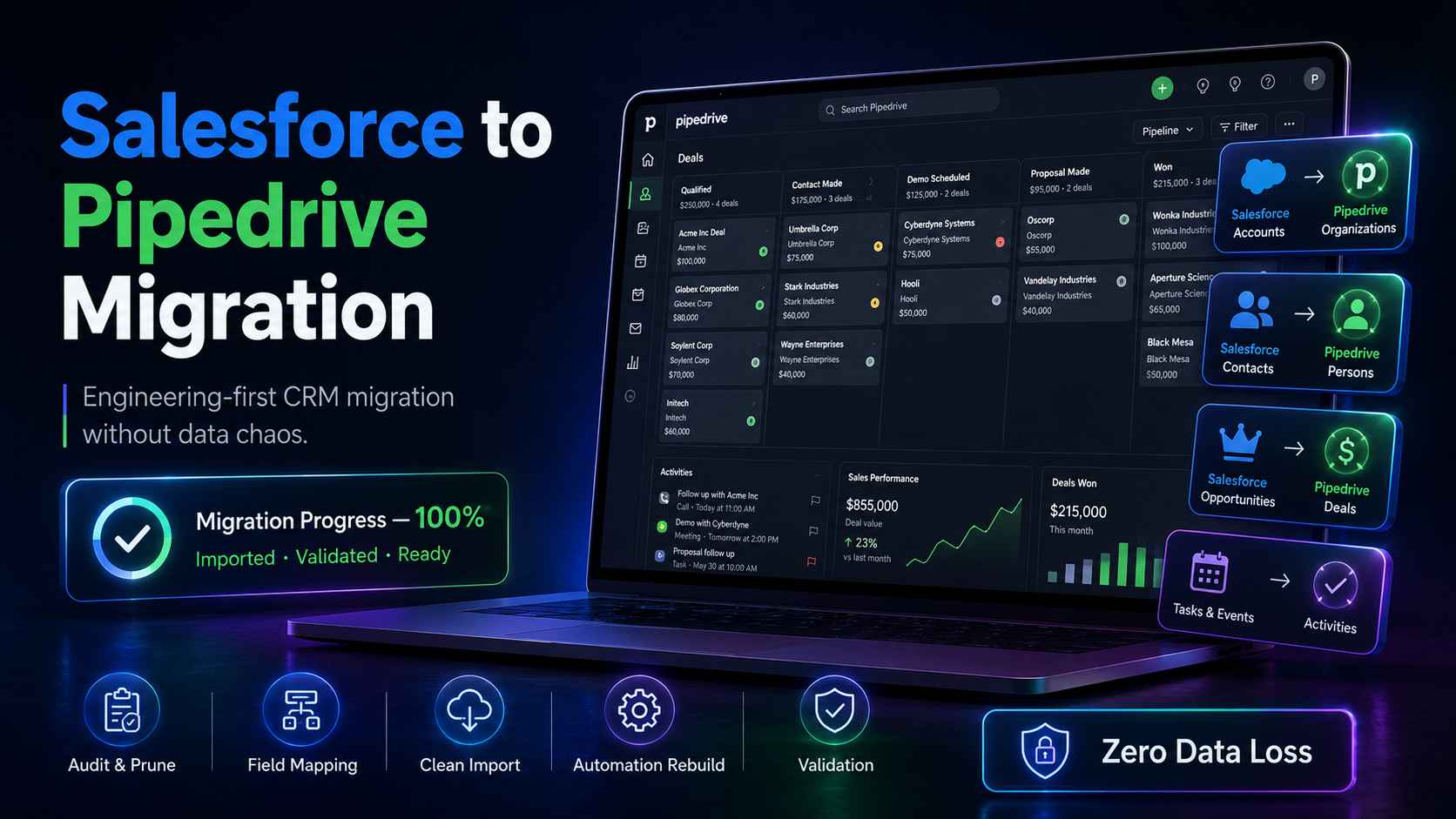
Salesforce to Pipedrive Migration: The Complete Playbook for $10M-$50M Operators
Migrating from Salesforce to Pipedrive is a schema translation project, not a CSV upload. Map the objects first, migrate pruned data second, rebuild automations third, and cut over on a hard date.
Read →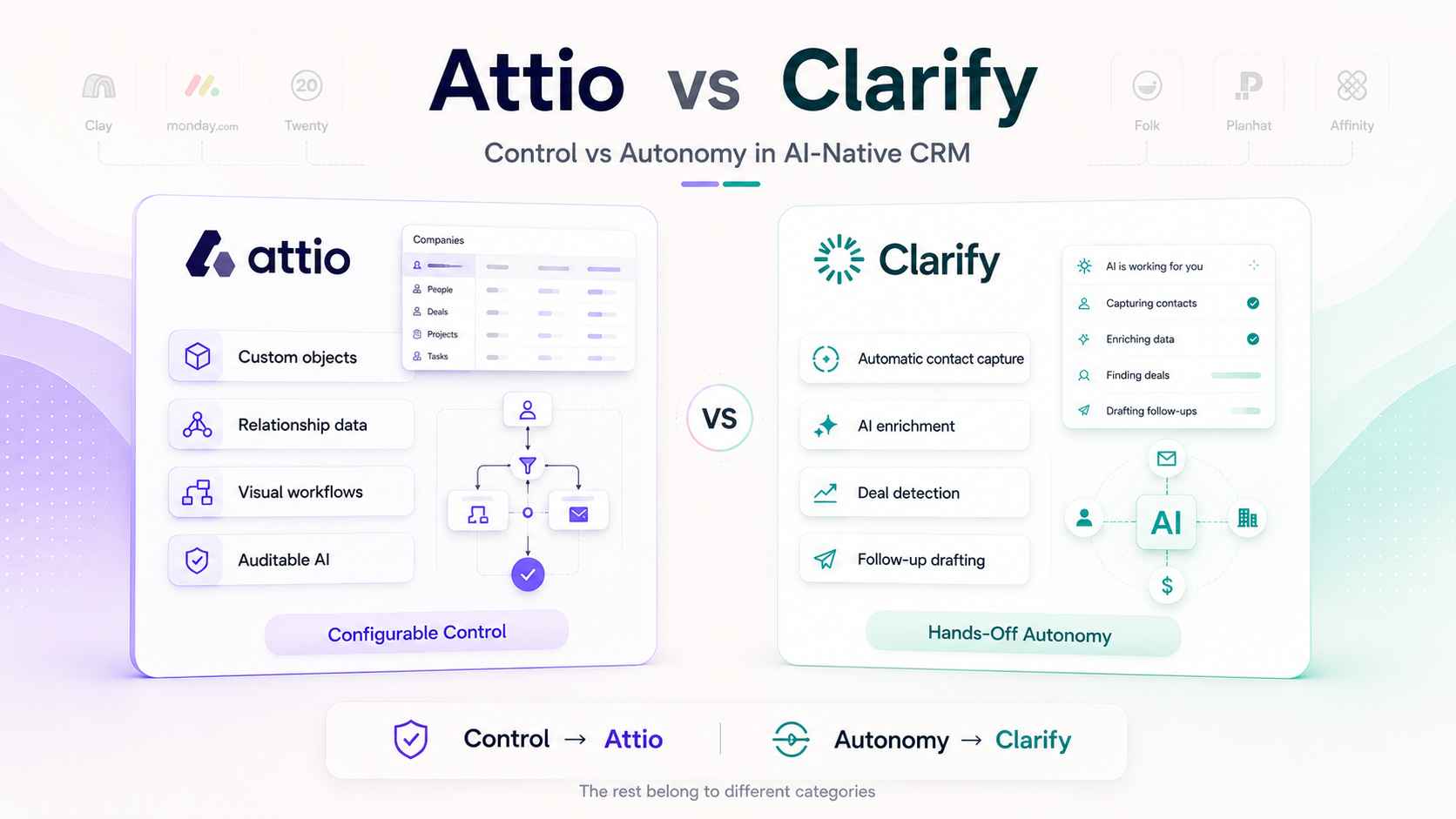
Attio vs Clarify (and the AI-Native CRM Field): An Expert Partner's Sort
Only one name in the Attio comparison field competes head to head, and it is Clarify. Attio bets on configurable control. Clarify bets on hands-off autonomy. The rest of the list is category confusion, sorted below.
Read →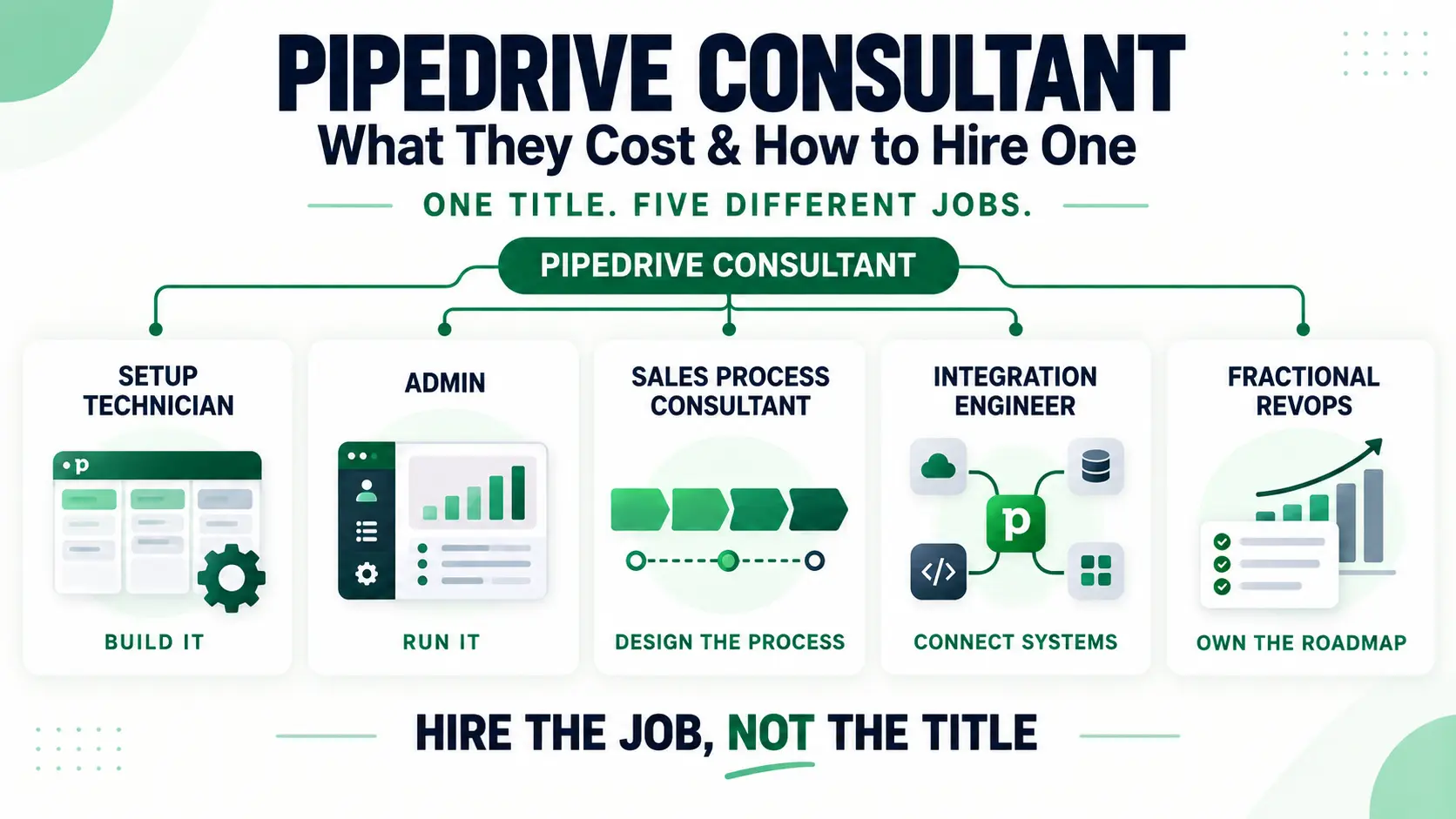
Pipedrive Consultant: What They Cost and How to Hire One
"Pipedrive consultant" is one title covering five different jobs: setup technician, admin for hire, sales process consultant, integration engineer, and fractional RevOps partner. Match the role to your symptom, price the engagement by model, and judge candidates by the questions they ask you. Mismatched roles cause most bad hires.
Read →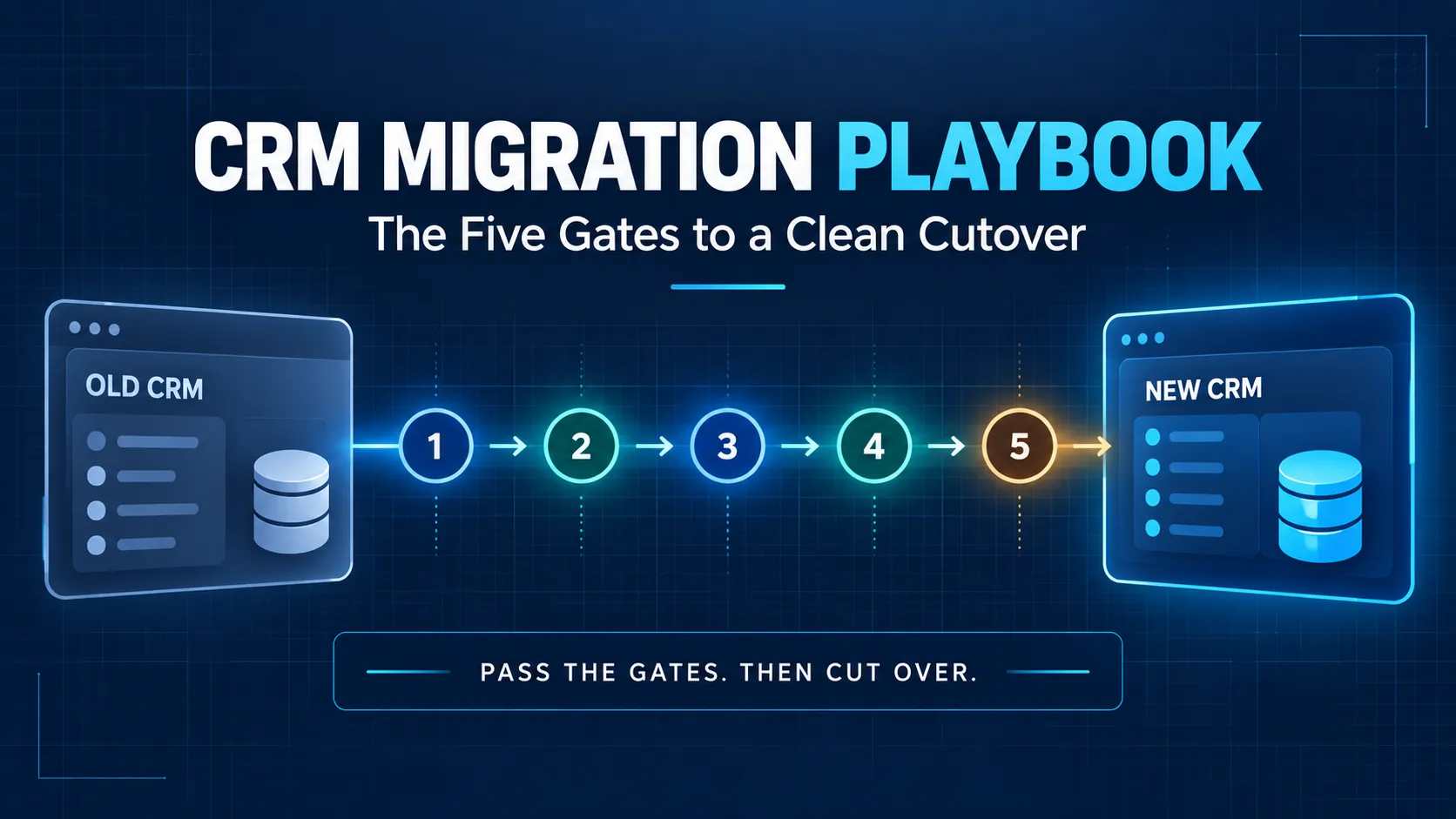
CRM Migration Playbook: The Five Gates Between You and a Clean Cutover
A CRM migration is a data model translation plus an adoption event, run as five gates. The reasons audit. The model map. The sample run. The full run with a parallel period. Cutover with decommission. Each gate has entry criteria and a pass condition, and no gate opens before the last one closes. You do not schedule a migration. You pass its gates, and the calendar takes care of itself.
Read →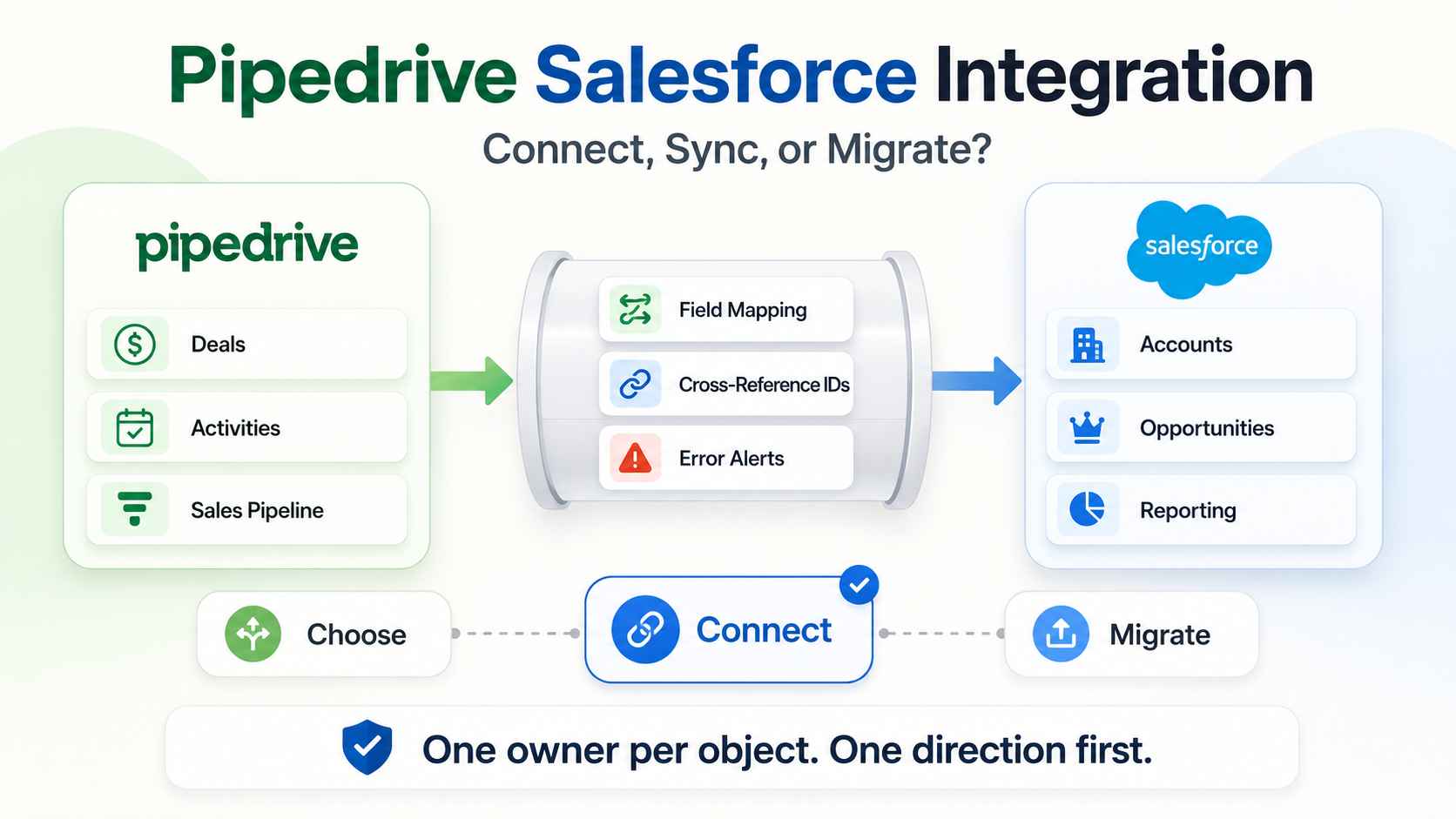
Pipedrive Salesforce Integration: When to Connect Instead of Migrate
Integrating Pipedrive with Salesforce is a data architecture project, not an app install. Define a system of record per object, start one-way, build error alerting, and know when the sync is really a postponed migration.
Read →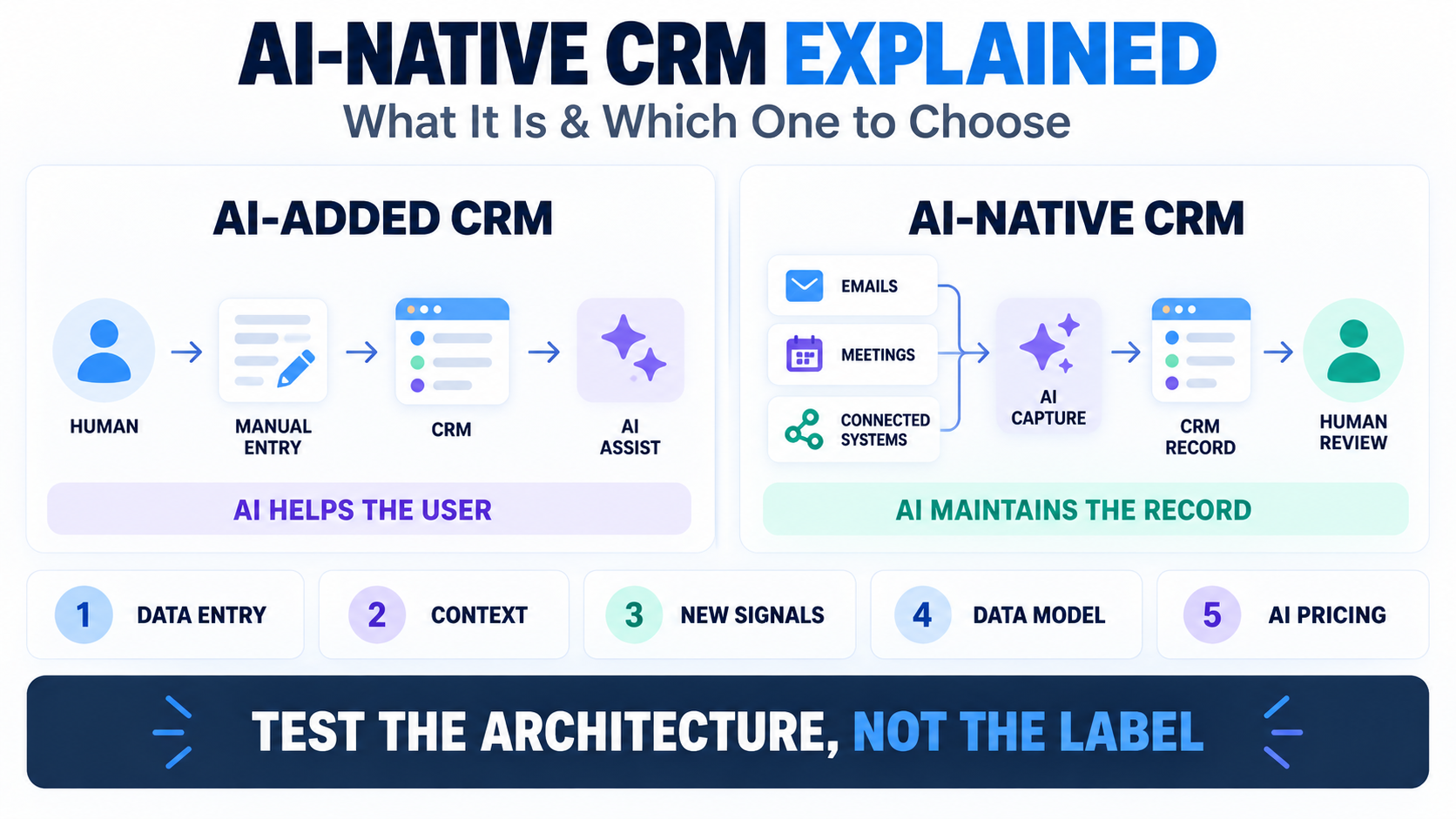
AI-Native CRM Explained: What It Is and Which One to Choose
An AI-native CRM is built with AI as the record-keeper, not the assistant: it captures, enriches, and maintains customer data itself, on a flexible data model, without add-on AI pricing. Five tests separate native from AI-added. For $10M-$50M operators wanting a CRM that does its own data entry, Attio is our pick, disclosed and conditional.
Read →
Attio vs Salesforce: Architecture vs Governance for Growing Operators
Attio vs Salesforce is three questions wearing one search: a mid-market operator choosing a serious CRM, a team weighing a Salesforce exit, and a scaling company asking when Salesforce becomes necessary. Attio bets on self-maintaining records and speed. Salesforce bets on governed depth. Four triggers legitimize Salesforce. Short of them, the lighter architecture usually wins.
Read →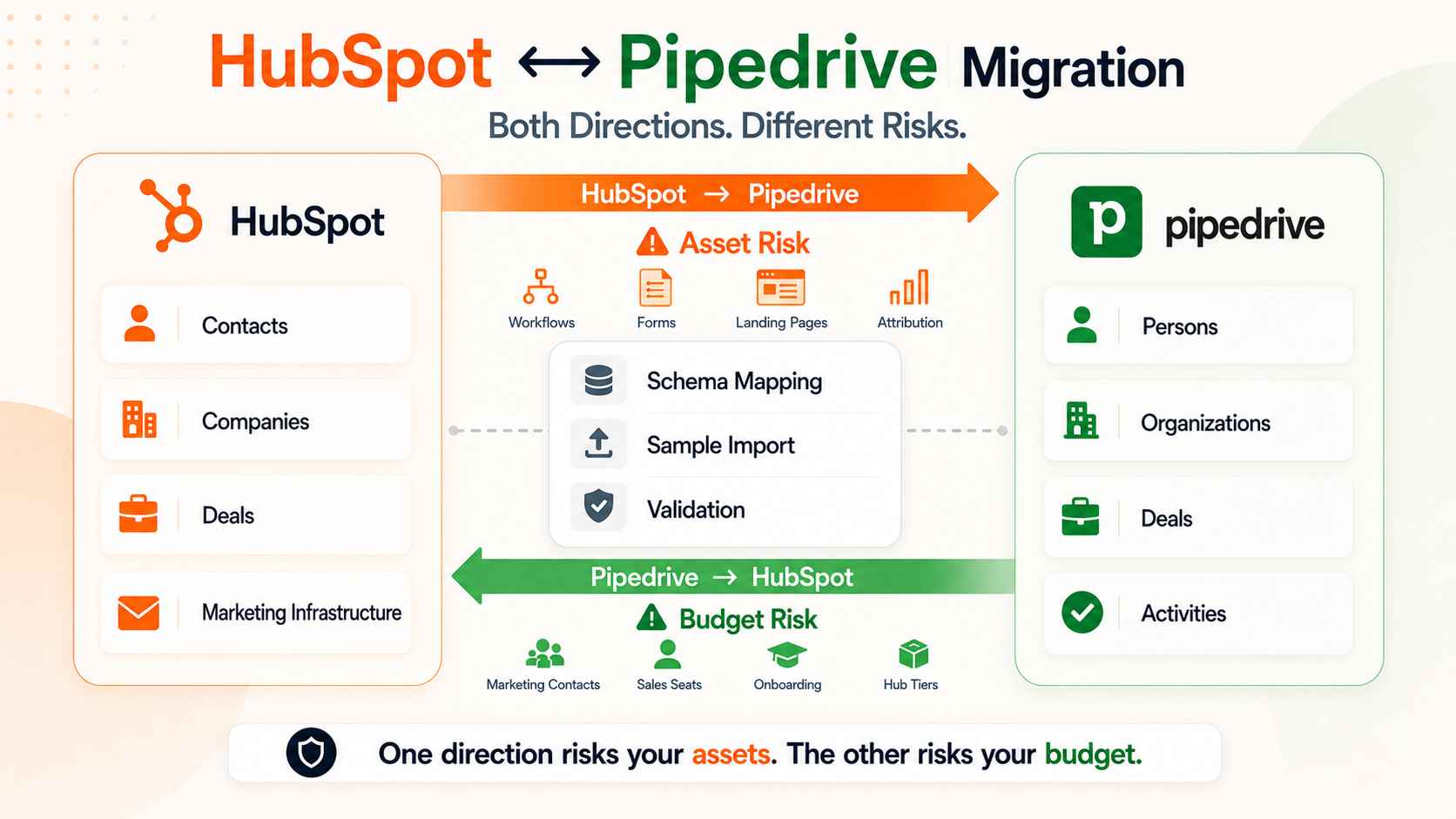
HubSpot to Pipedrive Migration (Both Directions): The Complete Playbook
HubSpot and Pipedrive migrations run both directions for opposite reasons. Cost and simplicity pull teams to Pipedrive. Marketing consolidation pulls teams to HubSpot. Same playbook, different traps, and this guide covers both.
Read →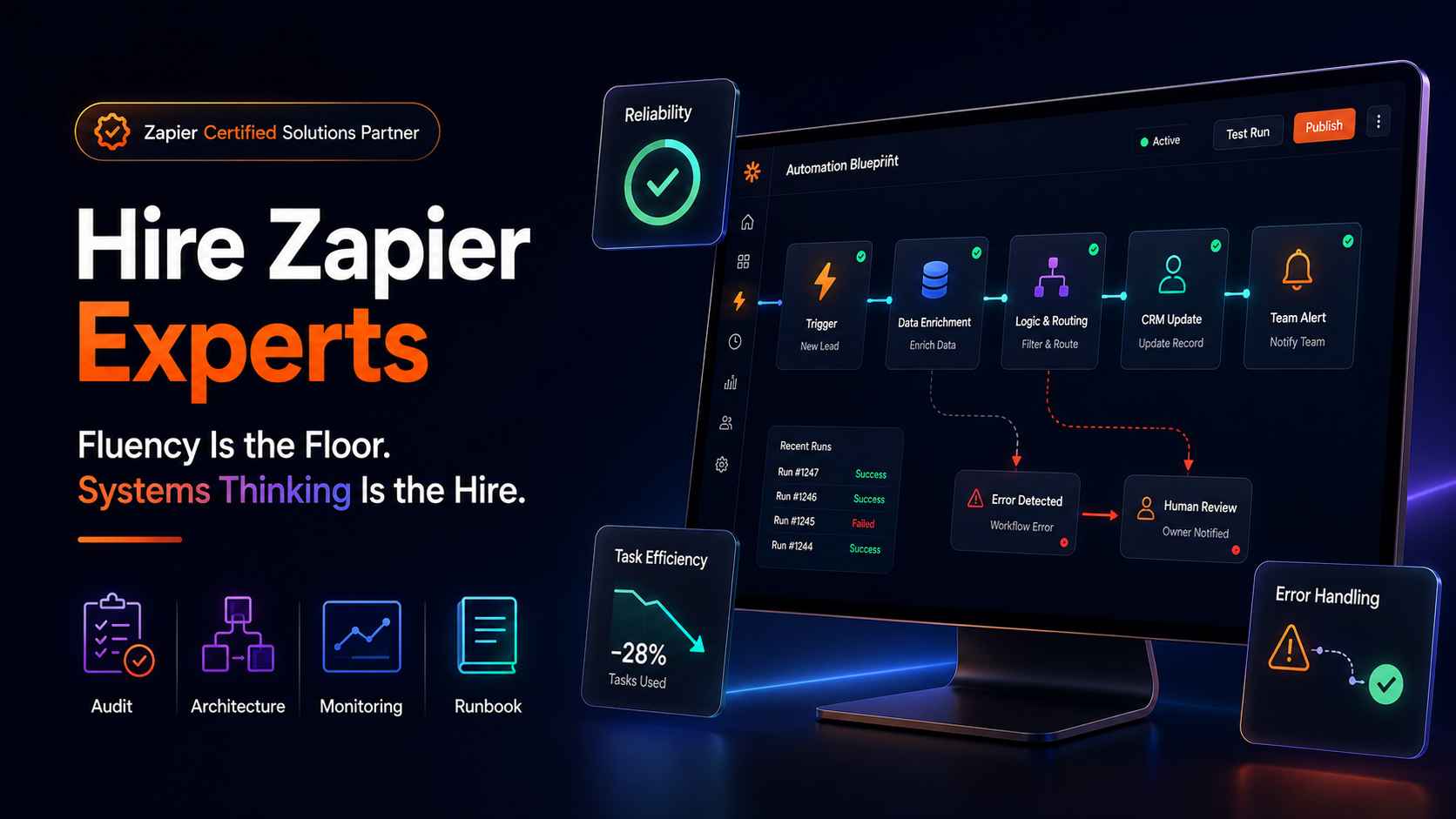
Hire Zapier Experts: What the Certified Solutions Partner Credential Actually Means
Zapier's Solution Partner program verifies tool fluency through certifications, client outcomes, and a vetted directory. Hire for systems thinking on top of it. The test of a good expert is simple: your automations get more reliable and your task bill goes down.
Read →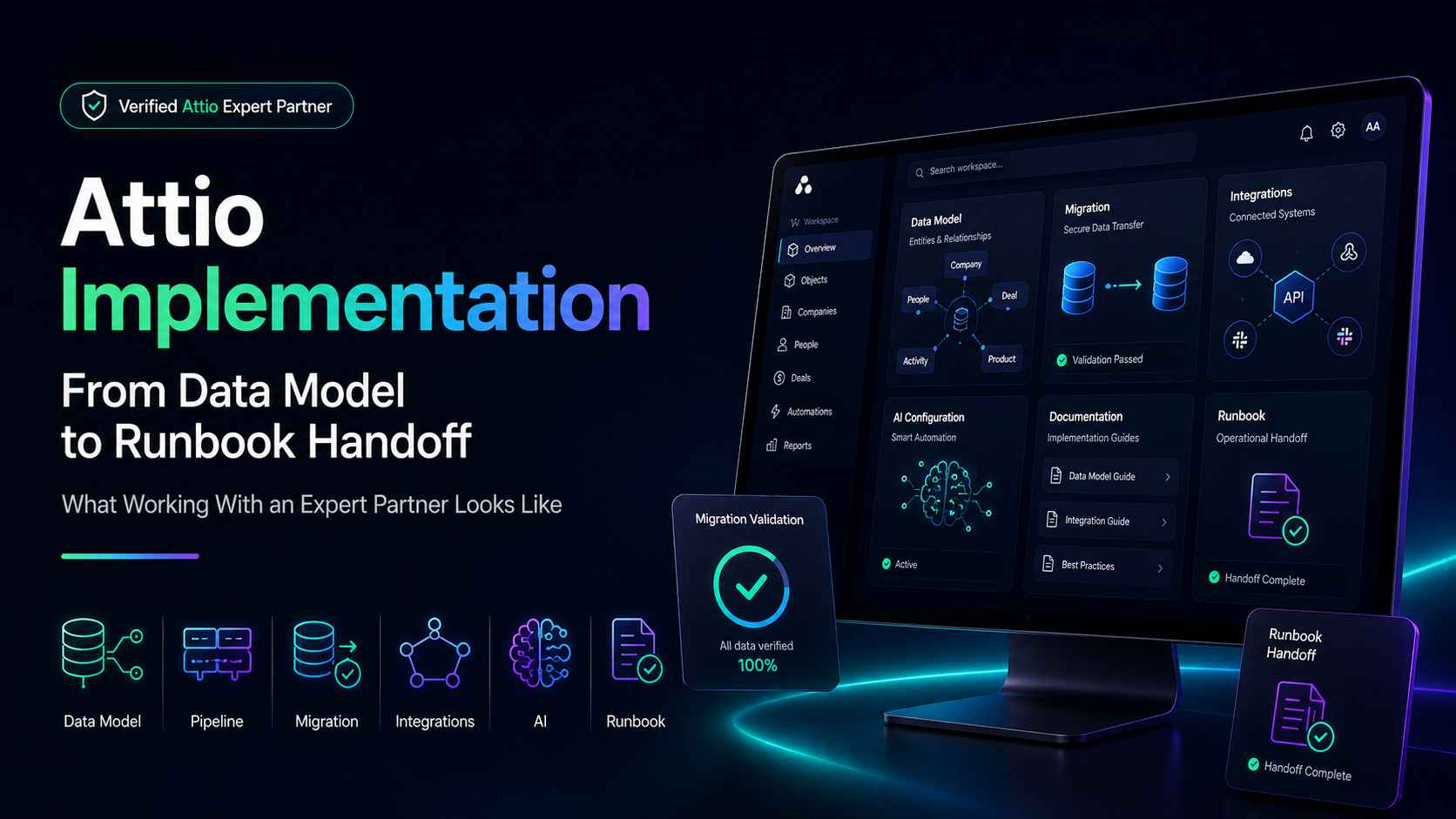
Attio Implementation: What Working with an Attio Expert Partner Looks Like
An Attio implementation is a data modeling project wearing a CRM badge. The Expert Partner program verifies shipped work, not license sales. Here is what the engagement contains, what it costs in structure, and when you honestly do not need one.
Read →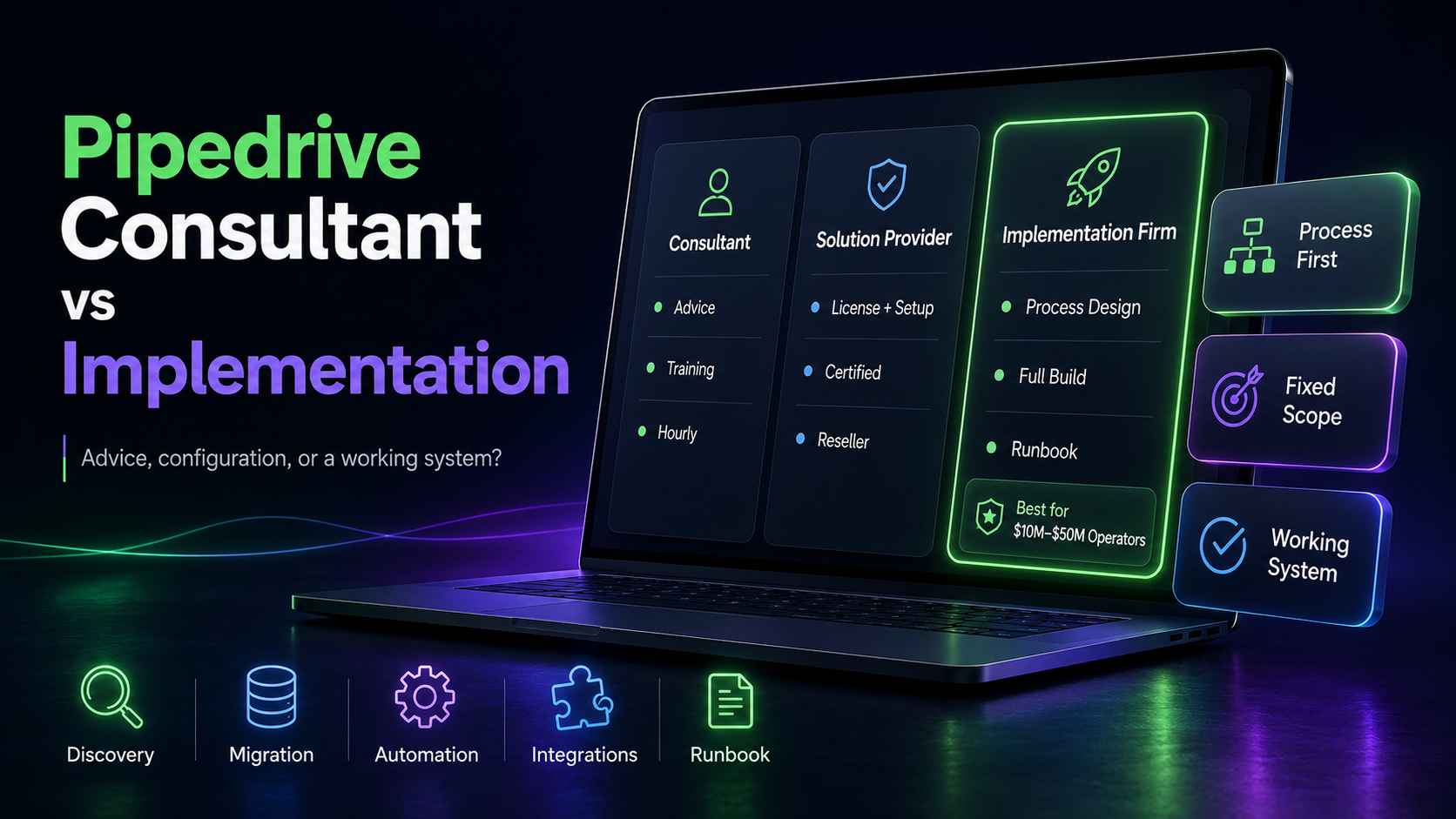
Pipedrive Consultant vs Pipedrive Implementation: What $10M-$50M Operators Should Hire
A Pipedrive consultant sells advice and configuration. An implementation firm designs the process, builds the system, and hands you a runbook. At $10M-$50M revenue, hire for the outcome, not the badge.
Read →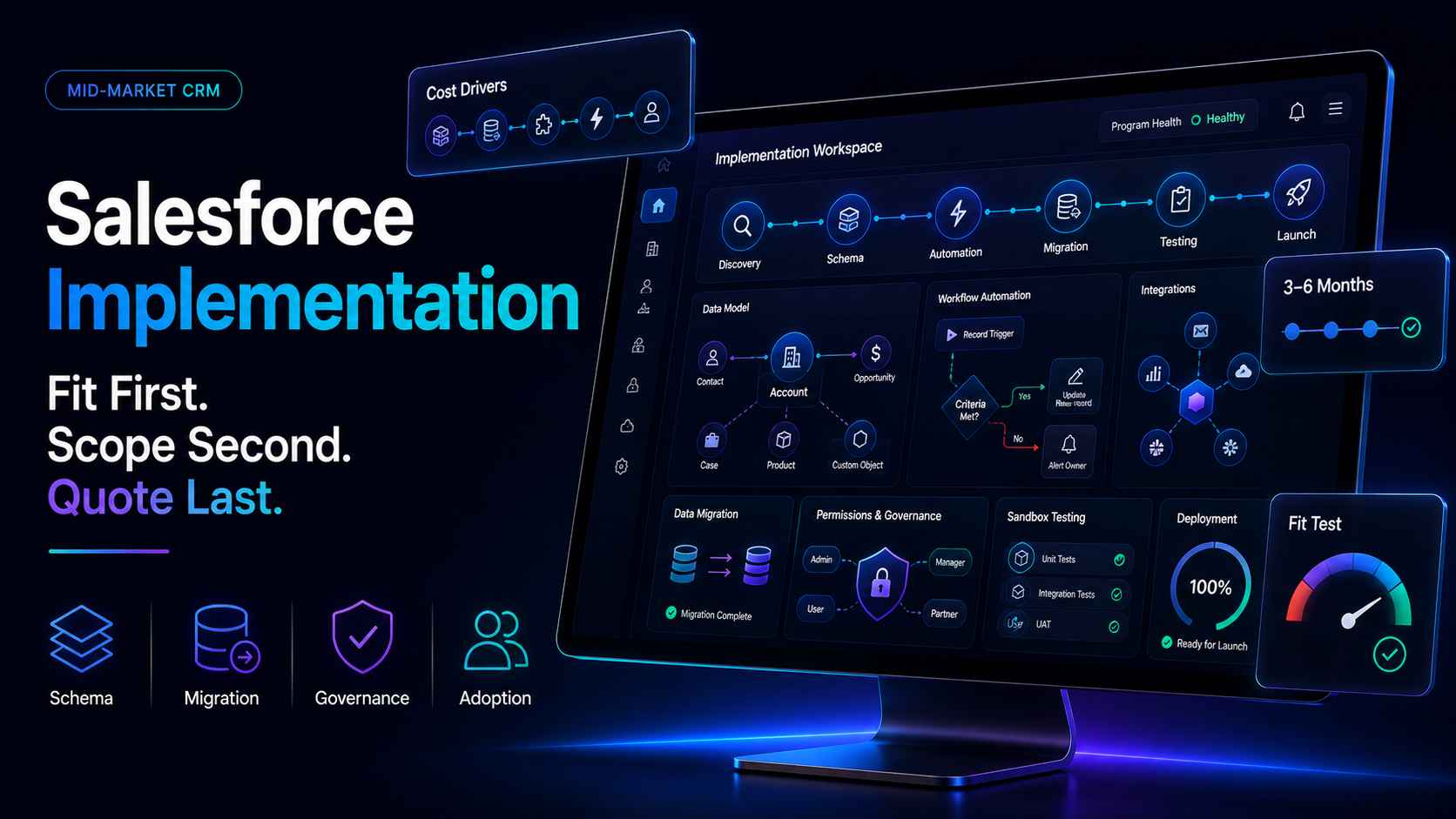
Salesforce Implementation for Mid-Market: What It Costs and When It's Overkill
Salesforce implementation cost is a scope function, not a price tag. Five drivers set it, five budget lines carry it, and for most $10M-$50M operators the honest first question is not "how much" but "why Salesforce."
Read →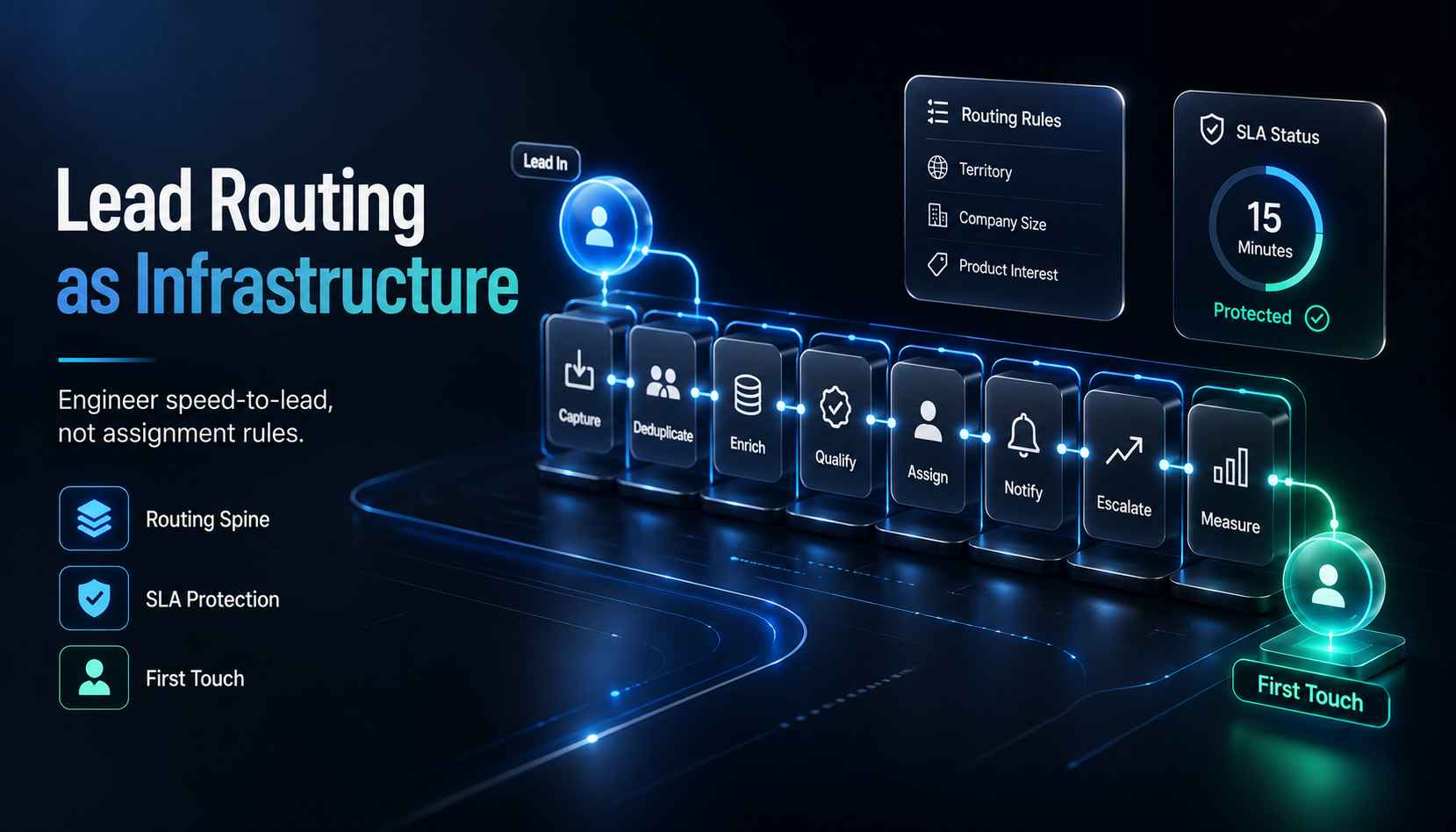
Lead Routing as Infrastructure: The Speed-to-Lead Playbook
Lead routing assigns every new lead to the right rep in minutes, automatically. Done well, it is infrastructure: eight components, SLA timers, fallback paths, and one metric on top. Minutes to first touch. Features get toggled. Infrastructure gets engineered.
Read →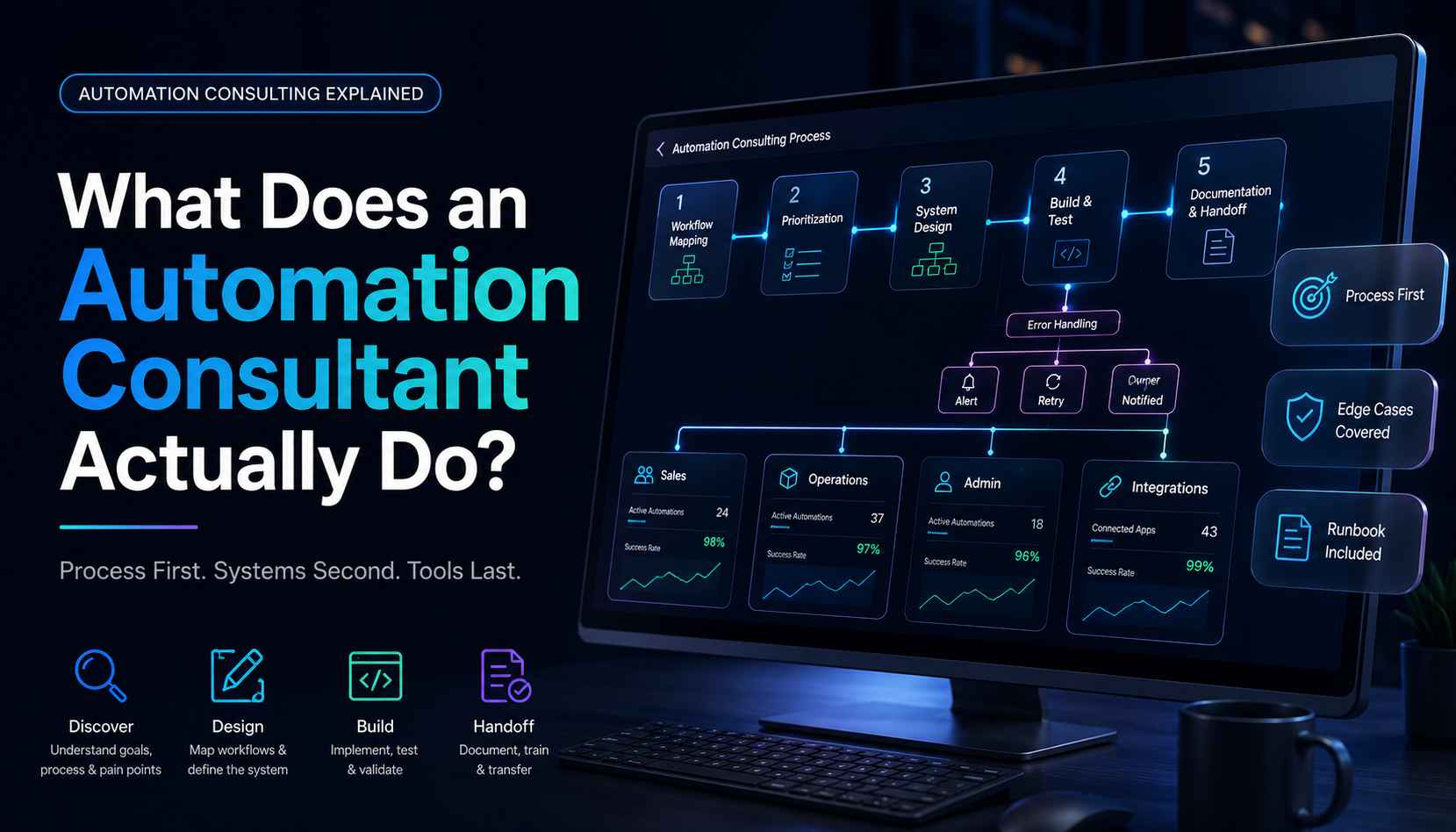
What Does an Automation Consultant Actually Do?
An automation consultant maps your workflows, decides what deserves automation, designs the systems, builds and tests them, and hands them off documented. The work runs across four surfaces: sales, operations, admin, and integrations. One engineering practice underneath.
Read →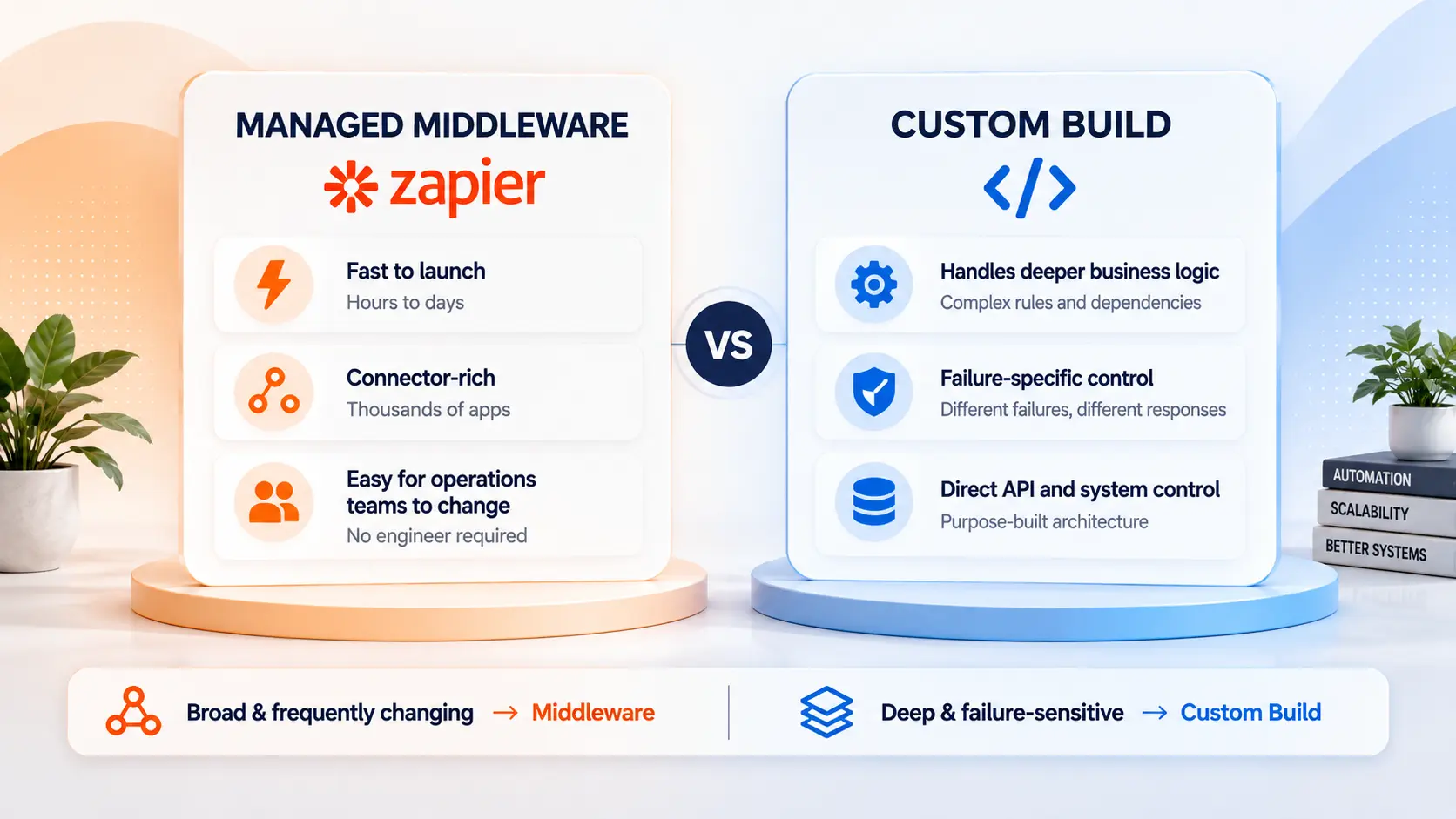
Custom Build vs Middleware: When to Stop Using Zapier
Middleware is the correct layer for most workflows. A custom build earns its cost in four situations: no connector exists on one end, one rule needs six steps to express, a trigger cannot answer fast enough, or the right response to a failure depends on which failure it was.
Read →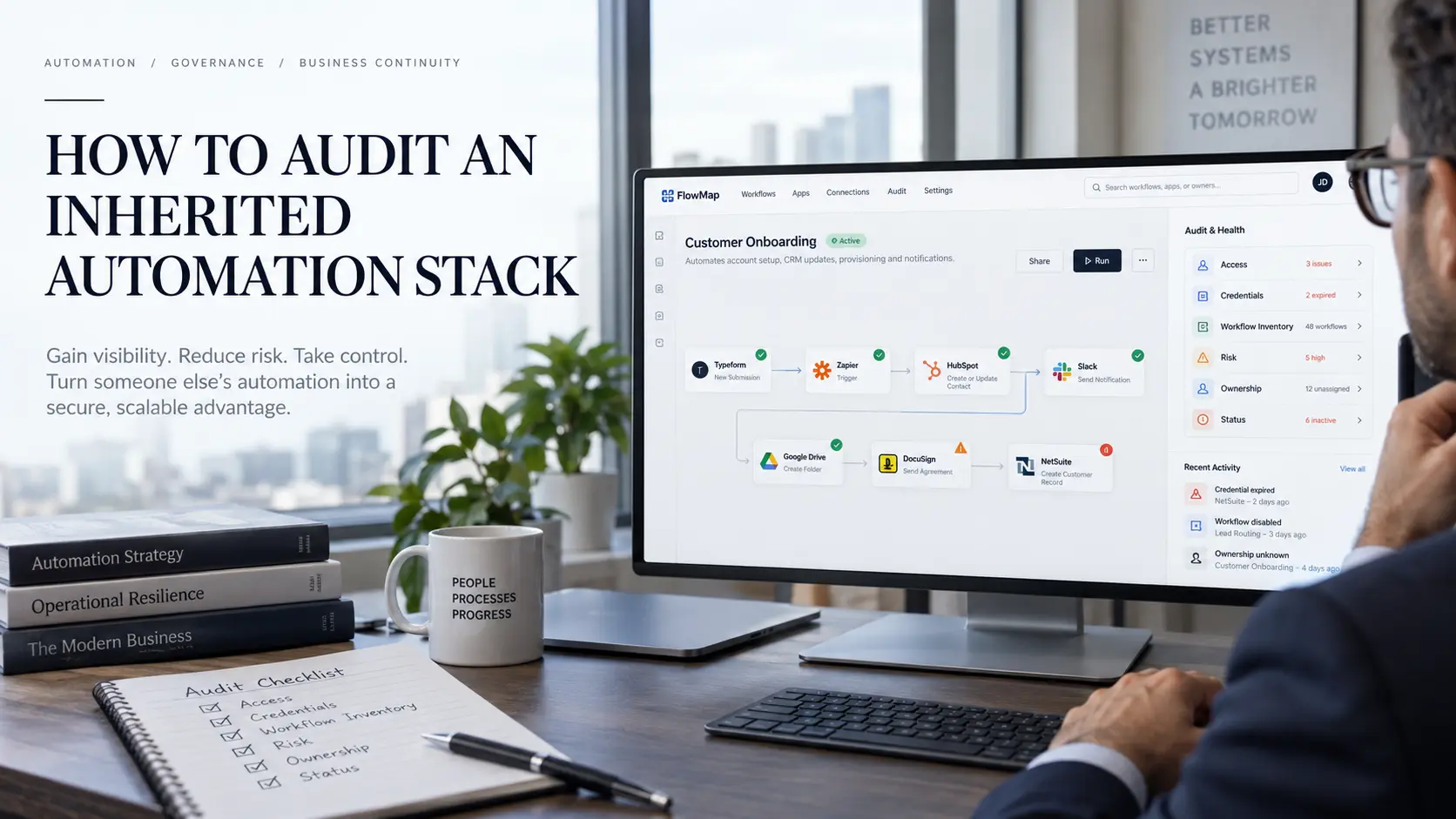
How to Audit an Inherited Automation Stack
Auditing an inherited automation stack means establishing what exists, what still works, and what is dangerous, in that order. Secure access first, because credentials belonging to people who have left can stop the whole estate without warning. Then inventory everything, including the workflows running outside your main platform.
Read →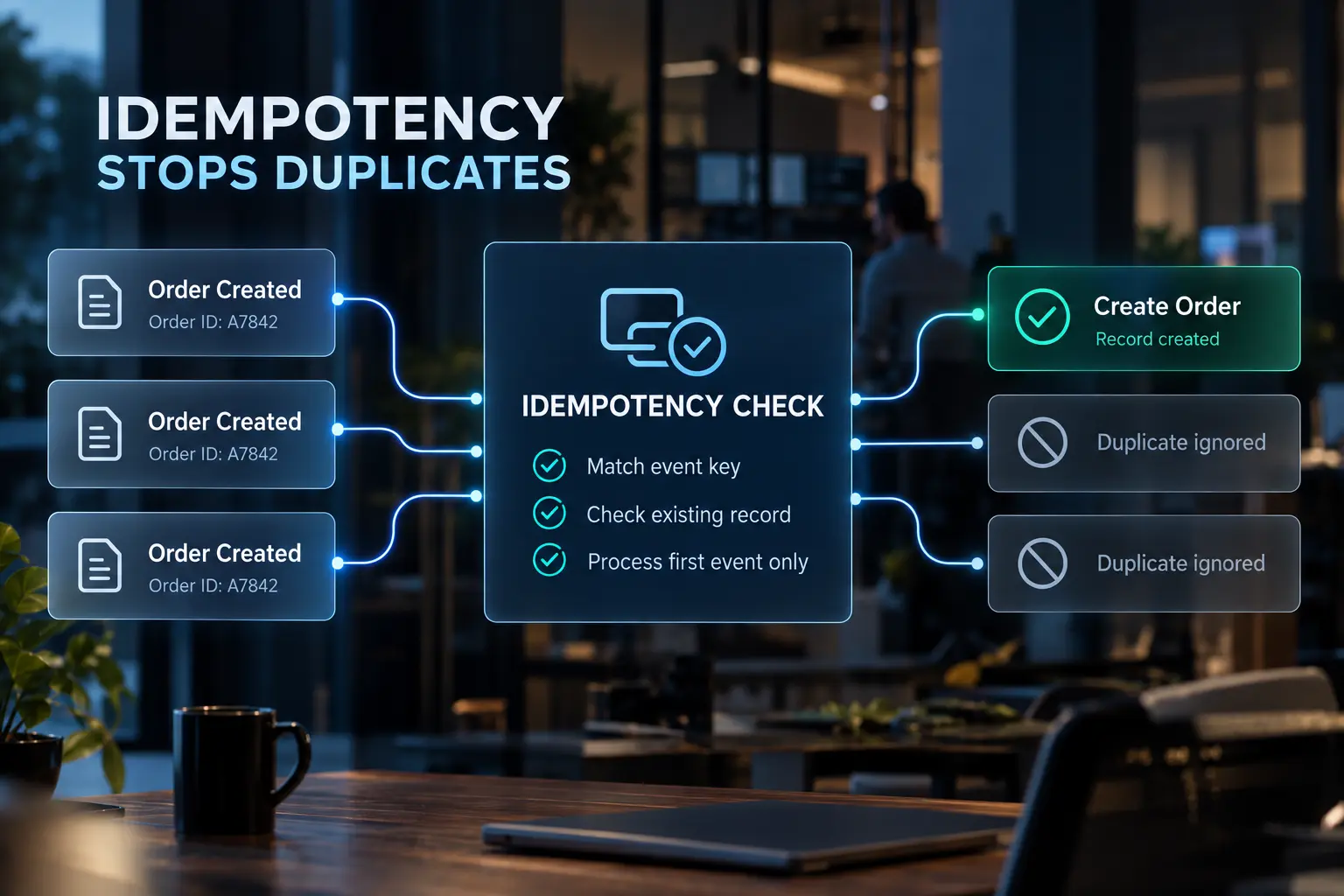
Idempotency in Business Automation: Why Your Workflows Create Duplicates
Two reps call the same buyer in one week. Deal history splits across two records, so nobody sees the full thread. Pipeline reporting counts one opportunity as two. Those are duplicate records, and the automation that produced them reported success every time it ran.
Read →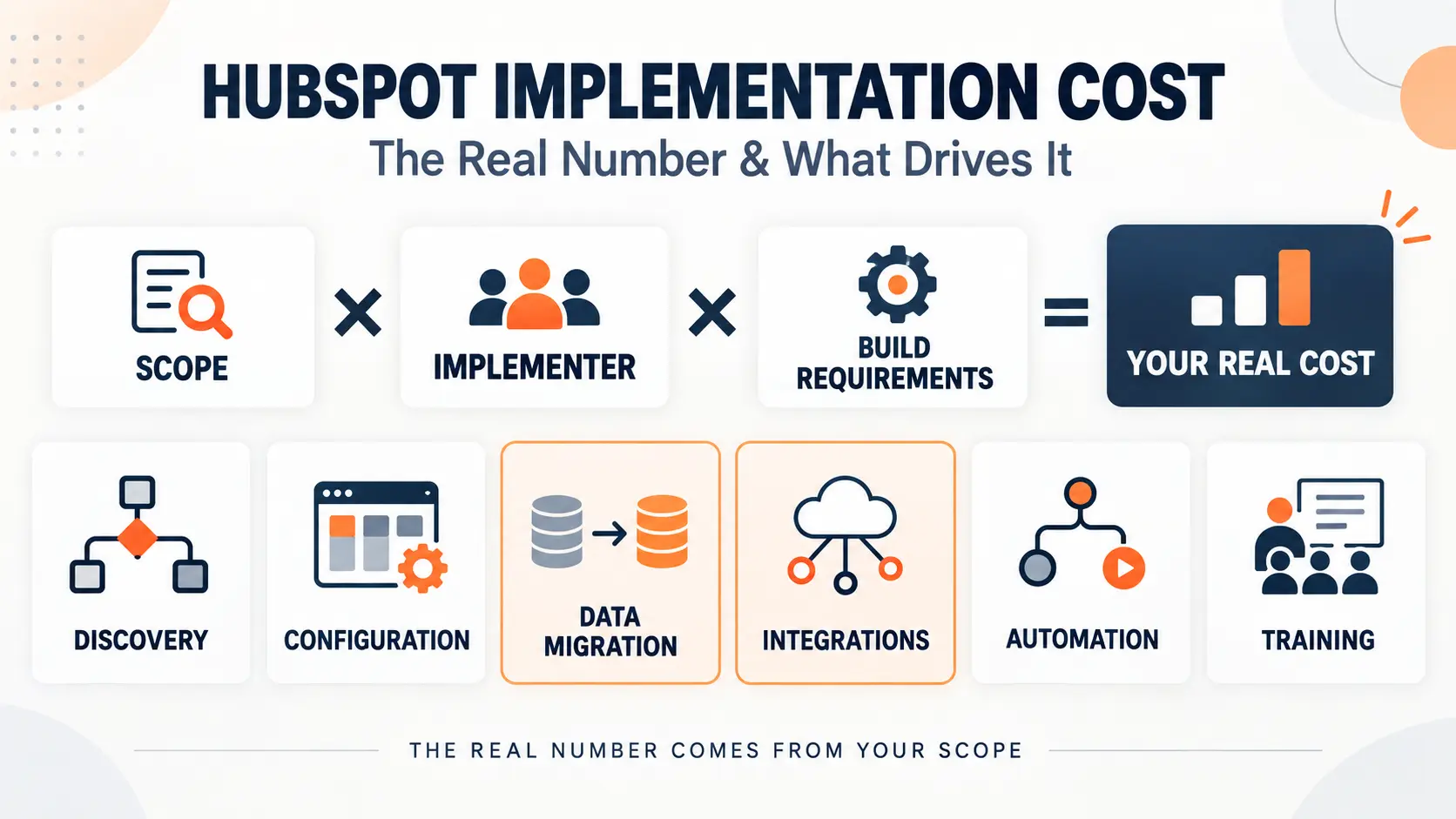
HubSpot Implementation Cost: The Real Number and What Drives It
HubSpot implementation cost is an equation, not a figure: line items times scope times who does the work. The license buys the tool. The implementation buys the outcome. Six line items make up every honest quote, data migration is where quotes double, and anyone quoting before scoping is guessing with confidence.
Read →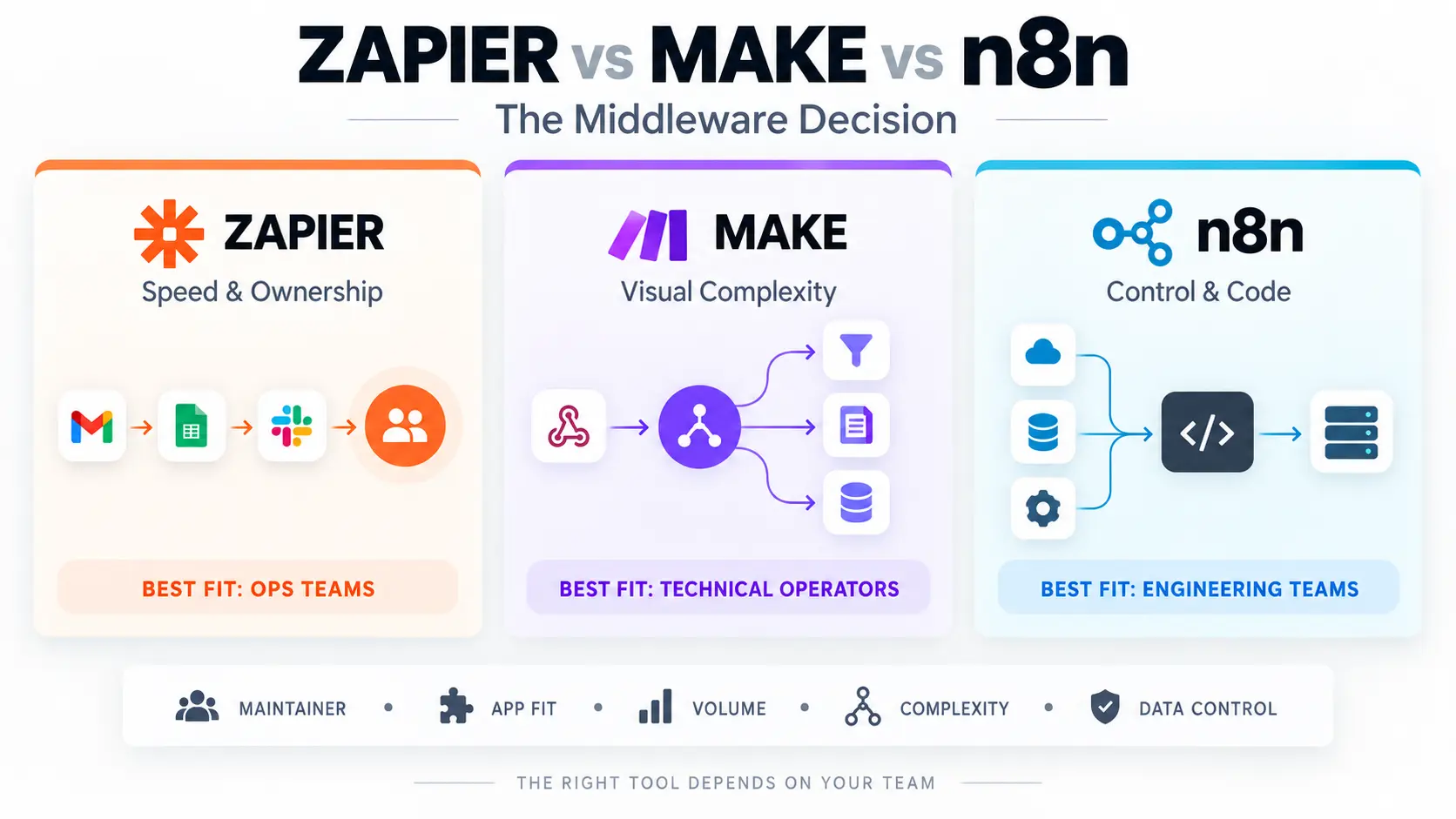
Zapier vs Make vs n8n: The Middleware Decision
Zapier, Make, and n8n solve the same problem with three different bets. Zapier bets on coverage and ease. Make bets on visual power. n8n bets on control and code. The right pick depends on who maintains it, what connects, and what your volume costs. The best middleware is the one your team still maintains in month eighteen.
Read →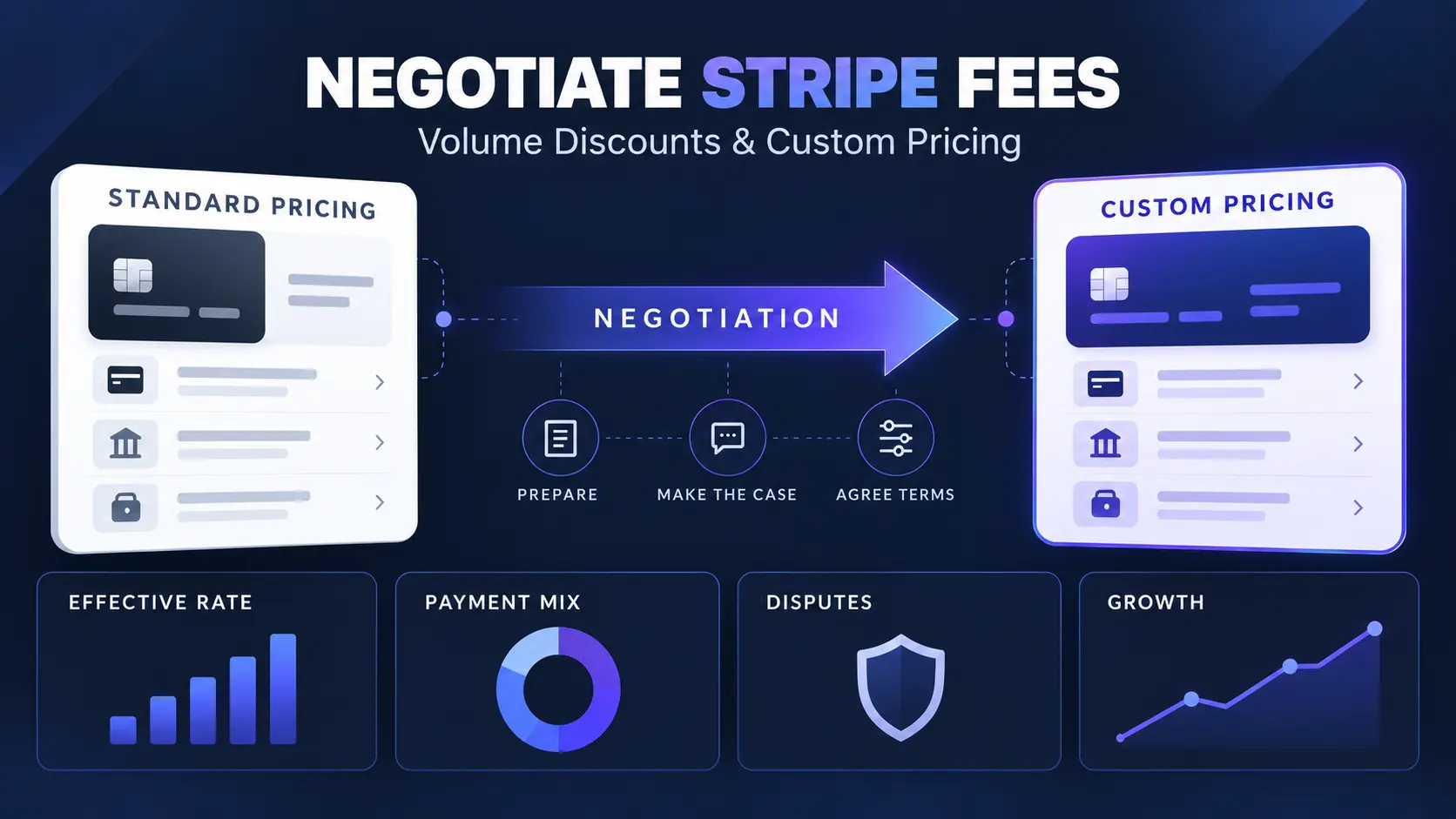
How to Negotiate Stripe Fees: Volume Discounts and the Ask
Yes, Stripe fees can be negotiated at volume. Stripe's own pricing points larger businesses to its sales team for custom pricing. The winning ask is prepared, not clever: know your effective rate, your payment mix, your dispute number, and your growth trajectory. Then verify every single rate you win.
Read →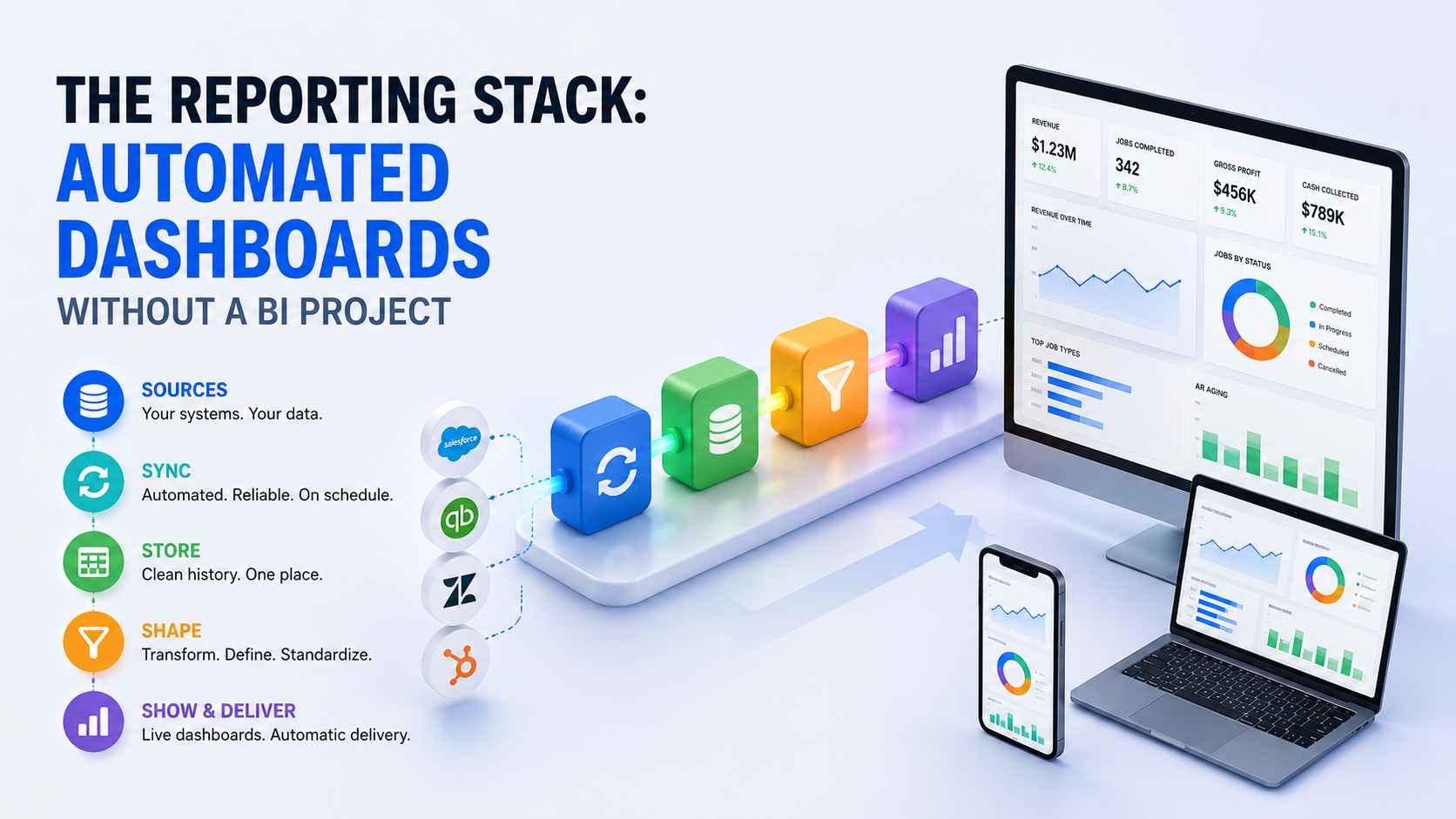
The Reporting Stack: Automated Dashboards Without a BI Project
Automated dashboards need five layers, not a BI project: sources, sync, a store, shaping rules, and a delivered view. Dashboards read live systems. They never receive pastes. Build the first one in a week, and retire the Friday report forever.
Read →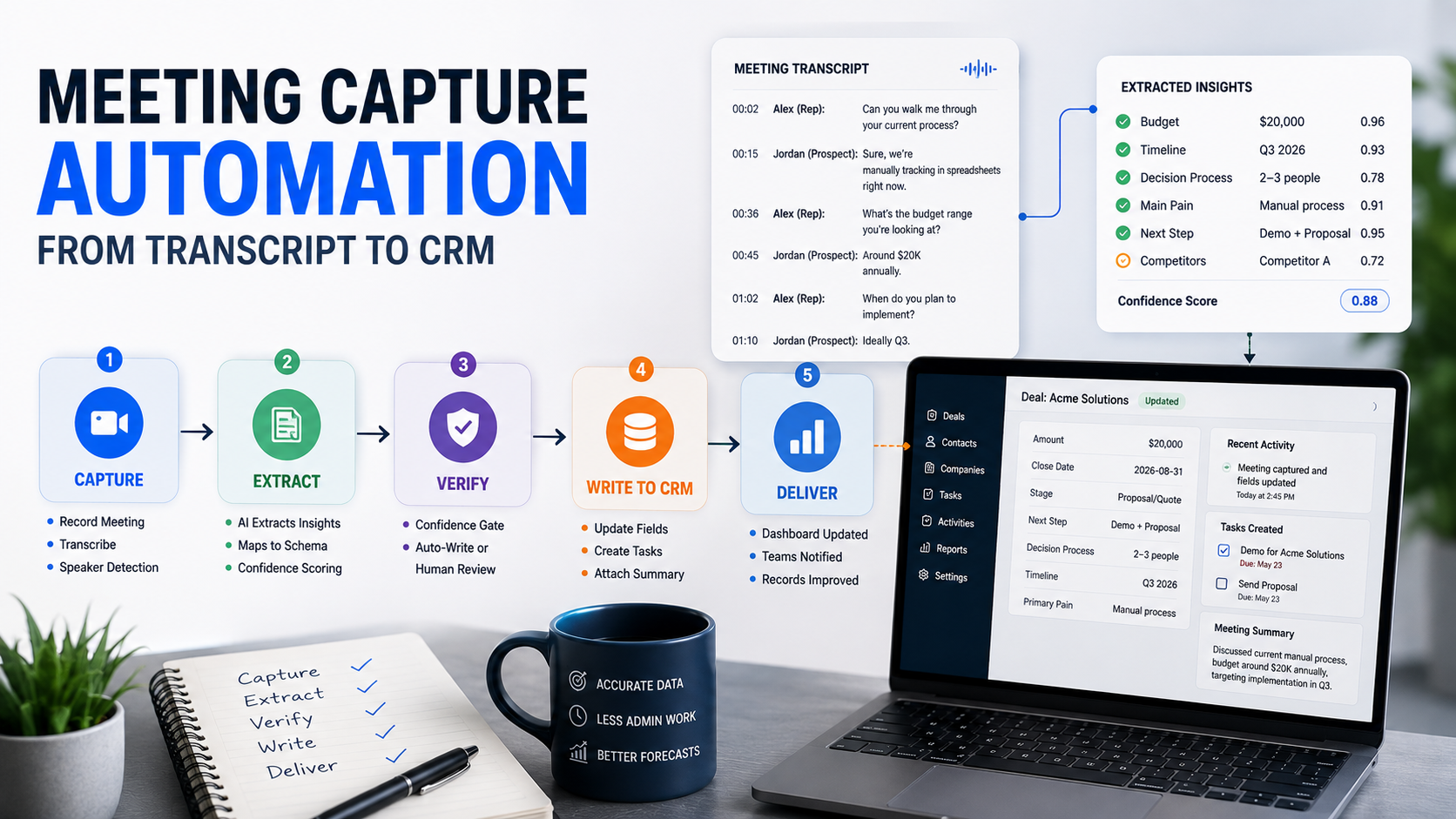
Meeting Capture Automation: From Transcript to CRM
Meeting capture automation moves a conversation into structured CRM data: capture, extraction against a schema, a confidence-gated write, and tasks with owners. Transcription is the commodity. The write is the product. A summary attached is a note filed. A field updated is a record improved.
Read →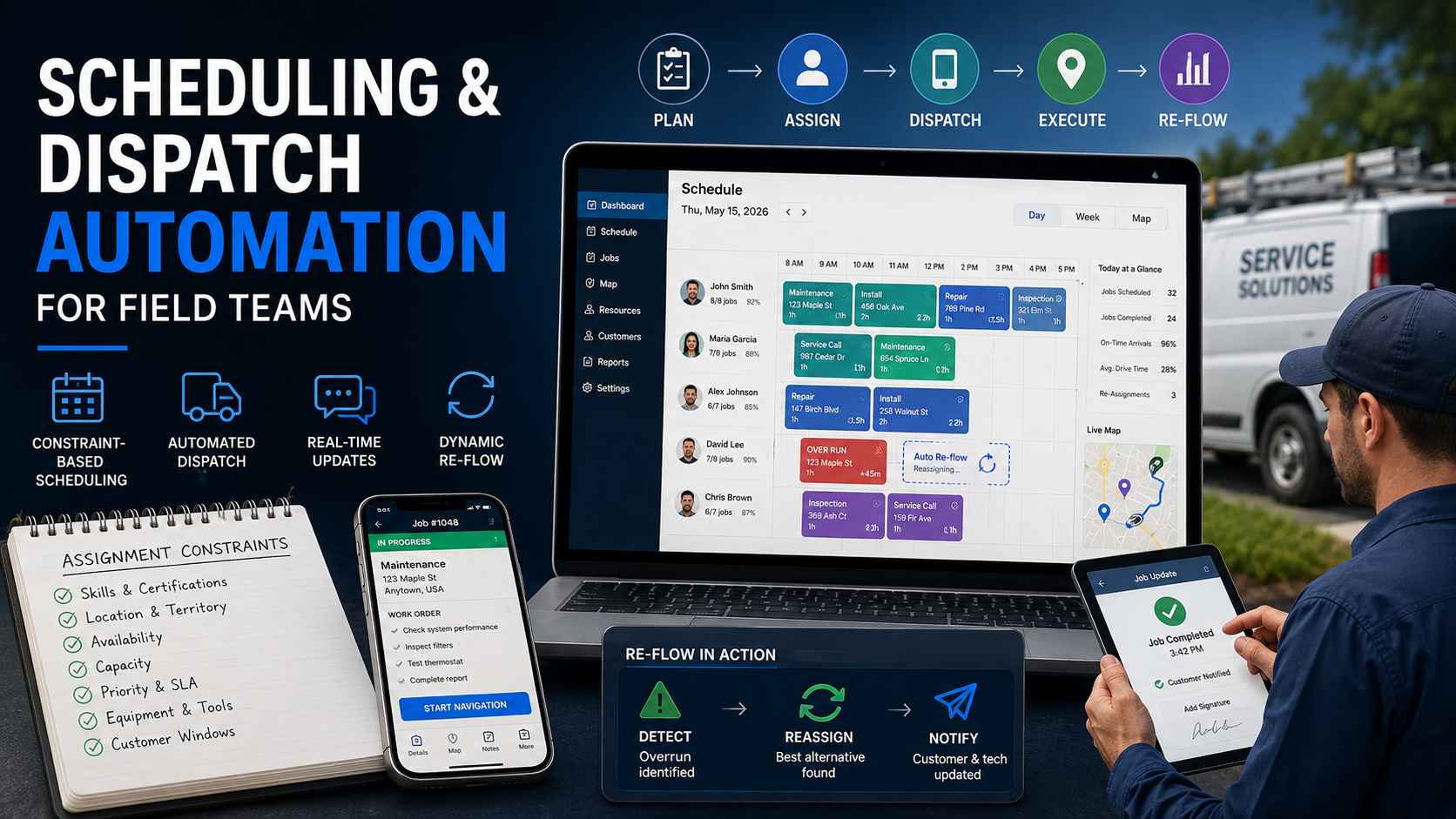
Scheduling and Dispatch Automation for Field Teams
Scheduling and dispatch automation assigns field work by rules, delivers complete work orders to crews, and recalculates when the day breaks. Seven constraints drive every assignment. Three automation modes fit different kinds of work. The schedule is a living decision, not a morning printout.
Read →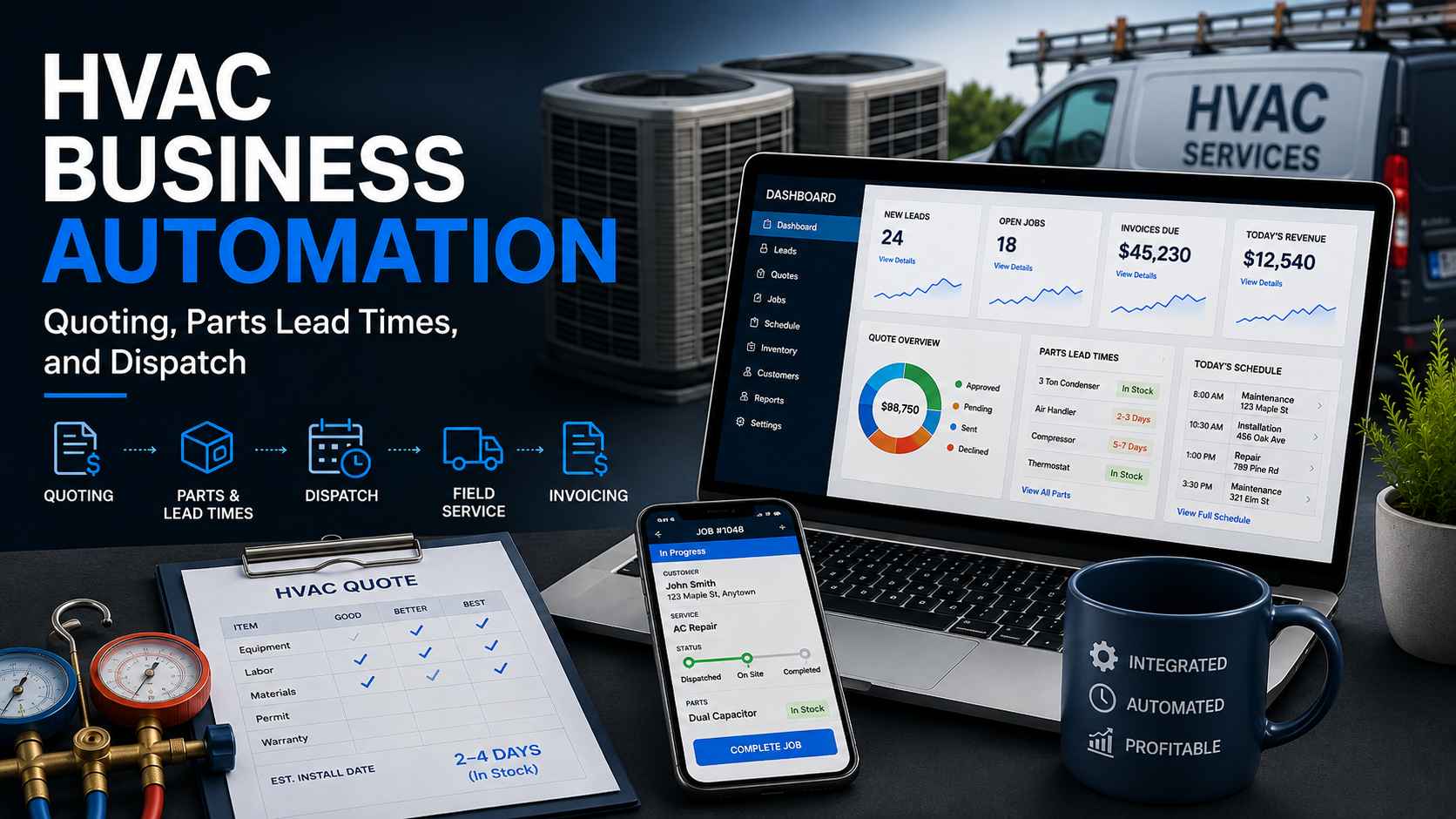
HVAC Business Automation: Quoting, Parts Lead Times, and Dispatch
HVAC business automation connects quoting, parts, and dispatch into one workflow, so a job moves from call to completed without re-keying. The part most systems skip: supplier lead times feeding the quote. A quote without a lead time is a guess wearing a price.
Read →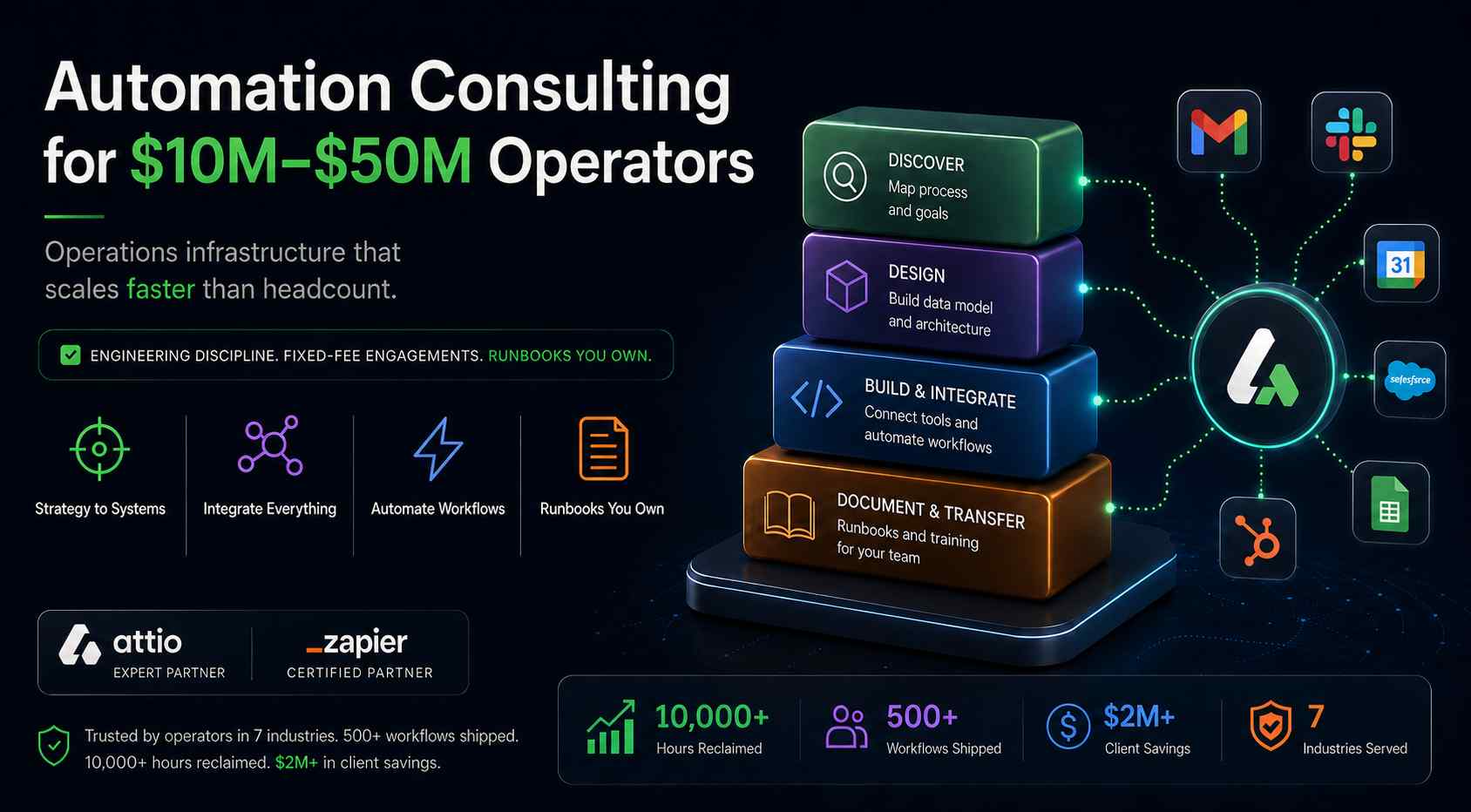
Automation Consulting for $10M-$50M Operators: What It Actually Is (And What Most Consultancies Get Wrong)
Automation consulting at the $10M-$50M scale is operations infrastructure work, not process consulting. The right partner builds CRM systems, workflow architecture, and integration layers that ship, then hands you a runbook you own.
Read →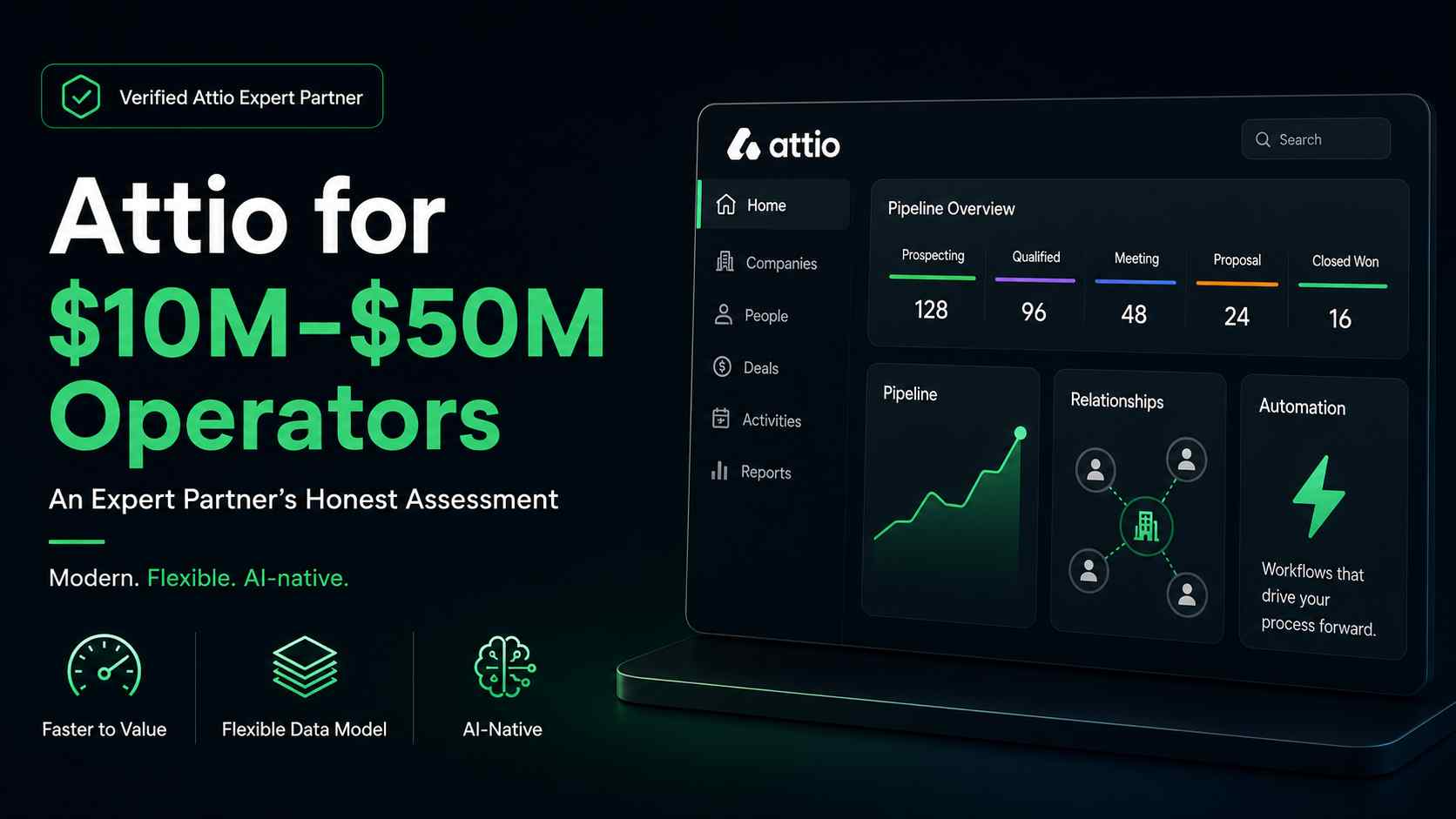
Attio for $10M-$50M Operators: An Attio Expert Partner's Honest Assessment
Attio is the modern default CRM for teams building today, and for many $10M-$50M B2B operators, it is the correct system of record. As a verified Attio Expert Partner, we assess where it wins, where it has real gaps, and when another CRM fits better.
Read →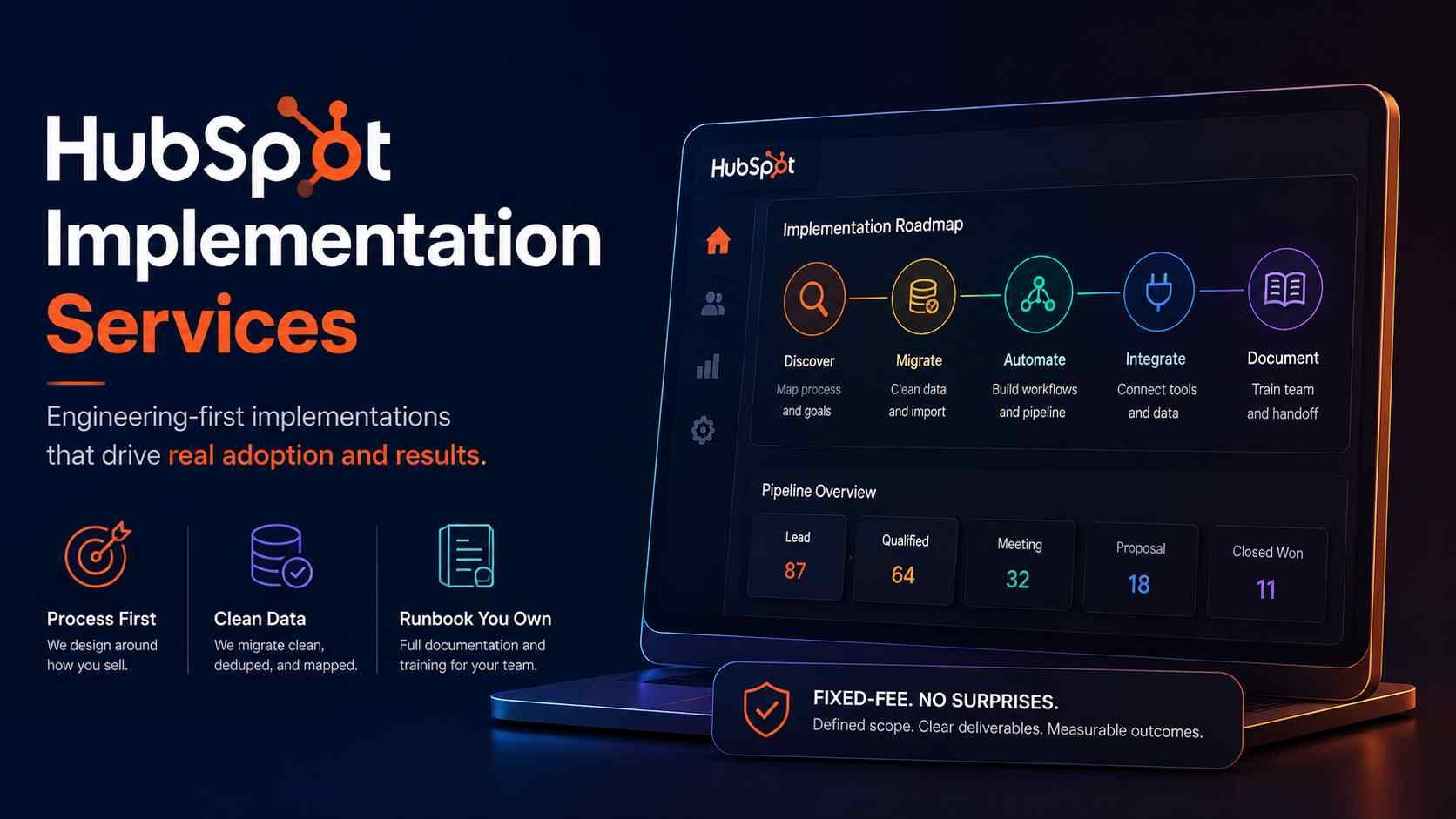
HubSpot Implementation Services: What $10M-$50M Operators Should Actually Pay For
HubSpot implementation services should buy you a working revenue process, clean migrated data, and a documented runbook you own. Pay for engineering and process design, not badge status or open-ended billable hours.
Read →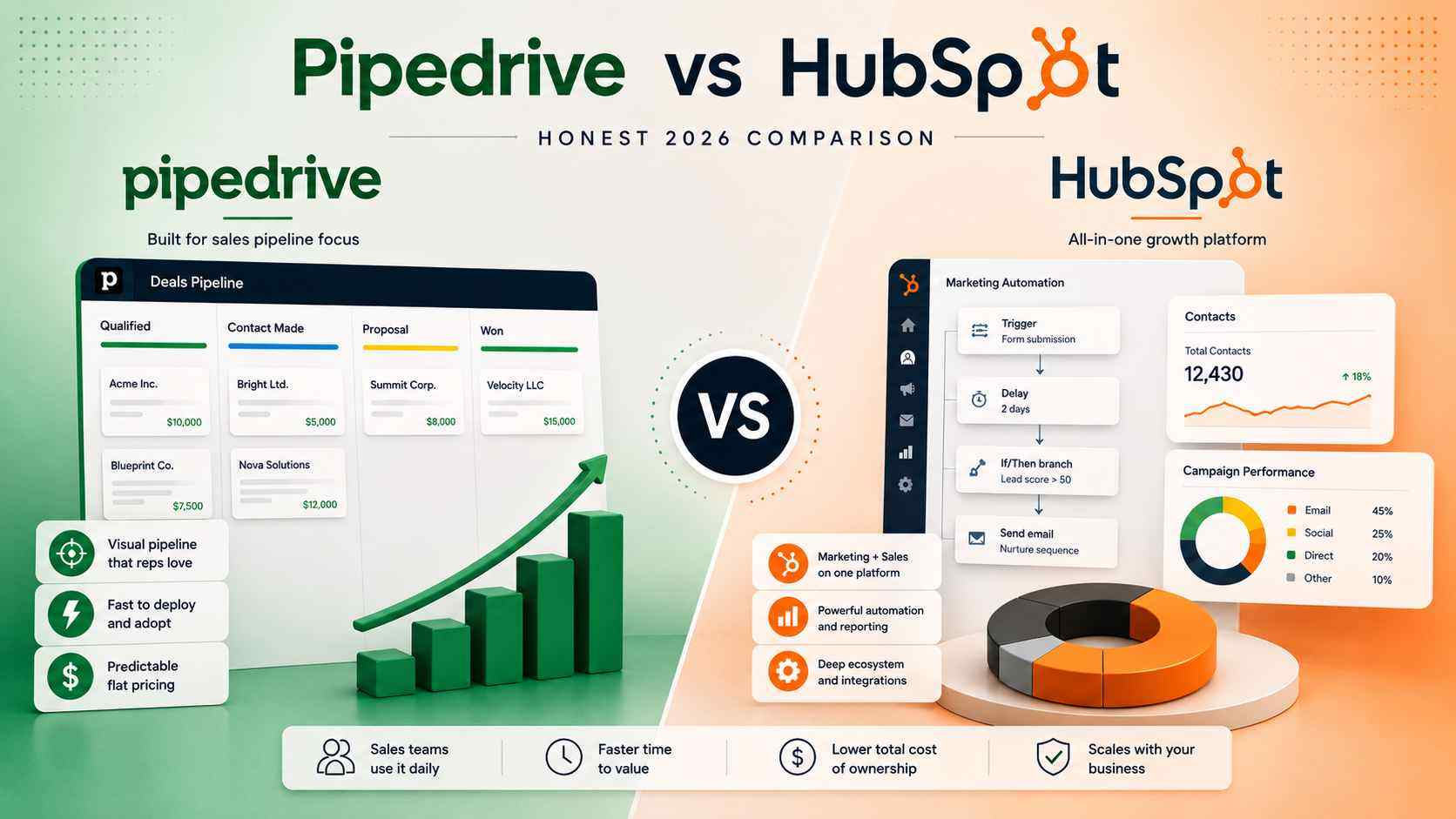
Pipedrive vs HubSpot: The Honest Practitioner Comparison for $10M-$50M Operators
At Automation Consulting Services, we build operations infrastructure built with engineering discipline for $10M-$50M operators. We are a verified Attio Expert Partner and a Zapier Certified Solutions Partner. We are not a HubSpot partner. We are not a Pipedrive partner.
Read →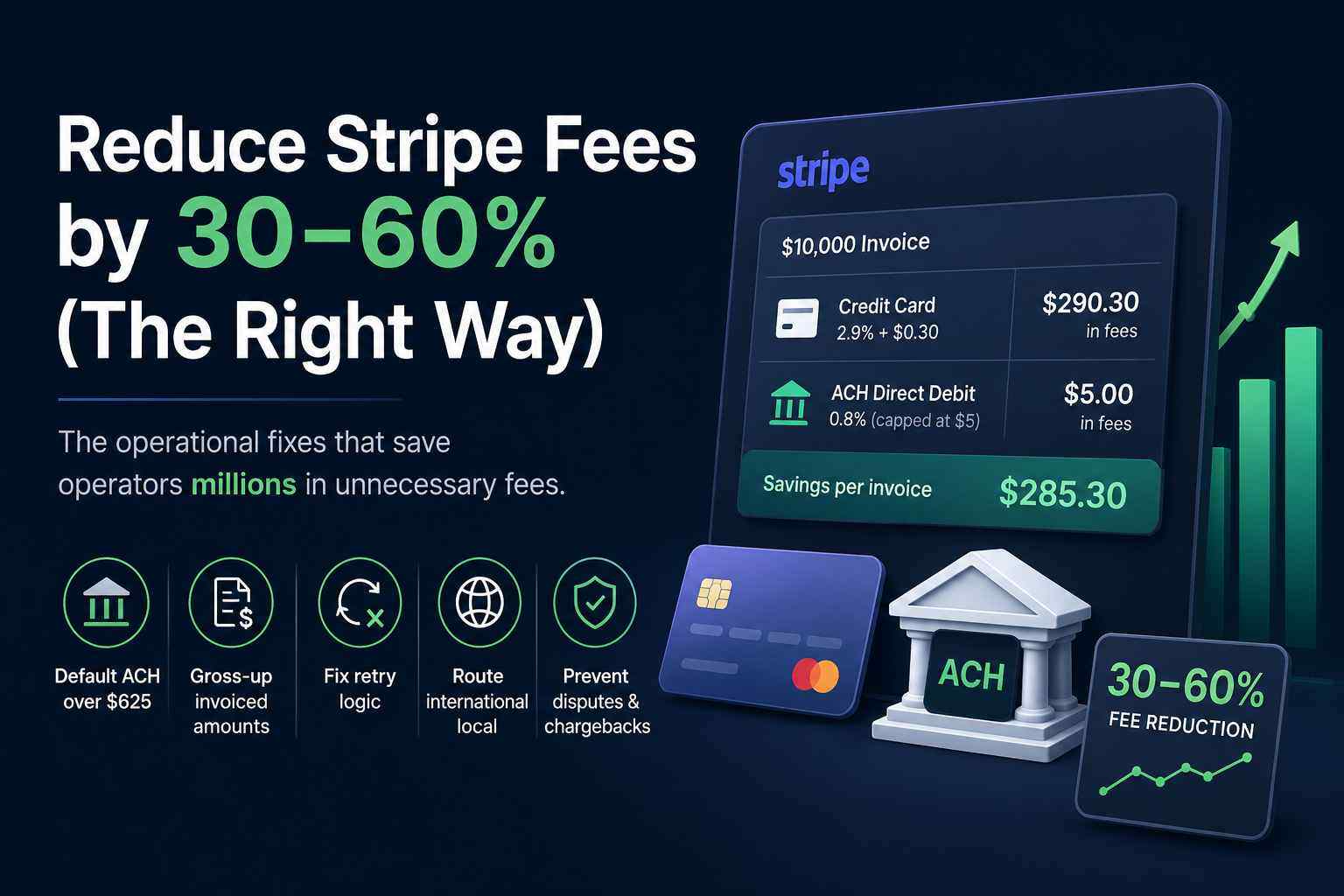
How to Reduce Stripe Fees Without Negotiating Your Rate
Stripe fees are reducible by 30 to 60% for most $10M to $50M operators, but not through the tactics most articles recommend. The real reductions come from routing, gross-up logic, ACH conversion, and fixing broken retry loops.
Read →Book a discovery call.
Paid discovery from $500. Output is a written audit, ranked bottleneck list, and recommended scope. If we are not the right fit, we say so on the call.