

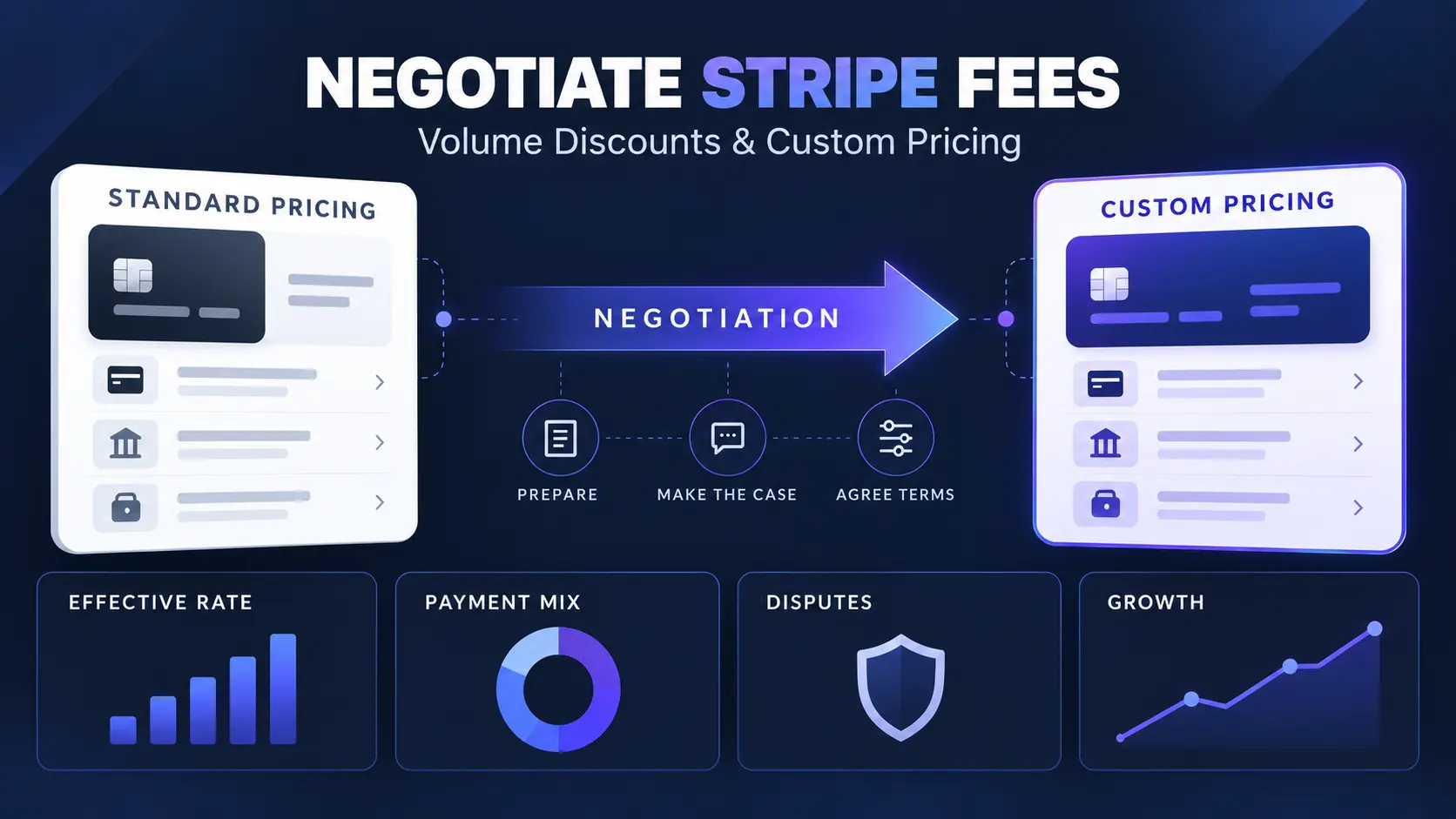
Can you negotiate Stripe fees? Yes. Stripe publishes standard pay-as-you-go pricing for everyone. Its own pricing page points businesses with large payment volume toward custom pricing through its sales team. The door exists. This guide covers how to walk through it prepared.
We build operations infrastructure with engineering discipline for $10M-$50M operators, and payment operations sit inside that work. Our guide to reducing Stripe fees covers the operational tactics. This post covers the other lever: the negotiation itself. Two levers, one effective rate. Work both.
One promise before we start. No invented thresholds. No fantasy savings percentages. The internet is full of confident numbers nobody can source. You will not find them here.
Can You Negotiate Stripe Fees?
Yes, and the mechanism is simple. Standard pricing is self-serve and fixed. Custom pricing is a sales conversation. Businesses with meaningful volume, a clean risk profile, and a growth story get that conversation.
What "meaningful volume" means is the honest catch. Stripe does not publish a negotiation threshold. Community folklore names various monthly numbers, and the folklore is unsourced. The real trigger is relational, not numerical. Negotiate when your processing volume makes you a customer worth keeping. Negotiate when a competitor would fund the effort of winning you.
Asking carries no penalty worth fearing. A pricing conversation is a normal sales interaction. The worst outcome is a polite no and a calibration of where you stand.
Growth counts alongside volume. A business doubling year over year is worth more to a processor than its current statement shows. Bring the trajectory, not just the total. Processors price the relationship's future, and your job is to make the future legible.
What Stripe Will Negotiate, and What It Will Not
Negotiations move on structure more than on magic numbers.
The headline lever is the pricing model itself. Standard accounts pay blended pricing: one flat rate covering every card. Custom agreements can move to interchange-plus, where you pay the actual card-network cost plus a fixed markup. The model change matters because card costs vary widely underneath a blended rate. Which model wins for you depends on your mix, covered below.
Volume discounts are the second lever: better economics in exchange for committed or demonstrated volume. Specific fee lines can enter the conversation too, depending on what dominates your statement. Read the statement before the meeting. The two or three lines carrying most of your cost are your agenda, and everything else is noise.
What rarely moves: anything at low volume, and the published standard structure for self-serve accounts. The negotiation is real, and it is earned, not requested.
When to Ask: The Volume Question Answered Honestly
Ask when three things are true at once.
Your volume is established, with real months of history behind it. Your risk profile is clean, because processors price risk before they price anything else. And your growth story is documented, because the discount is an investment in your future volume, not a reward for your past.
Timing helps at the margins. Renewal conversations, funding announcements, and platform-expansion moments all strengthen the frame. A quote in hand from a competing processor strengthens it more, and the alternatives section below covers getting one honestly. Quarter boundaries help too. A fresh trailing quarter of clean numbers reads better than a story about the quarter before last.
Build the Case Before the Ask: Four Numbers
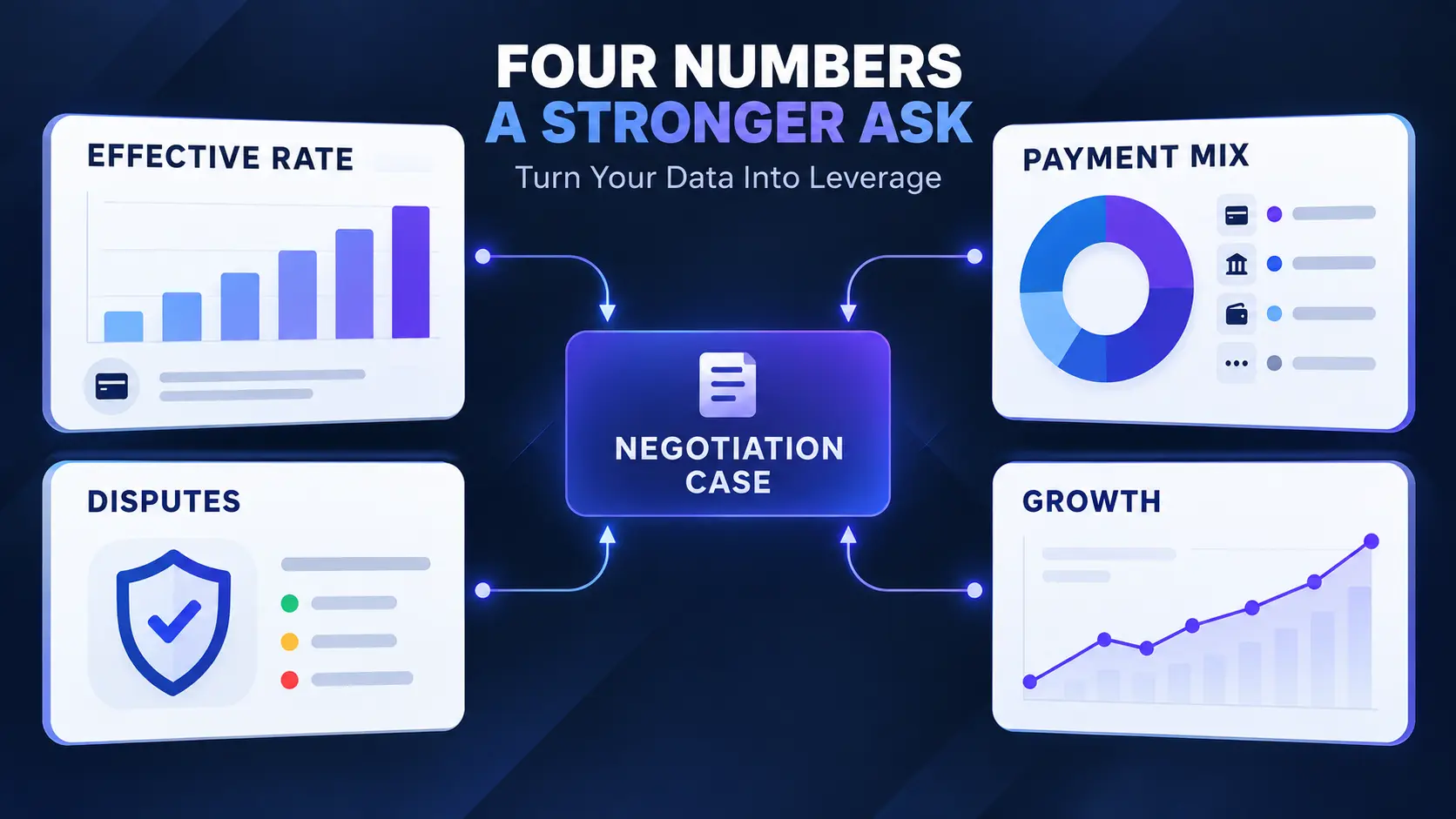
The negotiation is won in the preparation. Four numbers make the case, and every one of them should be automated, not assembled.
Know Your Effective Rate
Total processing fees divided by total volume, over a trailing period. One number, and most operators cannot produce it on demand. Run yours through our Stripe fee calculator before any conversation.
The effective rate is the negotiation's scoreboard: the number you have, the number you want, and later, the number you verify. Use a trailing quarter at minimum. A single month lies with seasonality, and a year hides recent changes. Decompose it by fee line while you are there, because the decomposition writes your agenda.
Know Your Payment Mix
The composition behind the rate. Card types, domestic against international share, currency conversion volume, and any bank-debit share. Mix decides which pricing model serves you. A mix heavy in low-cost card categories argues for interchange-plus.
A volatile mix argues for blended stability. Walk in knowing which ask fits your statement. An international-heavy mix changes the agenda too, because cross-border and conversion lines become the conversation rather than the base rate.
Know Your Dispute Number
Your dispute and refund rates, trailing twelve months. Risk pricing is real, and a clean dispute record is leverage you already own. A messy one is the first thing to fix, because it undermines the ask before volume ever enters the room.
Sequence accordingly. Two quarters of dispute cleanup before the ask beats a discount conversation carried on a shaky record. Our fee-reduction guide covers the operational side of keeping disputes down.
Know Your Trajectory
Twelve months of volume history and a defensible forward estimate. Processors invest in growth. A documented trajectory turns your ask from a discount request into a partnership case. Keep the estimate honest, because it may become a commitment in the terms.
The Ask: How the Stripe Negotiation Actually Works
Preparation done, the mechanics are short.
Who to Contact for Custom Pricing
Sales, not support. Support handles account issues and cannot reprice you. The sales and custom-pricing path is the door, reachable through Stripe's contact and enterprise pages. If your volume already earned you an account contact, start there. Expect a qualification conversation before any numbers move. Yours is already prepared.
What to Say: The First Message
Short, factual, numerical. The skeleton that works:
A Skeleton for the First Email
Who you are and what you process, in one line. Your trailing volume and effective rate. Your dispute number, if clean. Your growth trajectory, in one sentence. The ask: a conversation about custom pricing, and which model fits your mix. Nothing else. The numbers do the persuading, and the brevity signals you have done this before.
Leave out the complaints, the competitor threats, and the paragraph about your company story. Every sentence past the numbers weakens the numbers.
Interchange-Plus vs Blended: Which to Request
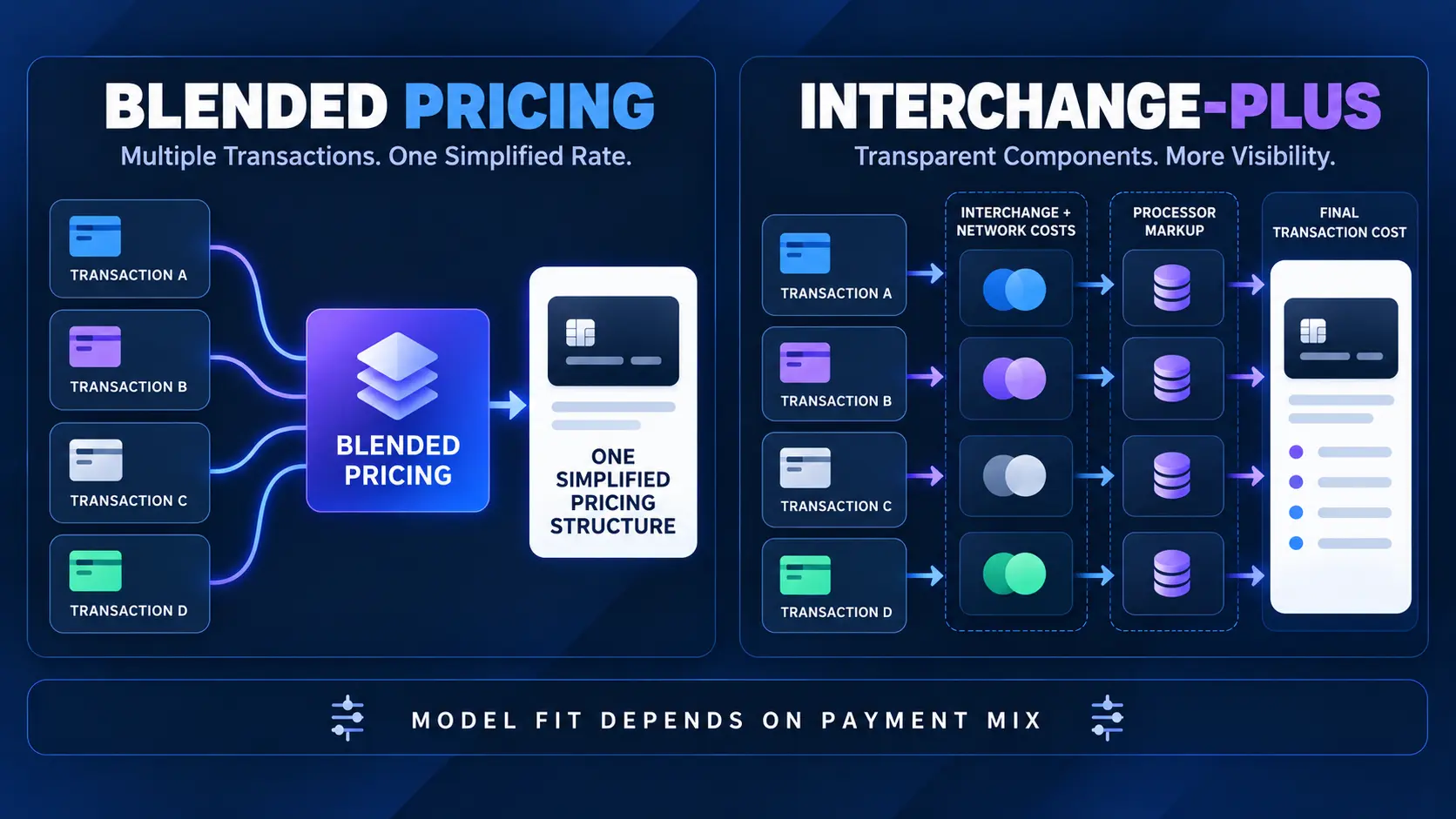
Ask the model question directly, because it frames everything after. Interchange-plus passes through true card costs plus a stated markup: transparent, and usually favorable for clean domestic mixes. Blended trades transparency for predictability: one rate, no surprises, simpler books.
Your mix analysis from the preparation already answered which to pursue. Say so in the meeting. One honesty note on interchange-plus: the statements get harder to read, because true costs vary per transaction. The verification build at the end of this guide stops being optional under that model.
Reading the Counter and the Terms
Offers arrive with structure attached, and the structure decides the deal.
The Four Terms to Read Before the Signature
Volume commitments, and what happens if you miss them. Contract length, and the exit terms. Which fee lines the new pricing actually covers, because a discount on one line can hide standard pricing on the rest. And any product commitments bundled into the deal. Ask the miss question out loud: "what happens in a slow quarter." The answer belongs in writing.
A lower rate with a heavy commitment can cost more than your current pricing. Model the offer against your real mix before signing, with the same calculator you used to prepare.
Leverage Without Bluffing: The Alternatives Card
The strongest card in any pricing conversation is a real alternative, honestly held.
Competing processors exist across every category: enterprise-grade gateways, interchange-plus specialists, and platform bundles. Getting one written quote from a credible alternative costs you a few conversations and transforms your negotiation posture. Not as a threat. As a fact.
Honesty matters here in both directions. Switching processors carries real costs: integration work, saved-card migration, accounting rewiring. Know your switching cost before implying you would pay it. A bluff read as a bluff weakens every number you brought.
A real alternative, calmly held, strengthens all of them. Deep platform integration raises the honest number. Billing logic, subscription state, and connected tooling all add weight, and pretending otherwise fools nobody on the other side of the table.
If the Answer Is No: The Operational Levers Still Work
No is a common first answer below the volume that earns yes, and it costs you nothing at all. Take it as a calibration, not a verdict.
The operational levers keep working regardless. Payment-mix shifts toward lower-cost methods. Recovery and retry hygiene. Dispute prevention. Fee-line auditing. The full catalog lives in our Stripe fee-reduction guide, and several of its tactics move your effective rate without anyone's permission.
Then grow, keep the record clean, and ask again with better numbers. The second ask lands differently when the trajectory you promised showed up. A rhythm helps: revisit the question every couple of quarters, with the refreshed numbers doing the knocking.
After the Yes: Verify the Rate You Won
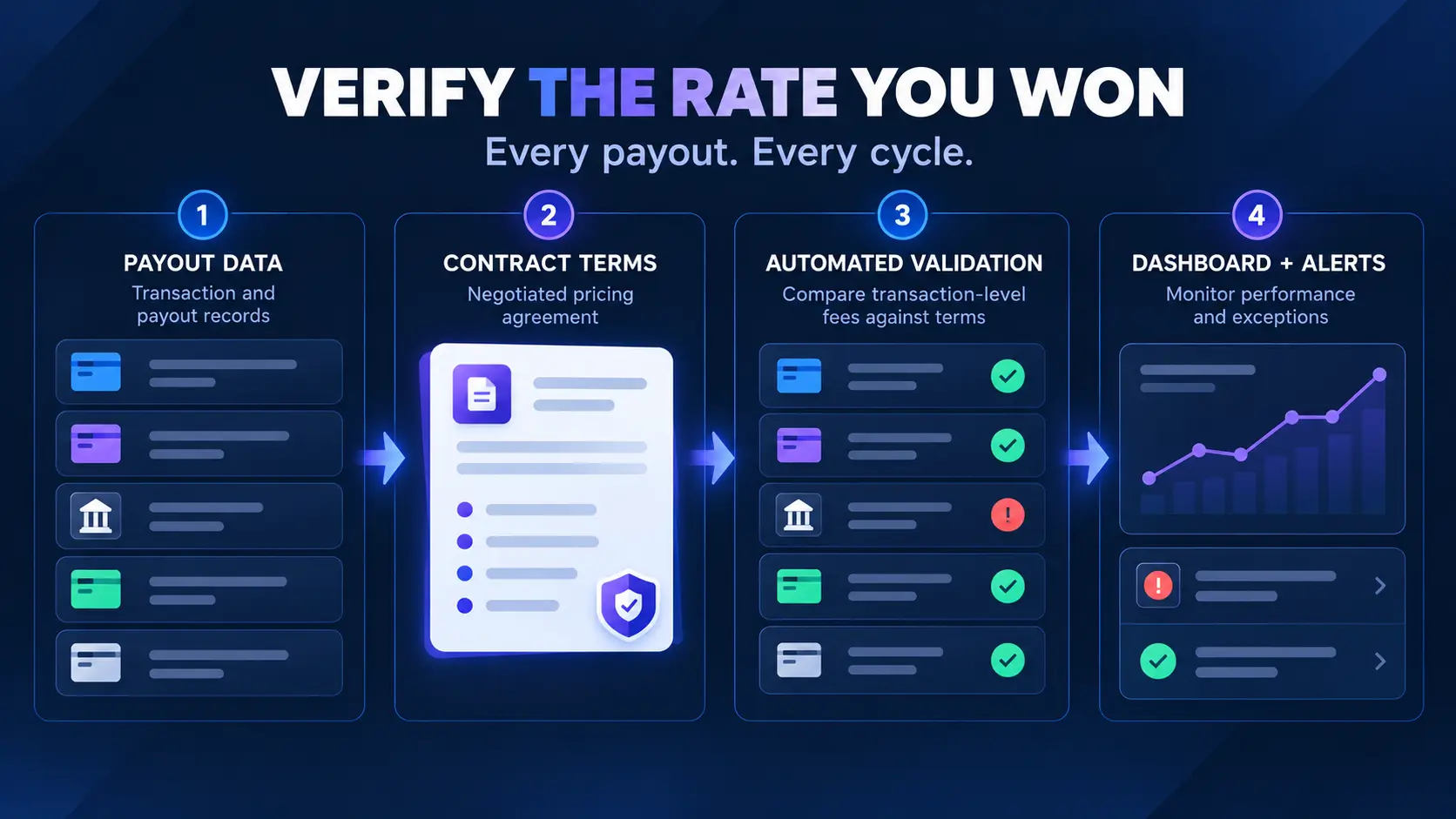
Here is the step almost everyone skips. A negotiated rate unverified is a press release.
Custom pricing takes effect in your account, and from that day, every payout deserves an automated check against the agreed structure. Fee validation is a build, not a chore. Transaction-level fees reconcile against the contract terms. Variances flag to a named owner. The monthly effective rate lands on a dashboard that assembles itself, per our reporting stack approach.
The verification build is integration engineering: payout data in, contract terms as rules, exceptions alerted. Pricing errors and misapplied lines happen in every complex billing system on earth. The businesses that catch them are the ones that look, automatically, every cycle.
Drift is the quieter risk. Your mix changes, new products launch, and the effective rate wanders while the contract sits still. An annual re-read of terms against reality keeps the deal you signed the deal you have.
Where ACS Fits in Your Payment Operations
We do not negotiate on your behalf, and anyone promising guaranteed savings deserves your skepticism. What we build is the infrastructure that wins negotiations and keeps their winnings: the effective-rate dashboard, the dispute-reduction workflows, the fee-validation checks that audit every payout against the deal you signed. The four preparation numbers stop being a quarterly scramble. They sit on a dashboard, current every morning, ready for the ask whenever you are.
Fixed fee, after a paid and refundable discovery that baselines your four numbers from real payout data. The engagement structure sits on pricing, and the shipped record in the case studies: 500+ workflows, more than 10,000 hours reclaimed, over $2 million in client savings.
Frequently Asked Questions About Negotiating Stripe Fees
Can you actually negotiate Stripe fees?
Yes, at volume, through the sales team rather than support. Stripe's own pricing materials point large-volume businesses to custom pricing. Standard self-serve accounts pay published rates. The negotiation is earned by volume, clean risk numbers, and a documented growth story.
What volume do you need to negotiate with Stripe?
No published threshold exists, and the confident numbers circulating online are unsourced folklore. The honest trigger: enough sustained volume that keeping you matters, strengthened by growth. Prepare the four-number case, ask, and let the answer calibrate you.
How much can you save by negotiating?
Any specific percentage would be invented, so none appears here. Savings depend on your current effective rate, your mix, and the model you move to. Compute your effective rate first. Model any offer against your real transactions. Let your own numbers answer, because they are the only ones that will bill you.
Does Stripe offer volume discounts?
Custom pricing for large payment volume exists, by Stripe's own public materials, arranged through its sales team. Structures vary by business: model changes, volume tiers, specific fee lines. The terms attached to the discount matter as much as the rate.
What is interchange-plus pricing?
A model where you pay the actual card-network cost of each transaction plus a fixed processor markup. Transparent and mix-sensitive, against blended pricing's single flat rate. Clean domestic mixes often favor interchange-plus. Volatile mixes often prefer blended predictability.
Why are Stripe fees so high for my business?
Usually mix and behavior, not the rate card alone. International cards, currency conversion, disputes, and failed-payment retries all raise the effective rate above the headline. Compute your effective rate, decompose it by category, and the "high" usually gets a name. Named problems have operational fixes, and several need no negotiation at all.
Can I pass Stripe fees to my customers?
Surcharging rules vary by region, card network, and local law, and they change. Check the current rules for your jurisdiction and card mix before implementing anything. Where permitted, disclosure requirements apply. This is a compliance question first and a fee question second.
Does asking for lower fees affect my Stripe account?
A pricing conversation is a normal sales interaction, not a flag. Accounts run on their own risk and compliance rails regardless of pricing discussions. Ask with clean numbers, take the answer professionally, and the relationship continues either way.
Is switching payment processors worth it?
Sometimes, and the math is yours to run. Price the switching cost honestly: integration work, saved-card migration, accounting changes. Compare it against the verified rate difference on your real mix. A written quote from an alternative is worth holding either way.
Ready to Ask With Numbers Instead of Hope?
Three ways forward.
Run your effective rate. The Stripe fee calculator turns your statement into the scoreboard number in minutes.
Work the operational levers. The fee-reduction guide moves your rate without anyone's permission.
Book a paid discovery. Your four numbers baselined from real payout data, the verification build scoped, one fixed price, refundable if the fit is wrong. Details on pricing.
Prepare the case with numbers nobody can argue with. Make the ask in one short message. Verify the win, every payout, every cycle.