
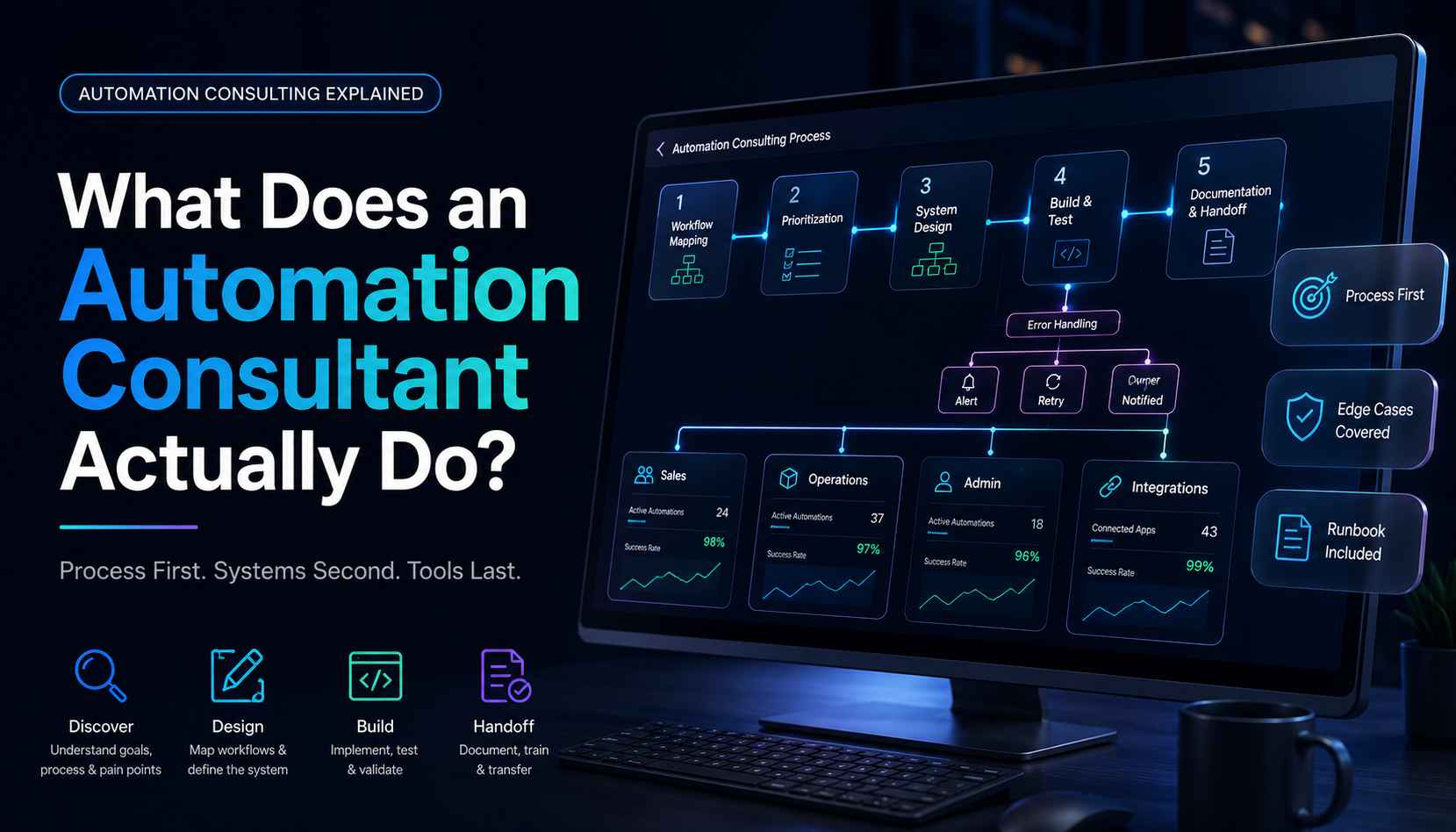
We build operations infrastructure with engineering discipline for $10M-$50M operators. Automation consulting is the work itself, so this guide explains it from the inside. What the role covers. What the days contain. How to judge anyone doing it, including us.
We are a Zapier Certified Solutions Partner and an Attio Expert Partner. Both credentials verify implementation work, and both are checkable on our partners page.
What does an automation consultant do?
An automation consultant finds the manual work inside your operations and replaces it with systems that run on their own. Data re-entered between tools. Reports rebuilt by hand every week. Approvals sitting in inboxes. Follow-ups that depend on memory. The consultant maps that work, designs the replacement, builds it, and hands it off.
The definition hides the hard part. The build is the visible half of the job. The invisible half is judgment: knowing which processes deserve automation, which need redesign first, and which should stay human. Automation amplifies the process it runs. A consultant who automates a broken process ships a faster broken process.
So the honest job description reads: process thinking first, systems engineering second, tools last. Any version that starts with tools has the order backward.
What "done" looks like is measurable. Fewer manual hours per week. Numbers the team trusts. Response times measured in minutes instead of days. And a system your own people can run, change, and fix.
The five responsibilities of an automation consultant
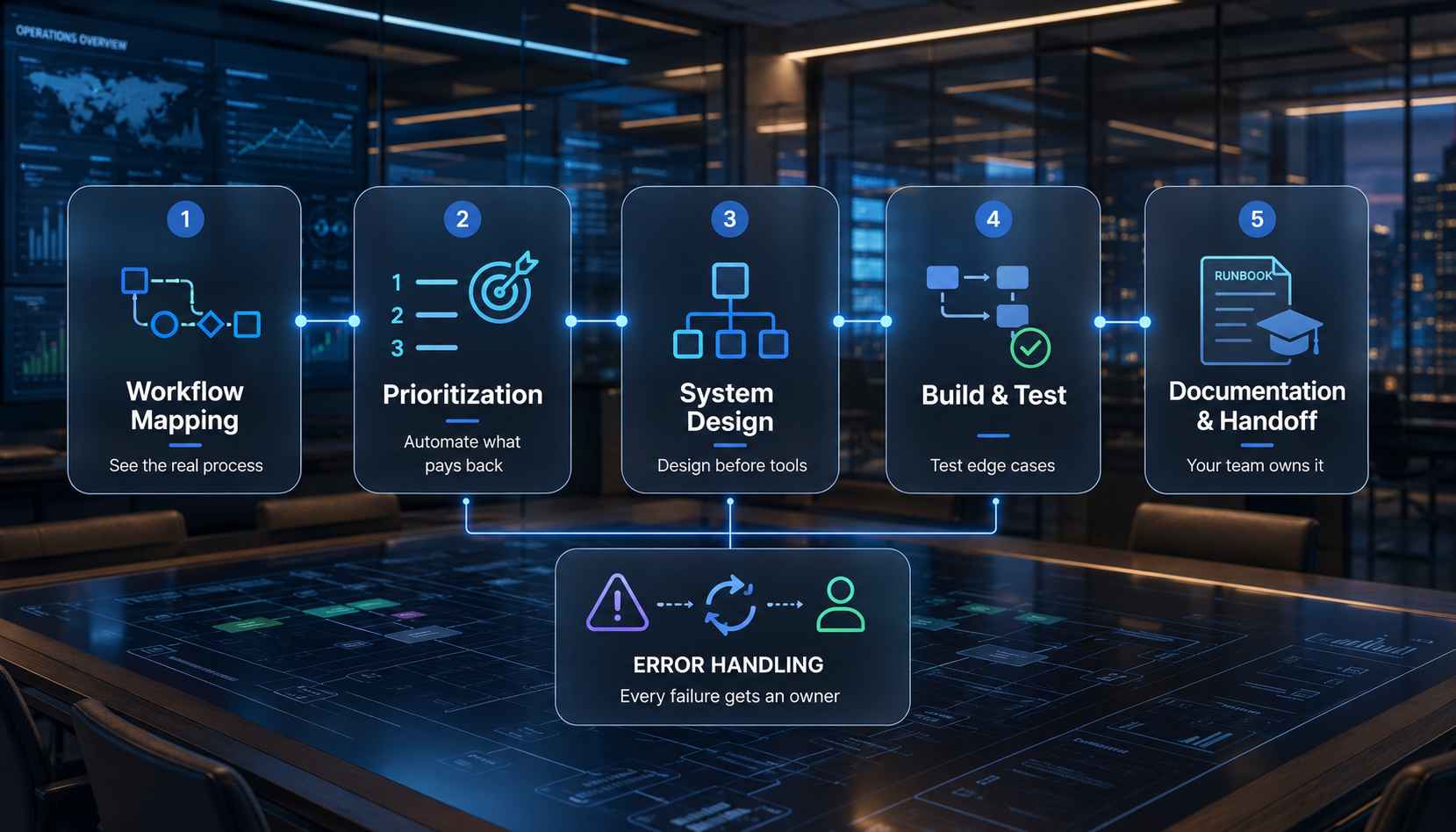
The role breaks into five responsibilities. Every real engagement contains all five.
Workflow mapping. The consultant walks the process with the people who run it, not the people who designed it. The map captures what actually happens: the undocumented steps, the exceptions, the handoffs nobody owns. This is where most of the value hides. The deliverable is a written map with the delay points flagged, and it belongs to you.
Prioritization. Not everything should be automated. High-volume, rules-based, repetitive work goes first. Judgment calls stay human. Rare tasks stay manual, because automating them costs more than doing them. The consultant ranks the targets by payback. A daily task saving twenty minutes outranks a monthly task saving two hours, and the ranking makes the roadmap honest.
System design and tool selection. The design decides what triggers what, where the data lives, and what happens on failure. Then the tools get picked to fit the design. Middleware for standard connections. Custom code for volume and complexity. The design leads. The tool follows.
Build and test. The workflows get built, then tested against reality: missing fields, duplicate records, failed connections, strange inputs. Testing the happy path only is how automations break in week three.
Documentation and handoff. Runbooks, training, and a named internal owner. Most automation projects fail at handoff, not at build. The consultant who skips this step is selling a dependency, not a system.
And a sixth responsibility nobody lists: error handling. Every automation gets an owner and an error alert, because automations fail silently. The alert design is real engineering work, and its absence is the most common flaw we find in inherited builds.
What the work looks like day to day, across four surfaces.
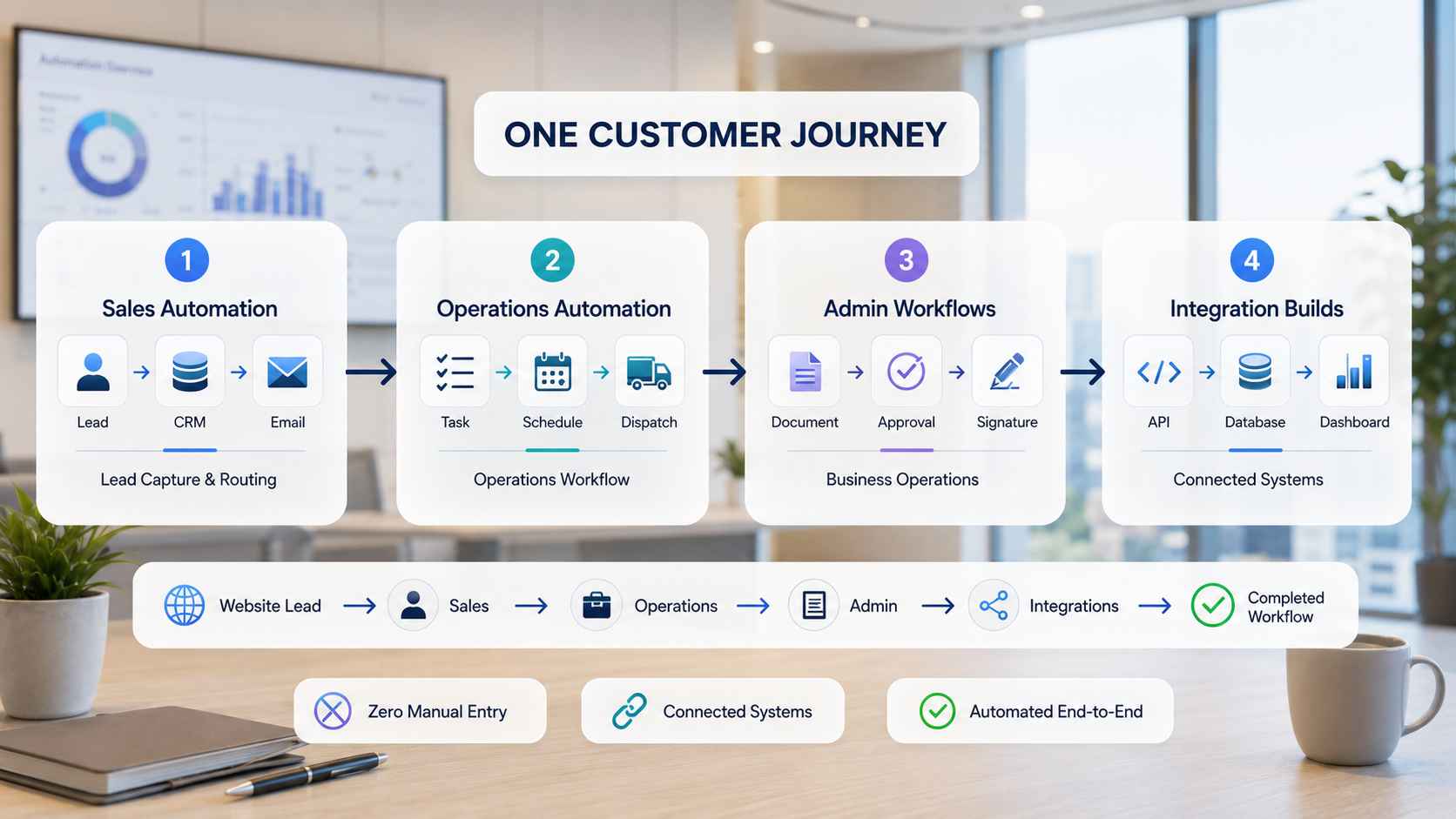
Automation consulting is one discipline applied to four surfaces. Here is what the consultant actually builds on each.
Watch one lead travel through all four. A form fill hits the website. Sales automation routes it, enriches the record, and fires the first touch. The deal closes, and operations automation opens the job, schedules the work, and tracks the inventory.
Admin workflows generate the contract, route the approval, and capture the kickoff meeting. Integration builds carry the data between every system in that chain without a single copy-paste. Four surfaces. One customer. Zero re-keying.
Sales automation. Lead routing that moves an inquiry to the right rep in minutes. CRM enrichment that fills records automatically. Quote generation from templates and pricing rules. Outreach sequences with clean handoffs. The work lives in our sales automation practice.
Operations automation. End-to-end workflow engineering across bidding, scheduling, dispatch, inventory, and reporting. The consultant connects the operational spine so a job flows from intake to invoice without re-keying. That is our operations automation surface.
Admin workflows. Meeting capture into the CRM. Document generation for proposals and SOWs. Approval routing with visibility. Executive rollups that build themselves. Details sit on the admin workflows page.
Integration builds. Custom connectors, API integrations, supplier portal automation, and unified dashboards. The connective layer that makes the other three surfaces possible. Covered under integration builds.
The surfaces differ. The practice underneath does not. Specifications, runbooks, integration contracts, and documentation work the same regardless of which surface a workflow lives on. That is the test of a real practice versus a tool operator.
Automation consultant vs engineer vs developer vs agency
The titles blur, so here are the working distinctions.
An automation consultant owns the process outcome: mapping, design, build, and handoff. An automation engineer typically builds inside someone else's design, often in-house. A software developer writes custom applications; the consultant writes glue and logic between existing systems, reaching for code only when the job demands it.
An automation consulting agency is a team doing consultant work at scale, with more hands and more overhead. A freelancer is one consultant with a narrower surface. Judge all of them by the same standard: process thinking, error handling, and documentation. The org chart matters less than the runbook.
One more boundary matters. Industrial automation consultants program factory floors, PLCs, and machinery, and their world dominates engineering forums. Business automation consultants, our trade, build software workflows across revenue and operations systems. Same words, different profession. This guide covers the second.
The titles keep multiplying too. AI automation consultant, workflow consultant, process automation specialist, RPA consultant. Marketing language shifts yearly. The work underneath stays the same five responsibilities. Judge the responsibilities, not the label.
What problems does an automation consultant solve?
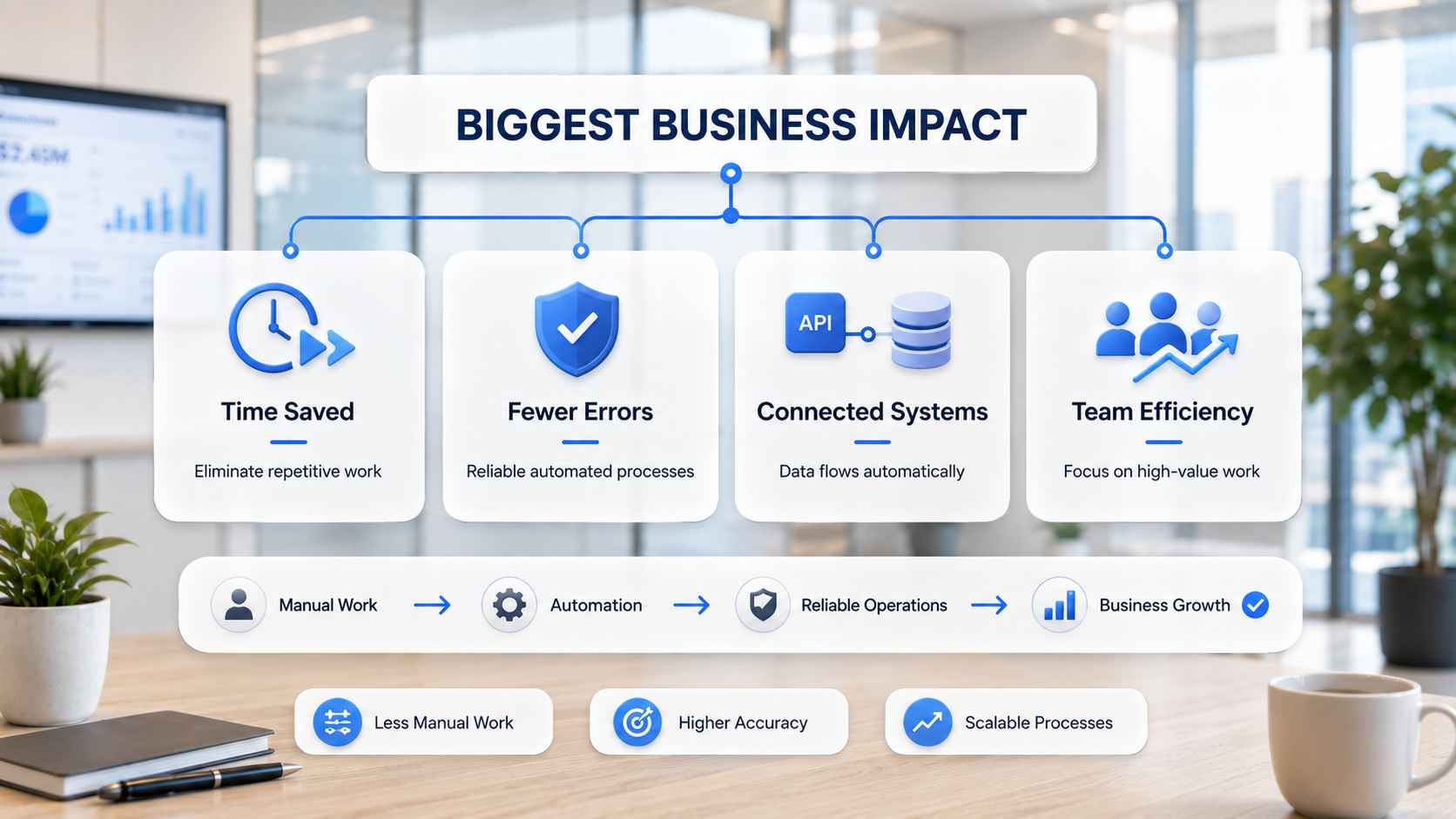
The patterns repeat across every industry we have served.
Data that travels by hand between systems, exported here and imported there. Reports assembled manually on a schedule, eating hours and inviting errors. Approvals that live in inboxes with no visibility and no timeline.
Intake that arrives without routing, so someone assigns it by memory. Numbers from five sources that never agree, so nobody trusts the dashboard.
None of these are edge cases. They are the default state of a growing operator whose tools multiplied faster than their processes matured. Our case studies show the pattern across seven industries: quoting systems, lead-time automation, meeting capture, competitor intelligence. Different surfaces, same disease, same cure.
The cost of leaving them alone compounds quietly. Every manual seam bills you weekly in hours. Nobody invoices it, so nobody budgets it. The consultant's first job is making that invisible invoice visible.
The proof behind the method: 500+ workflows shipped, more than 10,000 hours reclaimed, over $2 million in client savings. Those numbers came from exactly the pattern list above. No exotic problems. Just seams, closed one at a time, on purpose, with an owner and an alert on every one.
How an automation consulting engagement runs
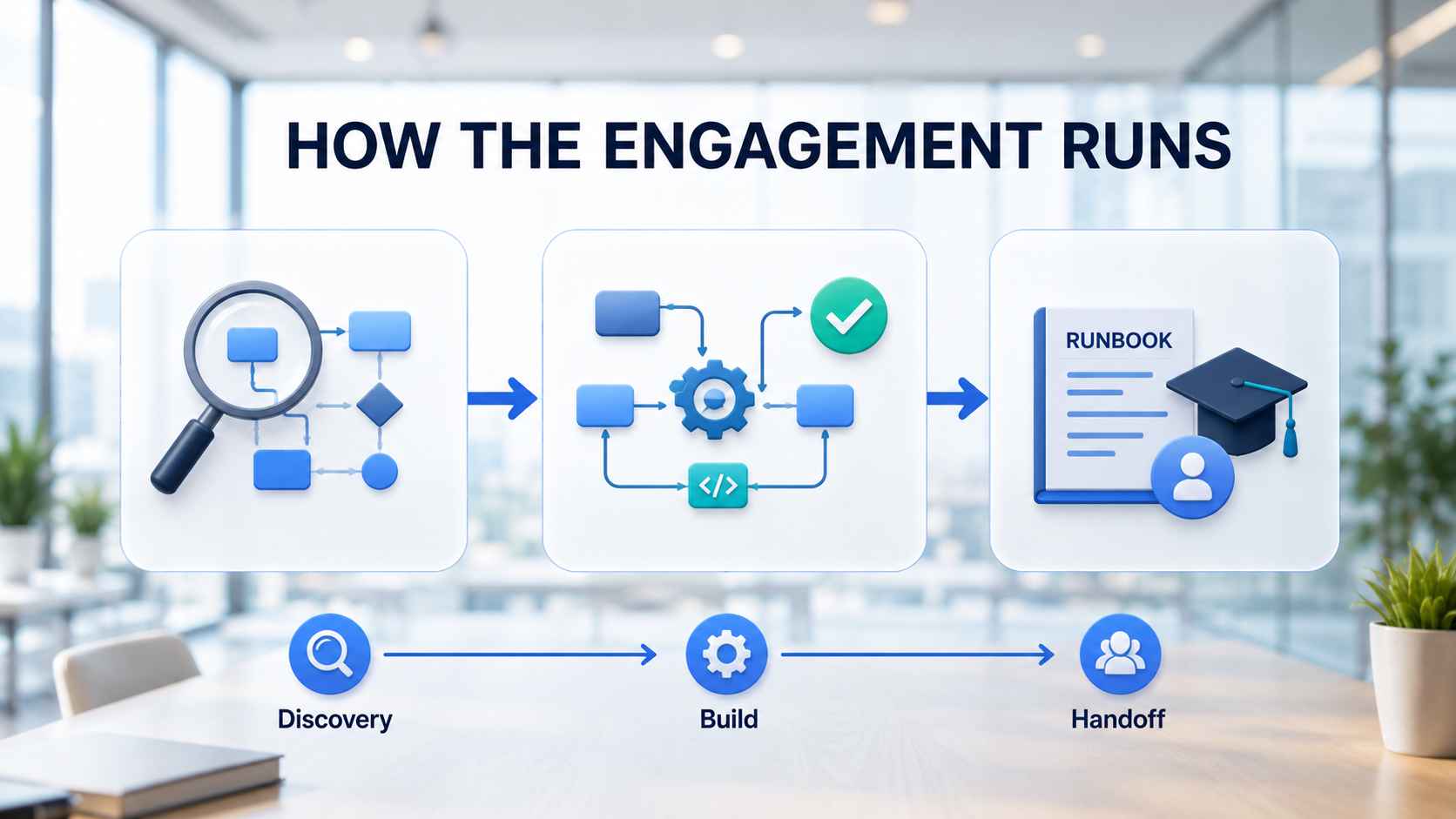
A disciplined engagement follows one shape.
Discovery first, paid and refundable in our model. The consultant maps the workflows, ranks the bottlenecks by payback, and scopes a recommendation in writing. You learn what to build, in what order, for one fixed price. If the fit is wrong, the fee comes back.
Then the build, in phases with exit criteria. Design before configuration. Sample tests before full rollout. Error alerting wired before launch, not after the first silent failure. Weekly check-ins keep the build visible, so nothing surprises anyone at handoff.
Then handoff: documentation, role-based training, and a named owner on your team. The engagement ends with your team running the system. The cheapest consultant is the one who makes themselves unnecessary, and the runbook is how that happens. Engagement structure lives on our pricing page, and the cost models across the market are broken down in our pricing guide.
When should you hire an automation consultant?
Hire when the math turns. A workflow eating fifteen manual hours a week costs more per quarter than its automation costs once. Hire when workflows touch revenue and a silent failure costs pipeline. Hire when the tool bill grows faster than the business, which signals inefficient builds. Hire when the person who built your automations left and nobody owns the estate.
Growth events trigger the hire too. A hiring wave, an acquisition, a new system landing in the stack. Each one multiplies the manual seams between tools, and the seams are where the hours leak.
Skip the hire in two cases. A single linear workflow with low stakes is a solid DIY project on modern no-code tools. And an unstable process should not be automated by anyone yet. Stabilize the rules on paper first. Automation freezes whatever it touches, so freeze the good version.
One more honest boundary. If the real problem is that two departments disagree about the process, no consultant fixes that with software. Settle the ownership argument first. Then automate the settlement.
Our fuller treatment of the operator's decision sits in the automation consulting for operators guide.
How to judge an automation consultant
Five tests separate practitioners from tool operators.
They ask about your process before naming any tool. A consultant who opens with a platform pitch has the order backward. They talk about edge cases without prompting: empty fields, duplicates, failure paths.
They put documentation and training in the scope, priced, not promised. They can show you a runbook from a past build. And their credentials verify in public directories, not just on their own site.
Add one structural test from our hiring guide: the accounts and workspaces stay in your name. Any consultant who builds in their own accounts is constructing a dependency you will rent forever.
Then ask one interview question. Walk me through a build that went wrong and what you changed after. Practitioners answer with specifics. Tool operators answer with reassurance.
How ACS does the work
Fixed fee, refundable discovery, four surfaces, one practice. We build across Zapier, Make, n8n, and custom code, and we implement the CRM layer as verified partners on both sides of the stack. The credential logic is deliberate: Zapier certification covers the connective layer, Attio partnership covers the system of record. Operations infrastructure needs both built well.
The thesis behind the structure: operations infrastructure is one discipline. The four service surfaces are facets of the same underlying practice. A specification reads the same on every surface. So does a runbook. That consistency is what an operator is actually buying.
Every engagement ships with error alerting, documentation, and training in scope. The proof sits in the case studies, the credentials on the partners page, and the engagement structure on pricing.
Frequently asked questions
What is the role of an automation consultant?
To find manual work, judge what deserves automation, design and build the replacement systems, and hand them off documented. The role spans process analysis, systems engineering, and change management. Tools are the last decision in the chain, not the first.
What do automation consultants do daily?
Map workflows with the people who run them. Design triggers, data flows, and failure paths. Build and test automations across CRMs, operations tools, and admin systems. Write documentation. Train owners. The mix shifts by engagement phase, but those are the hours, week after week.
Is $100 an hour good for automation consulting?
The rate alone predicts nothing. Speed and quality decide the real cost, and pricing models matter more than rates. Our full breakdown of hourly, retainer, and fixed-fee economics lives in the automation consulting cost guide.
What are the 5 C's of consulting?
A general consulting mnemonic with shifting definitions by source, usually covering clarity, credibility, and communication. For automation work, five sharper checks matter: process first, edge cases handled, documentation priced, owner named, credential verifiable. Judge on those.
What is the difference between an automation consultant and an automation engineer?
The consultant owns the outcome end to end: mapping, design, build, handoff. The engineer typically builds within an existing design, often as an internal role. Overlap is real. The distinction is who carries the process judgment.
Is automation consulting a career or a service I buy?
Both. This guide covers the buying side. The career exists in-house and independent, and demand tracks how fast tool stacks grow across the market. Career researchers should study process design first, tools second. The judgment is the profession, and it transfers across every platform.
Is this the same as industrial automation consulting?
No. Industrial consultants automate factories, machinery, and control systems. Business automation consultants automate software workflows across sales, operations, and admin. Rate research and job forums mix the two constantly. Match your research to the trade you mean.
What tools do automation consultants use?
Categories, not favorites. Middleware for connections. CRMs and databases for records. Code for volume and custom logic. AI layers for classification and drafting. The design picks the tool, never the reverse. Any consultant with one answer for every problem found a commission.
Does a small business need an automation consultant?
When one workflow costs more in monthly manual hours than its automation costs once, yes. Start with a single high-volume bottleneck on a fixed fee. Skip retainers until an automation estate exists and the math justifies ongoing ownership.
How long does an automation project take?
Single-workflow builds ship in days to two weeks. Multi-system builds with integrations run two to six weeks. CRM implementations and migrations run longer. Discovery sets the honest timeline, because scope drives duration more than any tool does.
Have a workflow that needs attention?
Three ways to move.
Book a paid discovery. Workflow map, ranked bottlenecks, one fixed price. Refundable if we are the wrong fit. See pricing.
Read the cost guide. The automation consulting cost breakdown covers every pricing model with market numbers.
Review the proof. The case studies show the shipped systems behind every claim above.
Process first. Systems second. Tools last.