
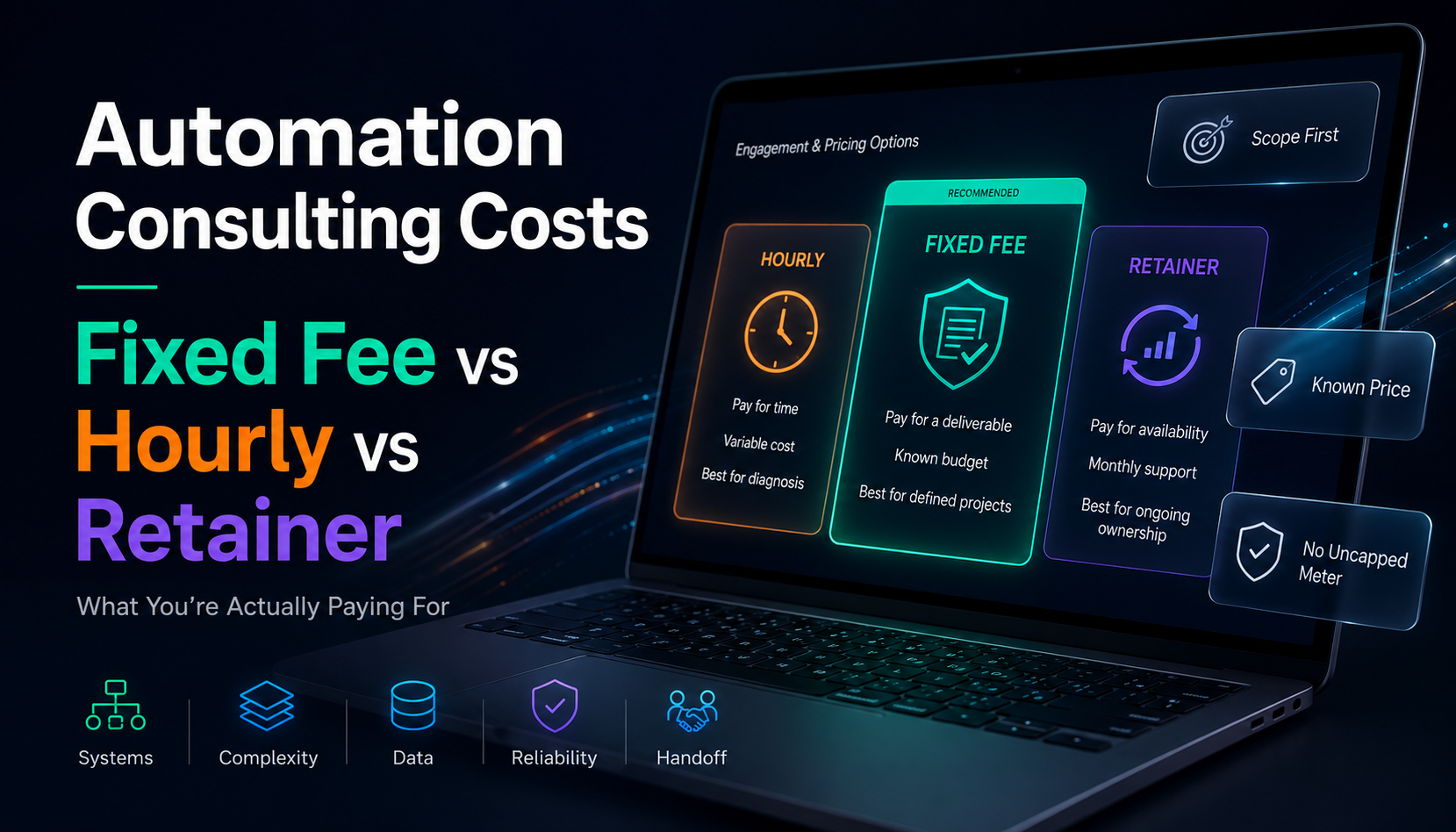
We build operations infrastructure with engineering discipline for $10M-$50M operators. Pricing questions open most of our first calls. So this guide answers the cost question the way we answer it live: with the real numbers the market charges, the five drivers behind every quote, and the pricing structure that protects you.
We are a Zapier Certified Solutions Partner and an Attio Expert Partner. Our own engagements always run fixed fee. The market data below covers everyone else in the industry too.
How much does automation consulting cost?
Automation consulting costs between $100 and $300 per hour for most US-based consultants, with projects spanning four to five figures and monthly retainers starting around four figures. Those are the market's numbers, drawn from published 2026 rate guides and practitioner forums.
Now the part the rate tables skip. The number you pay matters less than what the number buys. An hourly rate buys time. A retainer buys availability. A fixed fee buys a deliverable. Same market, three different products.
Cost is a scope function, not a price tag. Two companies can ask for "lead routing automation" and receive quotes five times apart, because one has two systems and one has nine. Anyone quoting a firm number before understanding your scope is guessing or anchoring. Start with the drivers, then the models make sense.
Three questions scope any quote fast. Which systems does the workflow touch? What volume runs through it monthly? Who owns it after handoff? Answer those in your inquiry and the quotes you receive get honest immediately.
What drives automation consulting costs?
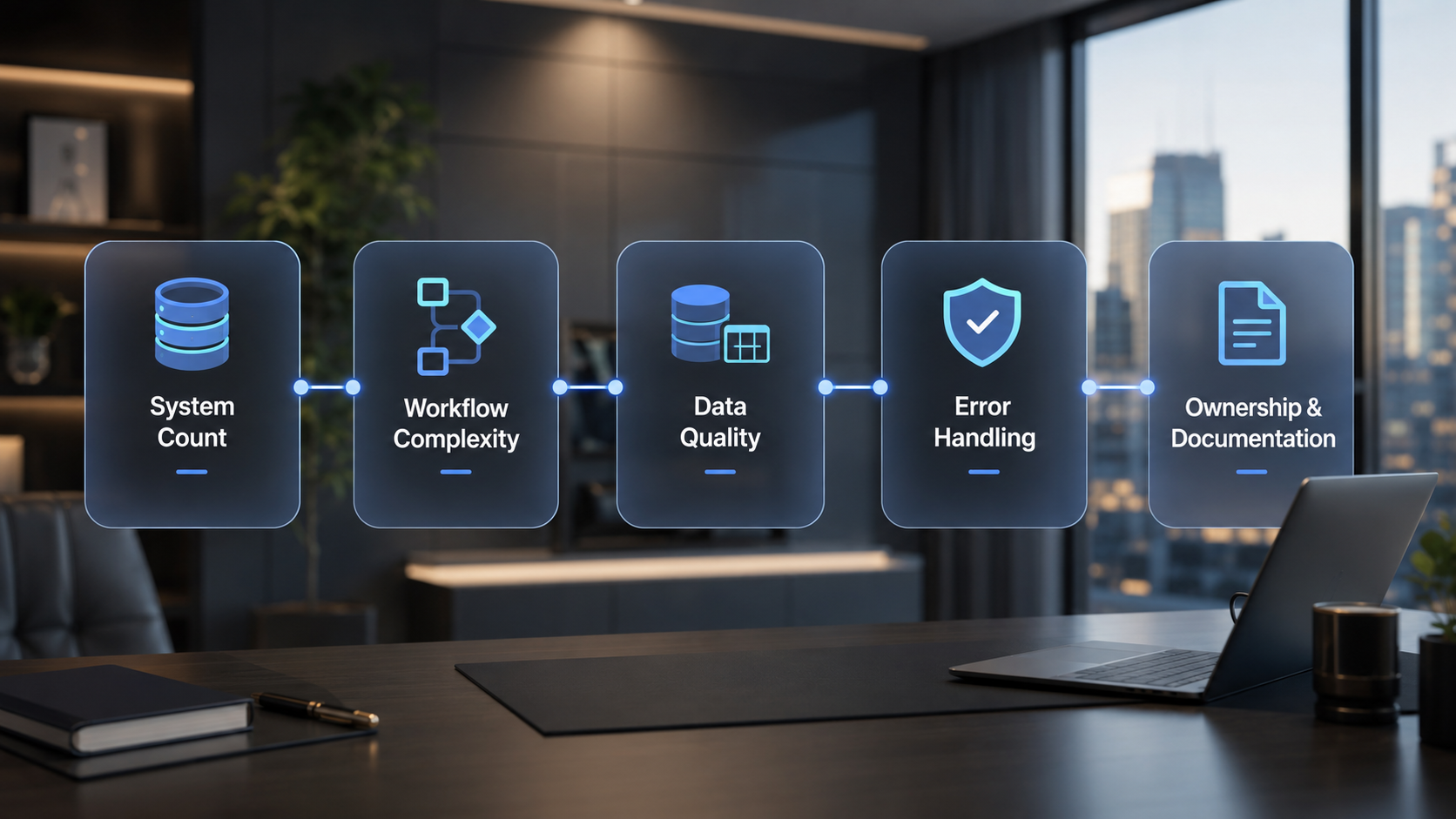
Five drivers set every honest quote. Scope the drivers and the price range narrows fast.
System count. Each connected platform adds mapping, testing, and error handling. A two-system workflow is a small build. A six-system workflow is architecture. Integration-heavy work runs through our integration builds practice for exactly this reason.
Workflow complexity. Linear flows cost hours. Branching logic, lookups, and transforms cost days. Approval chains and multi-step routing cost weeks. Count the decision points in your process. Each one is scope.
Data volume and quality. Clean data at low volume imports fast. Dirty data at high volume needs deduplication, validation, and staging. The data cleanup often outweighs the automation build itself.
Error handling depth. A workflow that touches revenue needs alerts, retries, and a named owner. That reliability layer is real engineering. Skipping it is how automations fail silently for weeks.
Ownership after handoff. Documentation, runbooks, and training cost money upfront. They save multiples later. This driver separates an engagement from a dependency, and we will return to it.
One multiplier sits above all five: timeline pressure. Rush work compresses testing, and compressed testing ships fragile systems. A deadline premium is honest. A deadline discount on quality is not.
Automation consulting rates per hour: what the market charges
US-based independent automation consultants charge roughly $100 to $300 per hour, according to published 2026 rate guides. Freelance marketplaces run $40 to $100. Offshore and nearshore teams bill $25 to $55. Senior specialists and boutique firms push past $300.
One naming trap skews the research. "Automation consultant" covers two different trades. Industrial automation consultants program PLCs and factory systems, and their rate discussions dominate engineering forums.
Business automation consultants build software workflows across CRMs, operations, and admin systems. Same title, different market, similar rate bands. This guide covers the second trade, which is our lane.
Those bands answer the "is $100 an hour good" question with context. In the US market, $100 sits at the entry of the professional range. The rate alone tells you little. A $250 consultant who ships in ten hours costs less than a $100 consultant who wanders for forty.
Here is our position on the model itself, stated plainly. Hourly billing pays consultants to think slowly. The meter rewards the wander. Every hour of confusion bills the same as an hour of progress, so the incentive points away from efficiency. Good consultants resist that pull. The structure still pushes.
Hourly has one honest use: small, genuinely unknowable work. A quick audit. A broken workflow nobody can diagnose. Cap the hours in writing and hourly serves fine. Uncapped hourly on a defined project is the shape to refuse.
Automation consulting costs per month: how retainers work
Monthly retainers for automation consulting start around four figures and scale with scope, running well into five figures for large automation estates. The retainer covers monitoring, incident response, and ongoing iteration. You are buying availability and ownership, not a project.
A retainer earns its cost under two conditions. Your automation estate is large enough that things break weekly. And the retainer's contents are written down: response times, included hours or outcomes, and what triggers overage. A retainer without a written scope becomes insurance you cannot claim.
Watch the dependency signal here. A healthy retainer maintains systems your team could run without it. An unhealthy retainer exists because nobody documented the build. If the consultant is the only person who understands your workflows, the monthly fee is a ransom with a logo.
Check the exit terms before signing. A clean retainer ends with thirty days notice and a handoff document. Long lock-ins on maintenance work signal that the value needs a contract to survive.
Fixed-fee automation projects: pricing the deliverable
Fixed-fee pricing attaches one price to one named deliverable. The lead routing system, built, tested, documented, and handed off, for one number agreed before work starts. Scope changes go through change requests. The risk of slow work sits with the consultant, where it belongs.
This is how we price, and the reasoning is incentive design. Price the deliverable, not the hours, and efficiency pays the builder instead of punishing them. The client budget is known on day one. The consultant profits by being fast and right. The interests point the same direction.
Fixed fee demands one thing from both sides: real discovery first. Nobody can fix-price undefined scope honestly. Our discovery is paid and refundable: we map the workflows, rank the bottlenecks, and scope the build in writing. If the fit is wrong, the fee comes back. The structure sits on our pricing page.
Change requests keep fixed fee honest in both directions. New scope gets a new price, agreed before the work, with your signature on it. That protects you from creep and protects the builder from drift. Silent scope changes are how fixed fees quietly become hourly.
The same logic runs through our platform work. Our Attio implementations and Salesforce projects both price on scope drivers after discovery, never on a rate card.
Hourly vs fixed fee vs retainer: which model fits your situation
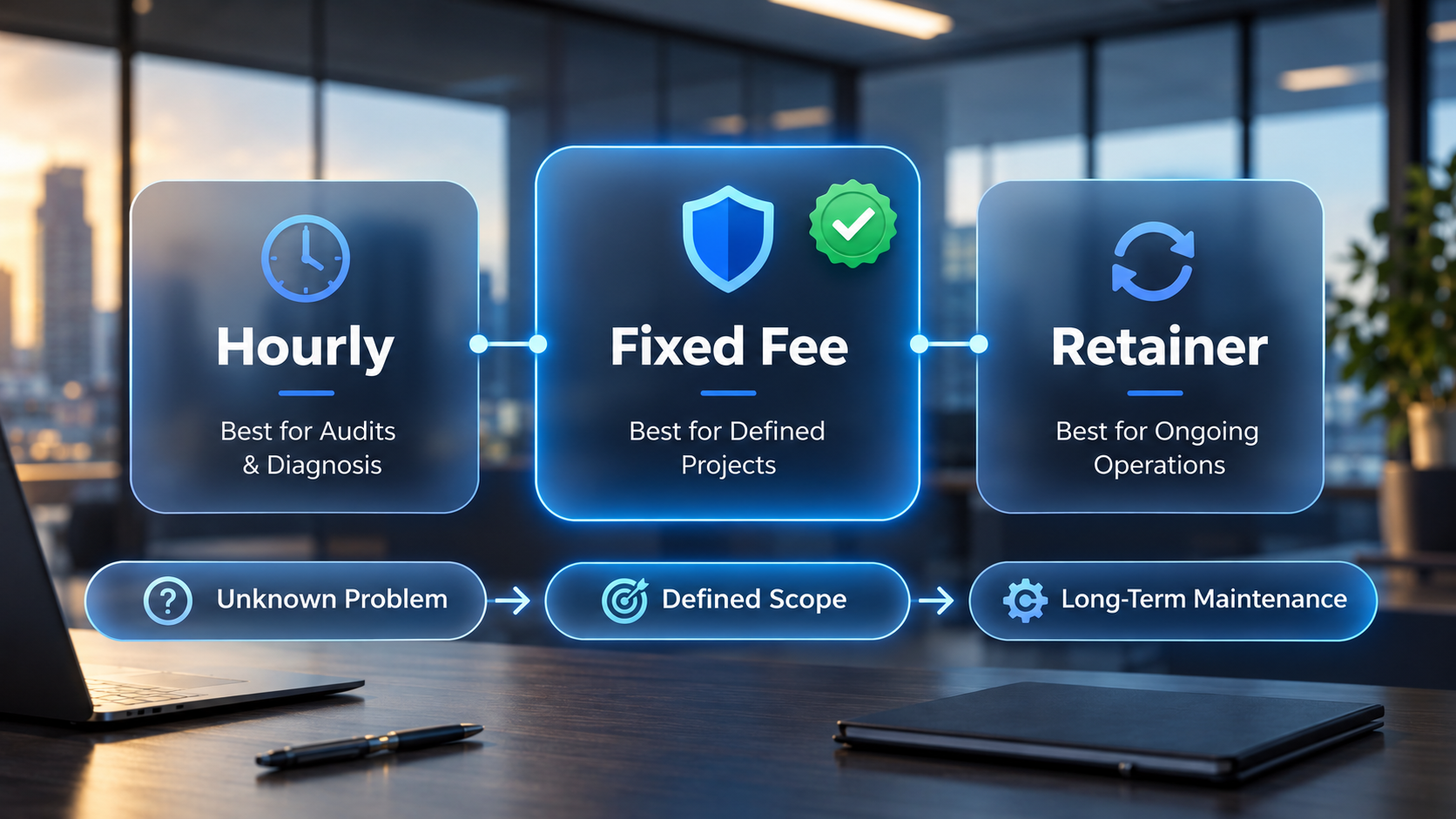
Match the model to the work's shape. Each has a home.
Pick hourly, capped, for diagnosis and small unknowns. A broken Zap. A quick systems audit. An hour of advice before a decision. Cap it in writing.
Pick fixed fee for anything with a definable deliverable. New workflow builds, CRM implementations, migrations, integration projects. This covers most real engagements, across sales automation, operations automation, and admin workflows alike.
Pick a retainer when the estate is large, documented, and alive. Ongoing monitoring, iteration, and a named owner on call. Confirm the scope document exists before signing.
The mature pattern blends two of them. A fixed-fee build first, then a light monthly retainer for monitoring once the estate justifies it. Build priced on the deliverable. Care priced on availability. Each model doing the one job it fits.
One test sorts every proposal, whatever the model. Ask what happens if the work takes twice as long as expected. Fixed fee: the consultant absorbs it. Capped hourly: you stop at the cap. Uncapped hourly: you absorb it. The answer tells you where the risk lives.
What is a reasonable automation consulting fee?
A fee is reasonable when the math is visible: hours reclaimed, times what an hour costs your business, against the price. That equation beats every rate comparison, because it prices the outcome instead of the input.
Run it on a real example. A quoting workflow that saves a team fifteen hours a week returns hundreds of hours a year. Price that time at your loaded cost per hour. Most well-scoped automation projects clear their fee inside months, which is why the scoping matters more than the rate.
Ask every vendor one question: what is the payback window on this build? A confident answer names the hours saved and the math behind them. A vague answer means nobody scoped the value, only the work.
Our proof stack shows the equation at scale: 500+ workflows shipped, more than 10,000 hours reclaimed, over $2 million in client savings across seven industries. The builds behind those numbers sit in the case studies. Reasonable is measurable.
One more honesty check. The cheapest consultant is the one who makes themselves unnecessary. A runbook, documentation, and training in the scope mean the value stays when the engagement ends. A low fee without them is the expensive option wearing a discount.
The hidden costs nobody quotes
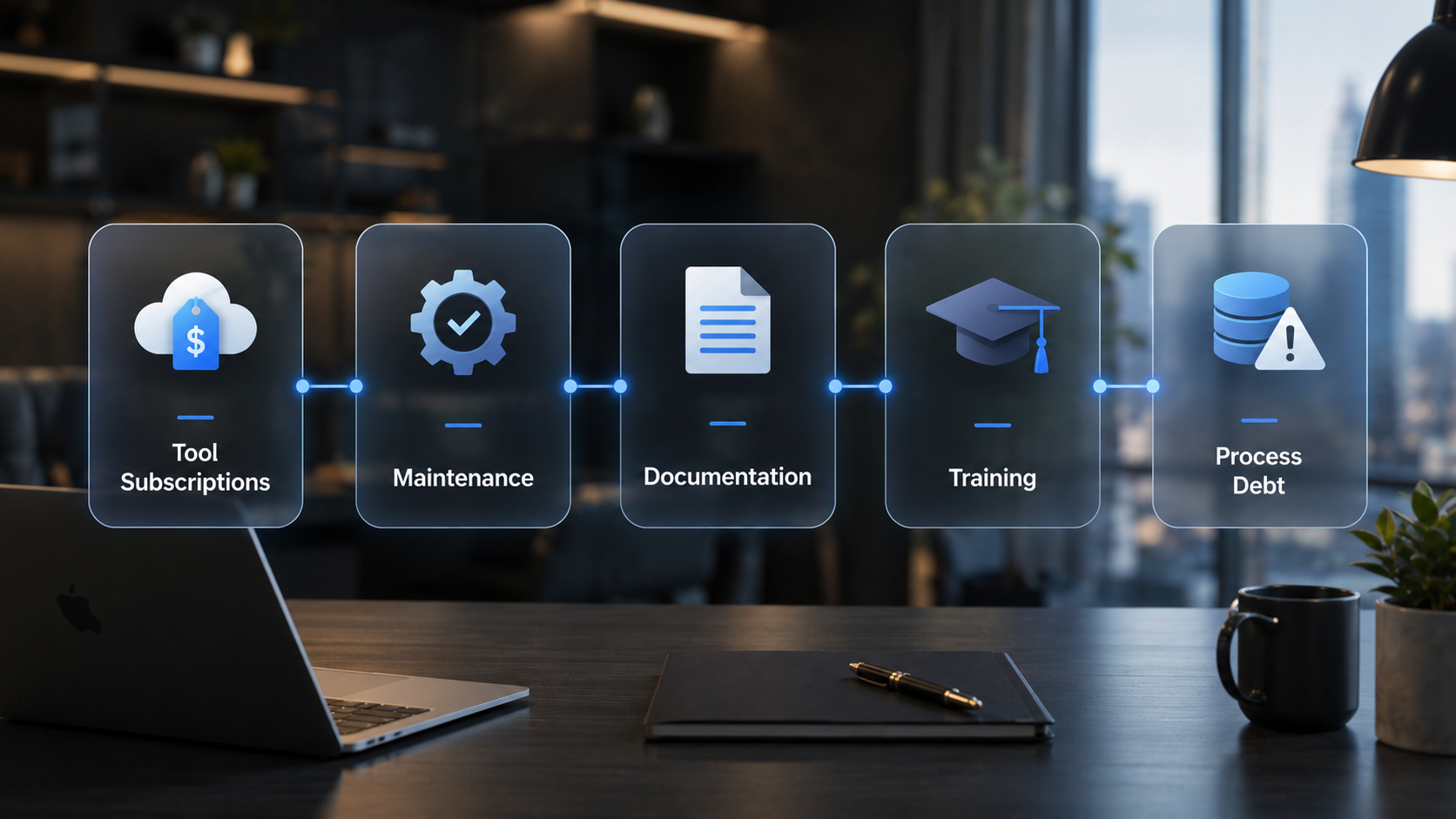
Four cost lines live outside most proposals. Budget them or meet them later.
Tool subscriptions. The platforms under the automation bill monthly. Middleware tasks, CRM seats, AI credits. A consultant who never mentions the running costs has not run this in production. Ask for the tool budget alongside the build quote.
Maintenance reality. Apps change their APIs. Fields get renamed. Volume grows. Healthy automations need an owner and occasional attention. Plan a small ongoing line, whoever holds it.
The dependency cost. Undocumented systems make their builder permanent. This line never appears on a quote, and it is the largest hidden cost in the industry. The runbook is the insurance. Our take on vetting for this sits in the Zapier experts hiring guide.
Process debt. Automating a broken process breaks things faster. Sometimes the honest quote includes process design before any build. Cheaper to fix on paper than in production.
Adoption work. A shipped workflow nobody uses saves nothing. Training and rollout time cost real hours on your side. Budget your team's attention, not just the vendor's invoice. Adoption is where the payback math becomes true or stays theoretical.
How ACS prices automation consulting
Fixed fee, after a paid and refundable discovery. The discovery ships three things in writing: a workflow map, a ranked bottleneck list, and a scoped recommendation with one price. If we are the wrong fit, the discovery fee comes back.
Every build includes the unglamorous layer in scope. Error alerting to a named owner. Documentation your team owns. A runbook and training at handoff, because the deliverable is a working system, not a relationship you cannot leave.
No hourly meters. No uncapped anything. The engagement structure and current details sit on the pricing page, the credentials on the partners page, and the broader case for hiring automation help in our operators guide.
One number stays constant across every engagement shape. The price you agree to is the price you pay. Everything else in this guide exists to make that sentence normal in this industry.
Frequently asked questions
How much does automation consulting cost per hour?
US-based consultants bill roughly $100 to $300 per hour per 2026 market guides. Marketplaces run $40 to $100, offshore teams $25 to $55. Judge the total cost of the outcome, not the rate. Fast and senior regularly beats cheap and slow.
How much does automation consulting cost per month?
Retainers start around four figures monthly and scale with the size of the automation estate. A legitimate retainer includes written response times and scope. Project work priced monthly without a deliverable is hourly billing wearing a subscription.
What is a reasonable consulting fee?
One the math justifies. Multiply hours reclaimed by your loaded hourly cost, compare against the fee, and add the value of errors prevented. A reasonable fee clears that bar visibly. An unreasonable one hides behind a rate card.
Is $100 an hour good for automation consulting?
It sits at the entry of the US professional range. Good or not depends entirely on speed and quality. Evaluate the estimated total for your deliverable, the error handling included, and the documentation. The hourly number alone predicts nothing.
What does an automation consultant actually do?
Maps your workflows, designs the systems, builds the automations, wires the error handling, and documents the result. The best ones reduce your tool spend while raising reliability. Our full breakdown lives in the operators guide.
Why do automation consulting quotes vary so much?
Because scope varies and models differ. System count, workflow complexity, data quality, error handling depth, and handoff scope move quotes by multiples. Offshore versus US rates widen it further. Same title, different products. Compare deliverables, never rates.
Business automation vs industrial automation consulting: same pricing?
Different trades, overlapping rate bands. Industrial consultants program factory systems and PLCs. Business automation consultants build software workflows across sales, operations, and admin systems. Rate research often mixes the two, which distorts comparisons. Match your research to the trade you are hiring.
Should a small business pay for automation consulting?
When a workflow costs more in weekly manual hours than the build costs once, yes. Start with one high-volume bottleneck, priced fixed fee. Skip retainers until an estate exists. The math should be visible before any signature.
Fixed fee or hourly: which protects the buyer?
Fixed fee, for any defined deliverable. The consultant carries the efficiency risk and the budget is known on day one. Hourly protects you only when capped and only for small unknowns. Uncapped hourly on defined work protects nobody but the meter.
Pricing an automation project?
Three ways to move.
Book a paid discovery. Workflow map, ranked bottlenecks, one fixed price. Refundable if we are the wrong fit. See pricing.
Read the operators guide. Our automation consulting overview covers what the work contains.
Check the math. The case studies show the hours reclaimed behind every number above.
Scope first. Model second. Meter never.