

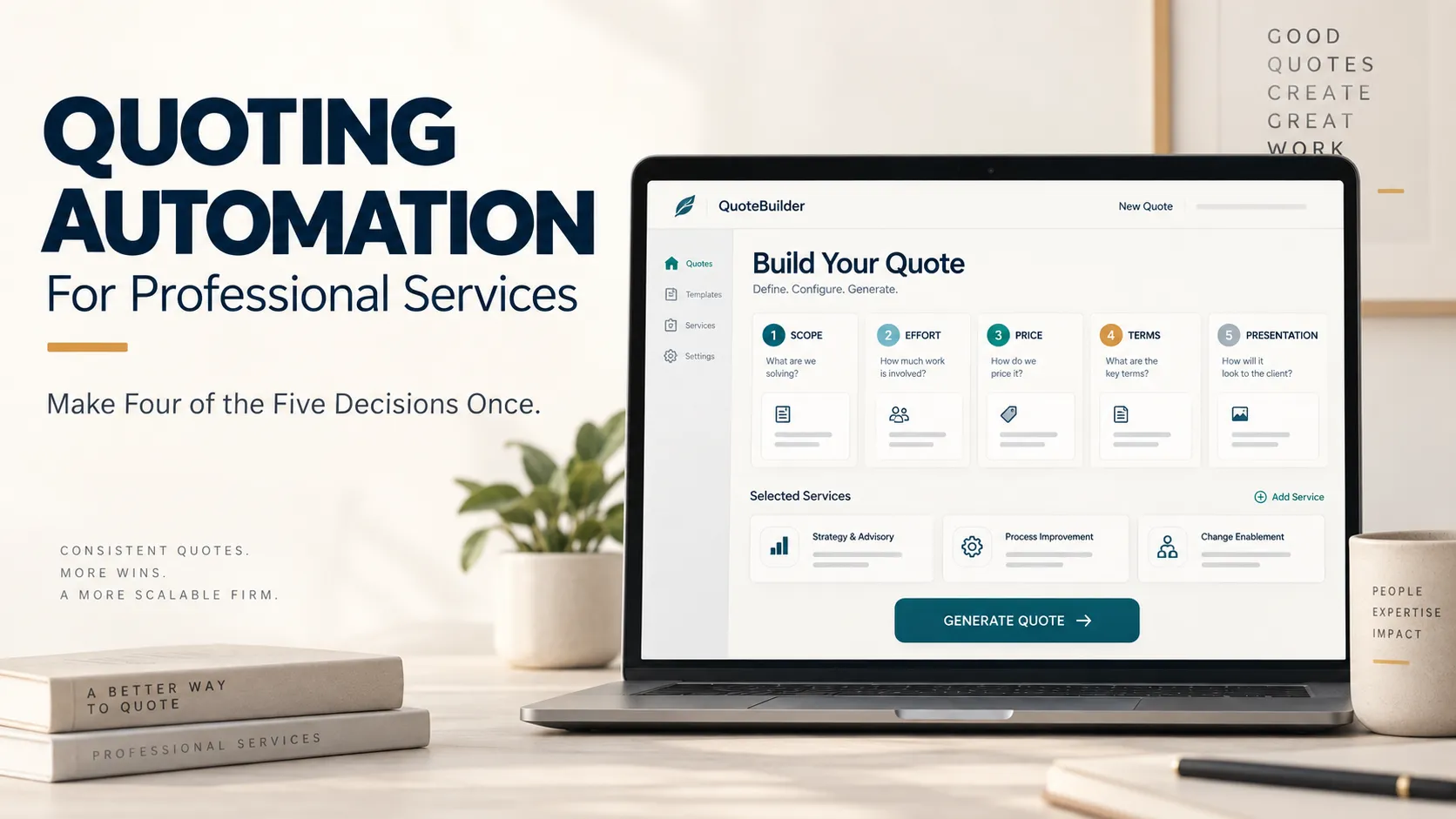
A product quote reads a price list. A service quote estimates human time and wraps it in a price. That is why yours takes days while an automated competitor's takes hours. The delay is not laziness. It is five decisions being made from scratch, every time, by your most expensive people, under deadline, with no memory between quotes.
We build operations infrastructure with engineering discipline for $10M-$50M operators, and quoting systems sit inside our professional services work: agencies, consultancies, IT services, engineering firms.
The same pattern repeats across all of them, because the five decisions themselves do. This guide names the five decisions, shows which four relocate into a system, and wires the pipeline from intake to accepted quote to first invoice. The decisions come first, because the tooling debate is downstream of them.
Why Service Quotes Are Slow
The bespoke-document trap. Every quote starts as a copy of the last one that resembled it. Edited by hand. Priced by memory. Formatted at midnight before the deadline. The knowledge lives in two senior heads.
Quotes queue behind those two calendars. Consistency drifts quote by quote, and nobody notices until two clients compare notes at the same conference. And the client waits, cooling, while a competitor's quote arrives first and anchors the conversation.
None of this is a talent problem at all. It is an architecture problem. Decisions that belong in a system are being remade per quote, by hand, under deadline pressure. Fix the architecture, and the same people quote in hours, with better numbers behind them.
The Five Decisions Inside Every Quote
Name all five, and the automation design writes itself. Each decision has a per-quote version and a relocated version, and the gap between them is your quoting cost.
Decision 1: Scope
What is included, what is excluded, what is assumed. Per-quote, scope gets rewritten from scratch. Exclusions get forgotten until they get expensive in delivery. Relocated, scope lives as a library of service blocks.
Each block carries standard inclusions, exclusions, and assumptions, reviewed once by the people who deliver it. Quotes get assembled per deal instead of authored per deal from nothing, and the exclusions never go missing again. Assembly takes minutes. Authorship took the whole weekend.
Decision 2: Effort
How much work each block takes. Per-quote, effort is a guess calibrated by whoever is quoting that day. Optimists underquote, and the delivery team pays for it. Pessimists overquote, and the pipeline pays instead.
Relocated, effort lives as models per service block, built from delivered projects and corrected by actuals every month. The estimate inherits the firm's whole delivery history instead of one senior person's mood that particular morning.
Decision 3: Price
Rates, margins, and adjustments. Per-quote, pricing is memory plus mood. Discounting happens quietly, one sympathetic conversation at a time. Relocated, rate cards live in one governed place.
Margins get computed instead of hoped for. Adjustments pass through rules with names attached to every exception. This is the CPQ core: configure, price, quote, as one governed motion instead of three arguments.
Decision 4: Terms
Payment schedule, validity window, assumptions, change-order language. Per-quote, terms get pasted from old documents, including the clause nobody has read since it last caused a dispute.
Relocated, terms live as approved standard language, with named variants for the common situations. Choosing replaces rewriting, the disputed clause finally gets retired, and legal reviews the library once a year instead of every quote.
Decision 5: Presentation
The document itself: structure, branding, clarity. Per-quote, formatting eats hours. The client never sees them and never pays for them. Relocated, presentation is a template the system fills in seconds, and the hours go back to billable work. The client sees a cleaner document, delivered faster, every single time.
The Relocation Principle
Automation does not remove the decisions. It moves them, from every quote to one system. Your best people make them once, on a calm day, with actuals in front of them. Not five times a week by whoever is available.
What stays per-quote is exactly what should stay. Judgment on scope edges. The read on this particular client and this particular moment. The final approval on exceptions. The system handles the remembering. The humans handle the thinking, which is the only part clients actually pay for anyway.
The Quote-to-Cash Pipeline, Automated
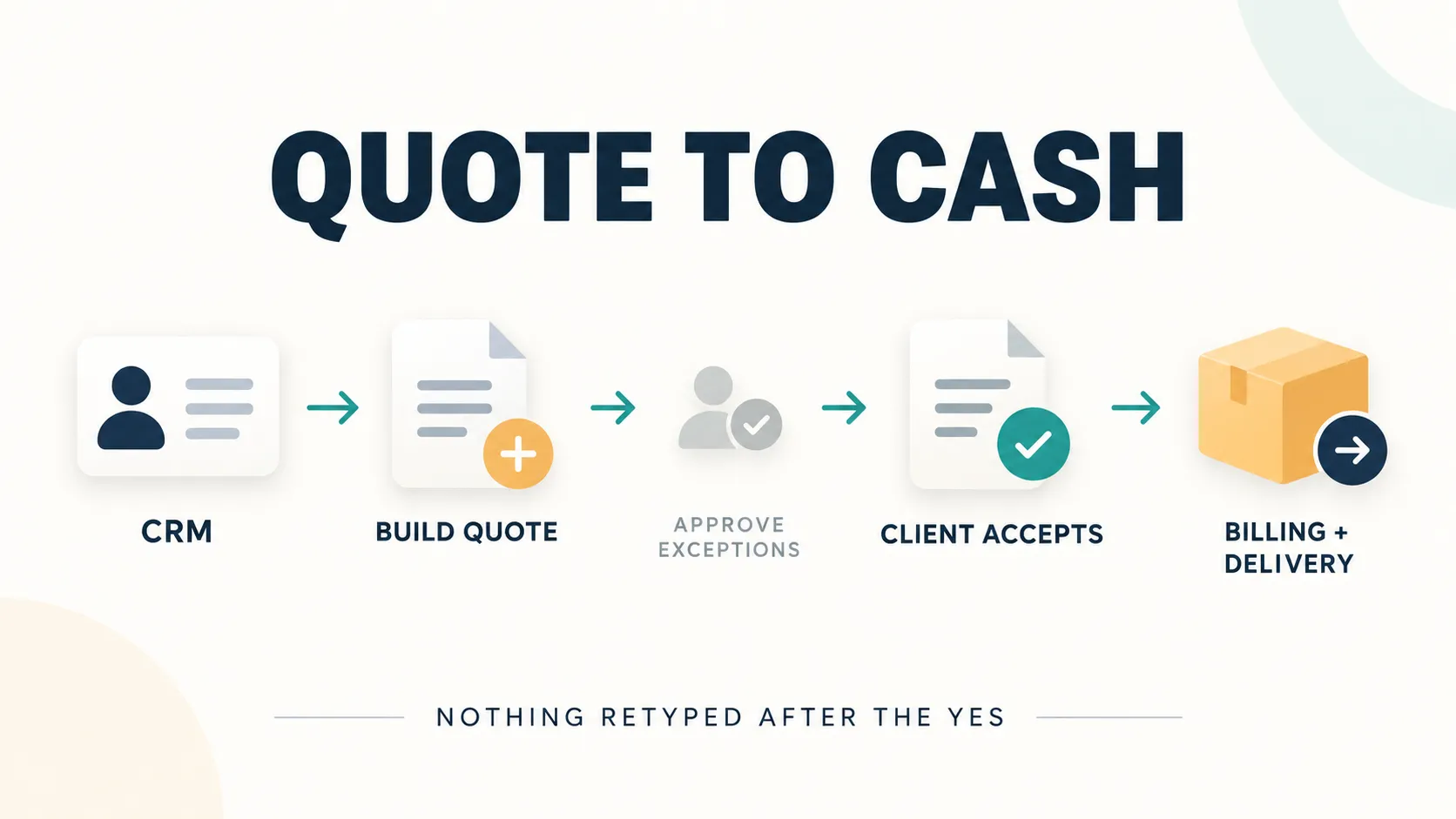
The five decisions feed a pipeline. Deal data flows in from the CRM record. Blocks get assembled. Pricing computes under the governed rules. Approval routes by exception only. The quote sends with tracking. Acceptance triggers the machine, end to end, with nothing retyped anywhere.
Approval Rules
Route by exception, not by default. Standard-rate, standard-terms quotes ship without a meeting, because the system already applied every rule. Discounts past a set floor, custom terms, or unusual scope route to a named approver, with full context attached.
Set the thresholds once, in writing, and the approval queue shrinks to the quotes that deserve scrutiny. Approvers stop being bottlenecks in the flow. They start being guardrails.
The Acceptance Moment
The most under-automated click in professional services. Acceptance should trigger one motion. Signature captured. Deposit or payment link issued. Deal marked won. Delivery team notified with the scope attached.
Invoice schedule created. Wire the payment leg with the same reconciliation discipline as our payment operations builds. Quote-to-cash ends at cash, not at the signature. A signed quote with no deposit motion is a promise, and promises age badly in accounts receivable. Cash collected at acceptance changes the whole engagement's posture from day one.
What Speed Is Worth
The first credible quote anchors the deal. It frames the scope conversation. It sets the price reference in the buyer's head. It makes every later quote a comparison to yours. Same-day quoting for standard work changes win dynamics.
Most pricing tweaks never will match it. Follow-up automation on sent quotes, with expiry dates that actually mean something, keeps the anchor working after you hit send. Speed also compounds internally. Senior hours stop leaking into document formatting. The queue behind two busy calendars disappears. And the firm quotes with one voice, at any volume.
The Wiring
The operations spine pattern applies. The CRM is the source of truth. Deal, contact, and context feed the quote, and quote status writes back, so pipeline reports tell the truth. A self-maintaining CRM makes the feed cleaner still. Rate cards and the block library live in one governed place, never in copies scattered across drives.
Middleware carries the standard flows, chosen per the platform comparison. The hard edges deserve engineered integration. Pricing logic and the billing handoff are those edges. On acceptance, the ops handoff fires cleanly: delivery kickoff from the won deal, per the spine, with the full scope attached and nothing retyped.
The build works the same from a HubSpot pipeline or a Pipedrive deal view. The placement rule from our wiring guides holds here too: automate at the lowest layer that can own it. And when you outsource the build, evaluate the partner like any automation hire. Judge the questions they ask about your pricing before they touch a single template.
Guardrails That Protect Margin
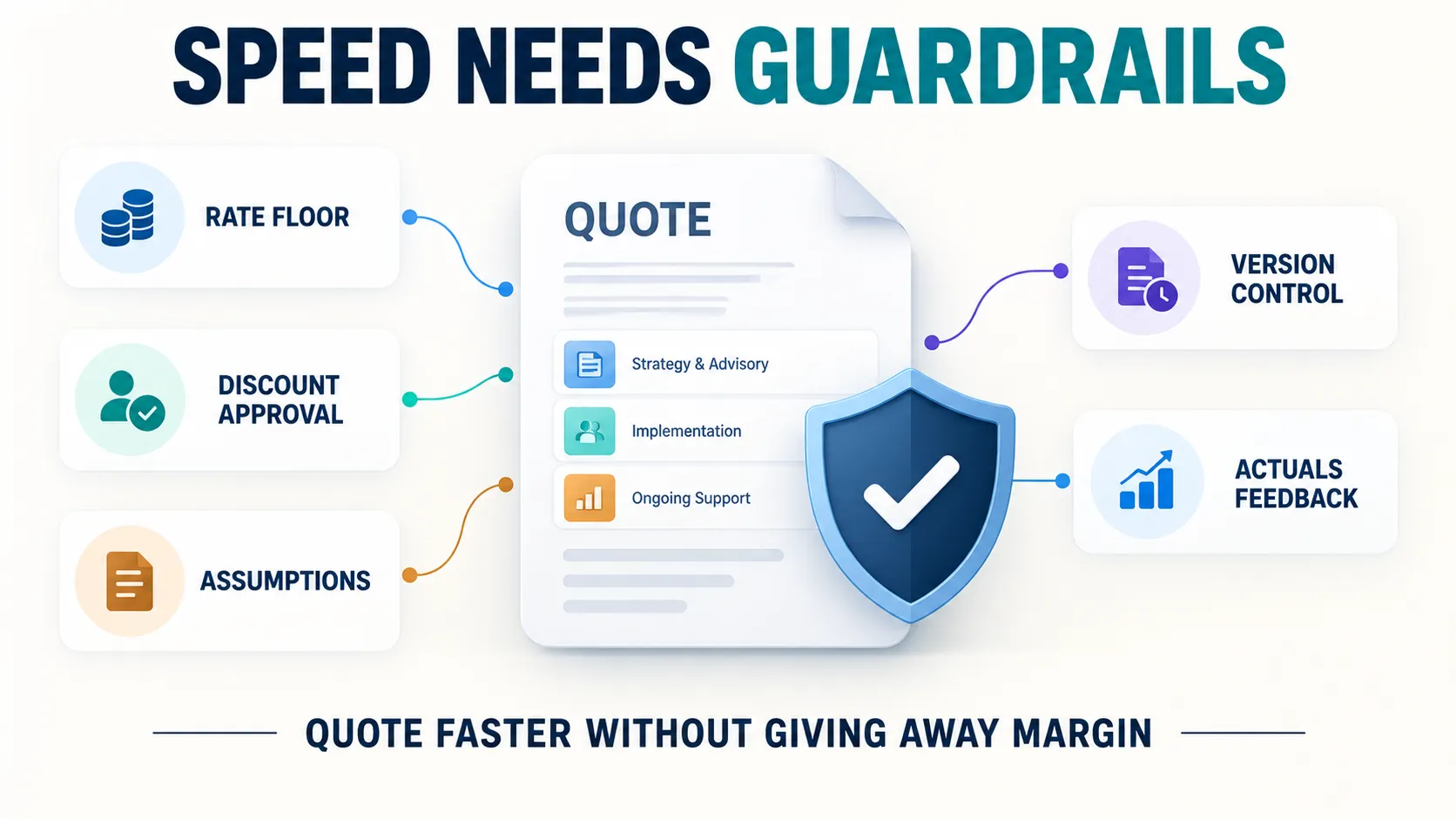
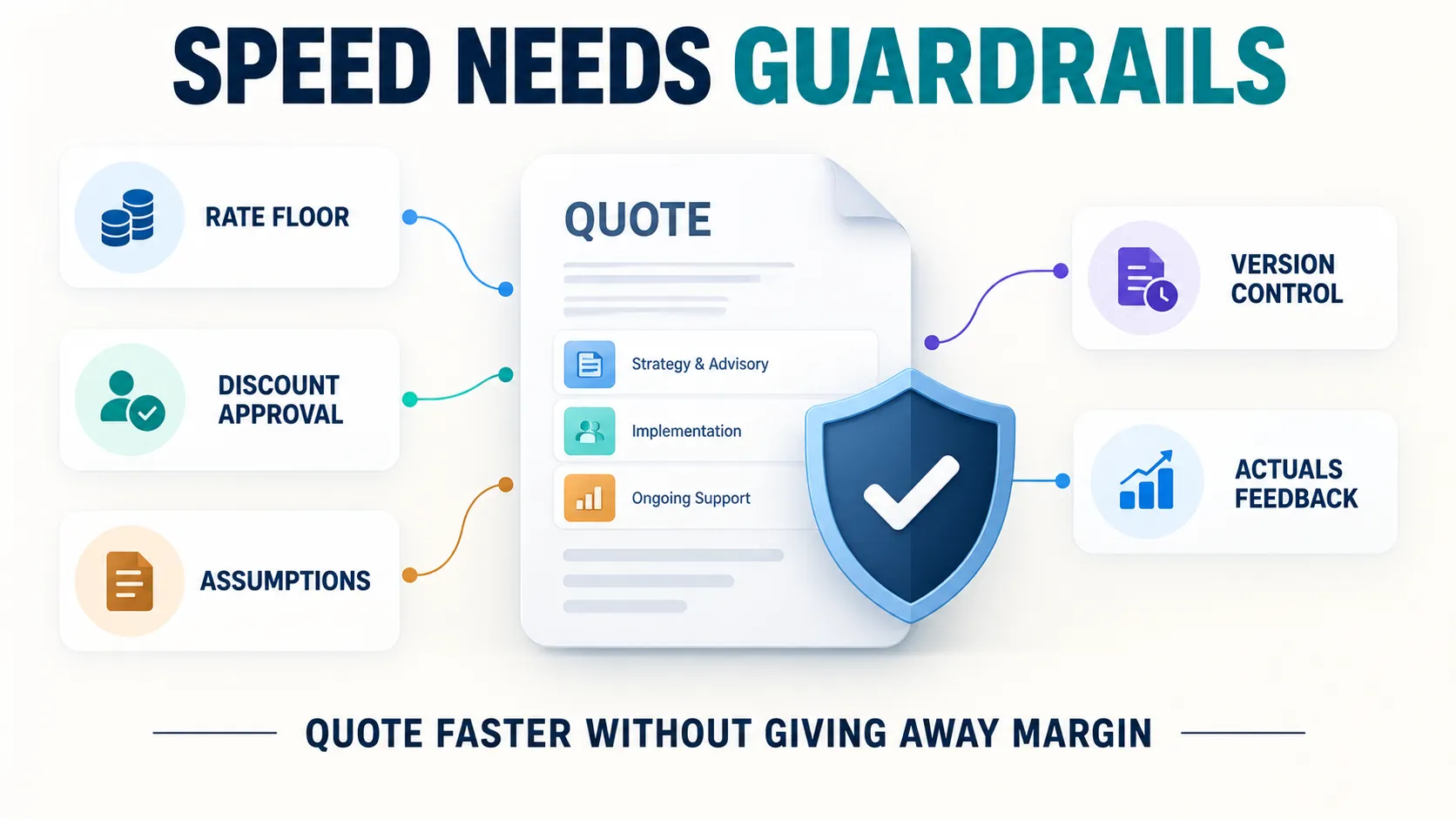
Speed without guardrails just loses money faster, and politely. Five guardrails earn their keep. Rate floors that require approval to breach. Discount rules with named approvers and reasons logged. An assumption library attached by default, because unstated assumptions become free work delivered with a smile.
Quote versioning, so the signed version is findable forever. And a monthly report of quoted-versus-delivered effort, feeding corrections back into the effort models where they compound. The guardrails are the difference between quoting faster and quoting worse, faster.
When Not to Automate Quoting
The honest gate, again. Truly bespoke work at low volume keeps manual quoting. Templates are the only upgrade worth buying there. A firm that cannot describe its services as blocks has a packaging problem before an automation problem.
The block workshop comes first, and it is strategy work, not admin work. And if rates are secret even internally, fix the pricing governance before wiring anything. Automating an ungoverned rate card just automates the leaks, at full speed.
How ACS Builds Quoting Automation
The five decisions as method, with engineered integration on the hard edges. Engagements run fixed fee after a paid and refundable discovery. Discovery inventories your services into candidate blocks. It drafts the rate and approval structure with your seniors in the room. It maps the full pipeline from your CRM to your billing, with each build priced visibly. The document is yours either way.
Builds carry the constants: documentation your team keeps, training to named roles, accounts in your name, error-alerted integrations. Engagement structure sits on pricing. The record sits in the case studies: 500+ workflows shipped, more than 10,000 hours reclaimed, over $2 million in client savings.
Frequently Asked Questions About Quoting Automation
What is quoting automation for professional services?
A system that relocates four of the five quote decisions: scope blocks, effort models, governed pricing, and standard terms, leaving presentation to templates and judgment to humans.
Deal data flows in from the CRM at the start, and acceptance triggers billing and delivery automatically at the end. The result is same-day quotes with better margin discipline than the slow handmade ones ever had.
What is CPQ, and does it apply to services?
Configure, price, quote: assemble the offering, compute the price under rules, produce the document. Born in product sales, it applies to services cleanly once work is described as blocks with effort models attached. The configure step is the services adaptation, and it is mostly packaging discipline, done once in a workshop with your senior deliverers.
How do I start automating quotes?
Blocks come first. Inventory your last twenty quotes, wins and losses both. Extract the recurring service components. Write standard inclusions, exclusions, and assumptions for each one. Then rate cards, in one governed place. Then templates. Then the CRM wiring last. Pricing logic before pretty documents, every single time, because a beautiful wrong number is still wrong.
Can quoting automation integrate with my CRM?
It should start there. The deal record feeds the quote with contact, context, and history. Quote status writes back, so the pipeline reports stay honest. Middleware carries standard flows on any major platform your firm runs. Pricing logic and billing handoffs deserve engineered pipes, because money math punishes flaky connections.
What should stay manual in quoting?
Scope judgment on edge cases. The client-specific read. Final approval on the exceptions that route to a human. The system remembers everything, forever. Humans decide only the exceptions. A quote that needed no human judgment was either perfectly standard, which is the win the system exists for, or insufficiently read, which is the risk worth one reviewing glance.
How does automated quoting protect margins?
Rate floors with approval to breach. Discount rules with logged reasons. Assumptions attached by default. And the quoted-versus-delivered report feeding corrections into effort models, so estimates learn from actuals instead of repeating them. Governance is the margin feature, and it is invisible on every demo you will watch.
What is the difference between a quote, a proposal, and an SOW?
A quote states the price for defined work. A proposal argues the whole case and includes the quote. An SOW contracts the full delivery detail after the yes arrives. One block library should feed all three, so the numbers never disagree between documents. Disagreeing documents are how scope disputes get born months later.
What happens after a client accepts a quote?
One motion, fully automated. Signature captured. Deposit or payment link issued immediately. Deal marked won. Delivery team kicked off with scope attached. Invoice schedule created. The handoff is where quote-to-cash usually leaks first, and wiring it is half the value of the entire build.
Do I need CPQ software, or can middleware build this?
Middleware plus your CRM covers most mid-market quoting: block assembly, rate lookups, templates, approvals, tracking. Dedicated CPQ tools earn their seat at high quote volume or genuinely gnarly pricing math. Start with the wiring you already own, and let real volume argue for the upgrade later. The placement rule applies here too: lowest layer that can own it.
What is quote follow-up automation?
Scheduled, polite persistence attached to every sent quote. A view notification when it opens. A timed nudge. An expiry reminder. A close-the-loop task when silence wins. It keeps the anchor working without anyone remembering to chase manually, and it retires the awkward "just checking in" email your seniors keep rewriting from scratch.
How long does a quoting automation build take?
The blocks decide. Firms with clear service packaging wire the whole pipeline in weeks. Firms still discovering their blocks add the packaging workshop first, and it is worth every added day. The build is faster than the thinking, which is the usual shape of good automation work.
Ready to Relocate the Decisions?
Three ways forward.
Inventory your last twenty quotes. Extract the recurring service blocks and the drift between them. The drift between them is the cost of per-quote deciding, made visible in a single afternoon.
Read the wiring beneath. The operations spine and the middleware comparison cover the layers this build sits on, placement rule included.
Book a paid discovery. Your services blocked, your rate governance drafted, the quote-to-cash pipeline mapped from your CRM to your billing, each build priced visibly, one fixed price, refundable if the fit is wrong. Details on pricing.
The math is simple. Five decisions per quote, or four decisions per year and one per quote. The fast firms already chose, and their same-day anchors are landing in your prospects' inboxes now. The good news: the system they chose can be built in a quarter, and the advantage starts with your first same-day quote.